
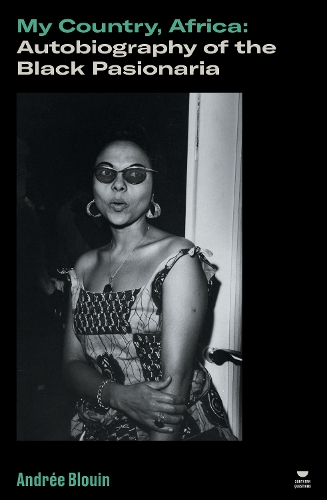
The long awaited reprint of My Country, Africa: The Autobiography Of The Black Pasionaria by that late Andrée Blouin has arrived. If you saw the award winning documentary Soundtrack To A Coup D’Etat and came way wanting to know more about the woman in dark glasses who stood at Lumumba’s side before the Belgian’s, the CIA, the UN and Mobutu orchestrated his downfall and death, you need to read this book.
It was back in November that I penned a few words about an excellent documentary that did indeed provide a “soundtrack to a coup d’etat” which took place in 1961 in the capital of the fledgeling Democratic Republic of the Congo. It resulted in the overthrow of the democratically elected Prime Minister Patrice Lumumba who, along with his allies, had spearheaded the movement for decolonisation and independence from Belgium. At his side was an activist, a woman called Andrée Blouin, who had thrown herself into the struggle, campaigning and working tirelessly on the front line, in the countryside, in the villages, with the women, against tribalism and the psychological legacy of their Belgian overseers. Back in the metropolis of Kinshasa after victory was secured, she took her life in her hands and did everything in her power to unite the different movements to stave off a Belgian / US backed coup led by the Chief Of Staff Of The Army – Mobutu Sese Seko aka Mobutu. She travelled to other African nations to rally support for Lumumba and earned herself the title of the ‘Black Pasionaria’. Upon Lumumba’s arrest, she was placed under house arrest and was eventually expelled to Algiers while her children were initially held hostage in the Congo to ensure her silence.
It’s a riveting and nail biting story, that deserves a film in its own right. This book – My Country, Africa: The Autobiography Of The Black Pasionaria – delivers a deep dive into the colonial mind-set and the psychological damage inflicted on the African people by their colonizers, whether they were from Belgium, France , Portugal or Britain.
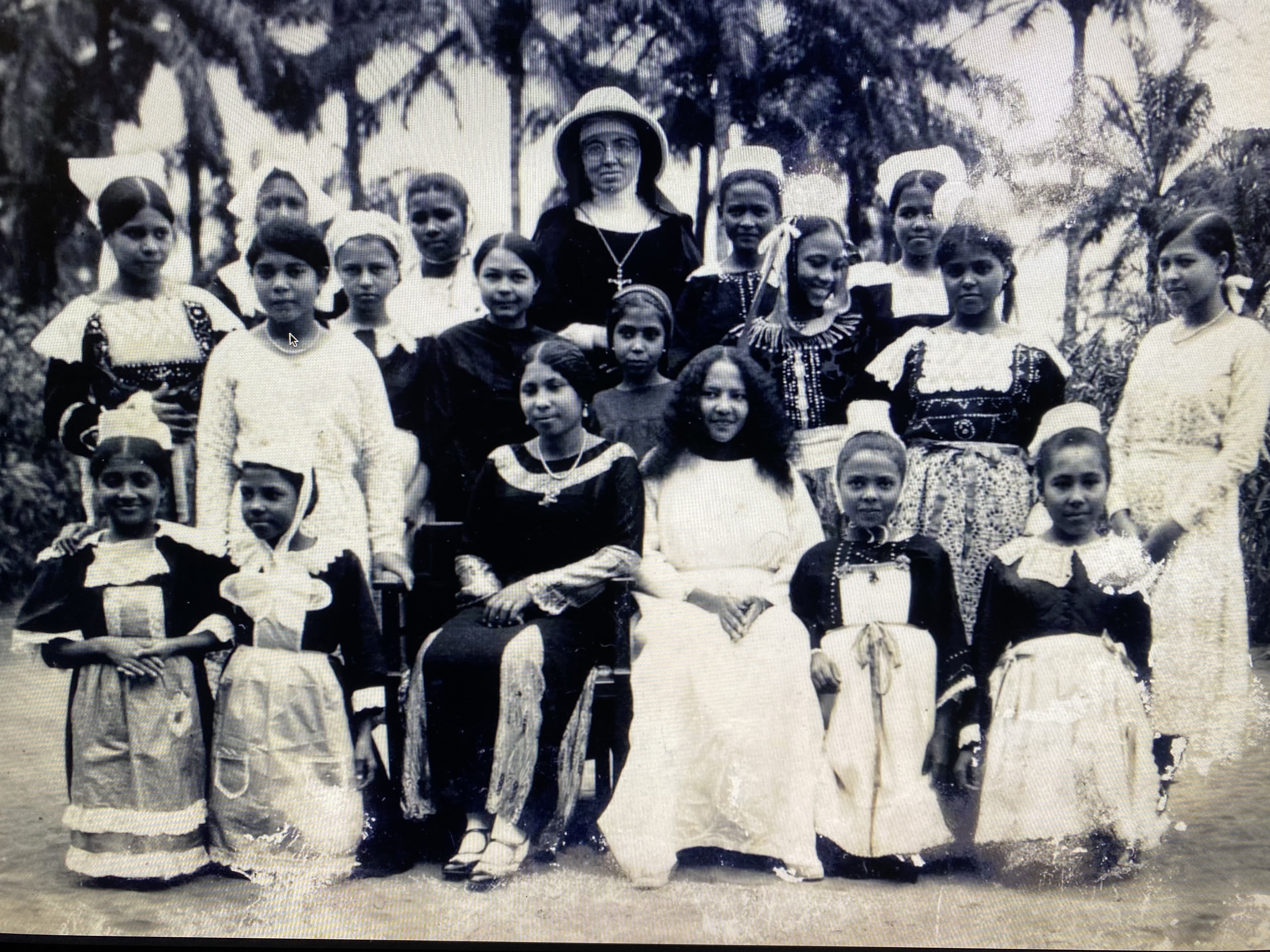
The story begins in French Equitorial Africa, in the remote village of Bessou on the Oubangui river where her motherJosephine Wouasimba was married at 13 years old to a 26 year old Frenchman with an iron will to succeed. His name was Pierre Gerbillat. Their daughter, Andrée, was born in 1921 and at the age of three years old she was dropped off by her father and his Belgian wife, Henriette Poussart, at an orphanage run by brutal Catholic nuns in Brazzaville. She was to stay there for the next 14 years. Along with other “metisse” mixed heritage girls she was instructed, along racist lines, to stay away from the black girls in the orphanage. In the eyes of the nuns she embodied the wickedness of her father and the primitive nature of her mother. It was living hell. They were slapped and whipped. The food was vile and rotten – she preferred to eat clay! They learned to recite their prayers but were never taught to read and write. There was little contact with the outside world but one day, as a flow prisoners in chains passed the orphanage gates chanting , “We want French citizenship, while being whipped by their captors, it opened up a sense of injustice.
At the age of 17, she and two others scaled the orphanage wall and fled. After being caught by the police Andrée made here case to the mayor Brazzaville offering up a detailed litany of the abuse they had suffered at the hands of the nuns. She was not to return and took up residence in the the district of Poto-Poto. The girl who’d lived on starvation rations loved the market.. the fruits , the vendors, the smell of cooking… it was “fabulous, fabulous, fabulous”. Sunday afternoon in the Grande Place was a feast for the ears and the eyes. Music, dancers, griots, vendors of all kinds. After a short stint with her father back in Bessou she returned to Brazzaville and earned her money on a sewing machine. It was hard. Exhausting ad pften humiliating. A chance encounter with a former inmate at the orphanage led to an enlightening trip up the Congo river and her meetingc a handsome Belgian of aristocratic birth. She was eager to LIVE… to live her life but she soon became painfully aware that she was repeating her mother’s humiliating history – that of the African concubine. Her first child was called Rita.
Ironically. her next relationship was with one Charles Greutz – a man from Alsace who had no love for the African race. WW2 was raging. During Greutz’s time away in South Africa it was Andrée who created an 800 acre plantation in the jungle. Quite a feat and testimony to her organisational and leadership skills which would come the fore in the future. Life was hard and it was the death of their son René from malaria that forced a radical shift in Andrée’s consciousness. René had been refused quinine because he was not white. He died while the son of a white neighbour survived. Her relationship with Greurz ended in divorce. Andée had already met the next love of her life – André Blouin a Frenchman man who seemed “to have escaped the colonial menatality”. They lived in Siguiri in north eastern Guinea on the river Niger for seven years where she gave birth to two children Patrick and Eve. It was during this time that Andrée became aware of the Reassemblent Democratique Africain (RDA) – a decolonialization, liberation movement led by the charismatic Sékou Touré. She had never heard anyone speak of rights for Africans as he did.
And so we enter Part II of the book. World War II is over and African’s who volunteered to assist their respective “mother” countries in the fight against fascism had returned home adding momentum to the independence movements. The Cold War between Russian “communism” and the “free world” had also kicked in and the western powers were desperate to ensure the newly independent countries in Africa and elswhere did not fall under the spell of Socialism and into the orbit of Kruschev’s Russia. The West sought – as they do today – to maintain a grip on the precious minerals and natural resources that Africa offered by any means necessary.
It was while browsing a small Guinean shop that Andée Blouin was mesmerised by a photo on the wall of Sékou Touré. At moment, she knew that her destiny was to join the African Liberation struggle. She thrived as an organizer for the Feminine Movement For African Solidarity whose charter outlined projects for women’s health, literacy, and their recognition as citizens of the emerging postcolonial nation. During 1960 Blouin joined the Democratic Republic of the Congo (DRC) campaign for independence alongside activists Pierre Mulele and Antoine Gizenga in the fight for independence.
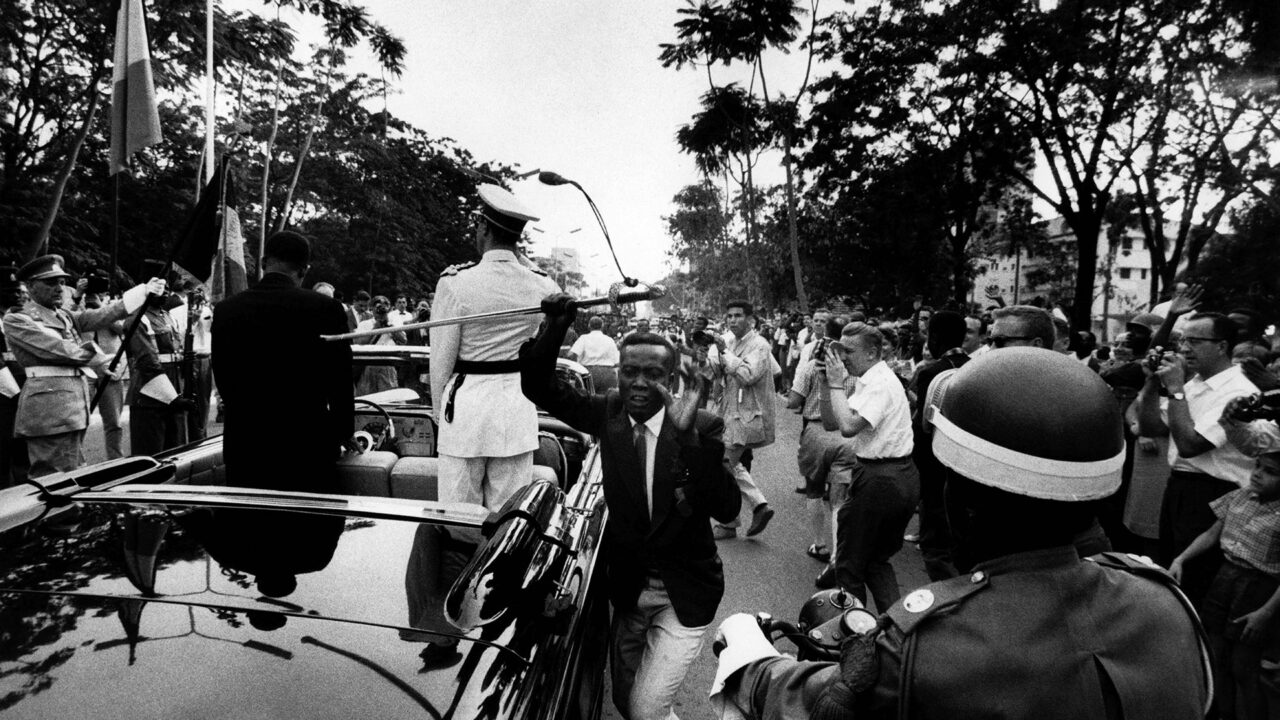
Andrée Blouin’s biography delivers the inside story to a most significant moment in global history. It was a campaign that led to Patrice Lumumba, a charismatic Pan Africanist and socialist becoming DRC’s first Prime Minister. On becoming PM, Lumumba appointed Blouin as his “chief of protocol” and speechwriter — demonstrating how important she had been to the fight and eventual winning of independence. But despite a frenzy of action and calls for unity his party and his allies were unable to halt an anti-communist plot that was hatched between the Belgians who didn’t want to leave, the CIA and the UN. Mobutu and the army stepped in. Lumumba was captured and murdered. All that remained of him was a gold capped tooth.

Isaïe Tasumbu Tawosa / Patrice Lumumba 1925 – 1961

Today, his name lives on, a martyr in the war against colonisation and the ongoing influence of outside forces. It’s a war that persists today. Hopefully, with the reprint of her book – My Country, Africa: The Autobiography Of The Black Pasionaria – and the praise heaped on Soundtrack To A Coup D’Etat we will see Andrée Blouin recognised as a groundbreaking pivotal political figure during the rise of the African liberation movements that flowered in the Sixties and Seventies. A luta continua.
My Country, Africa: Autobiography of the Black Pasionaria – Andrée Blouin (Verso’s Southern Questions) Paperback – 7 Jan. 2025
Note: “Pasionaria” refers to Isidora Dolores Ibarruri Gomez, a Spanish communist who fought on the side of the Republicans during the Spanish Civil War of 1936-1939.

 ancienttofuture.com