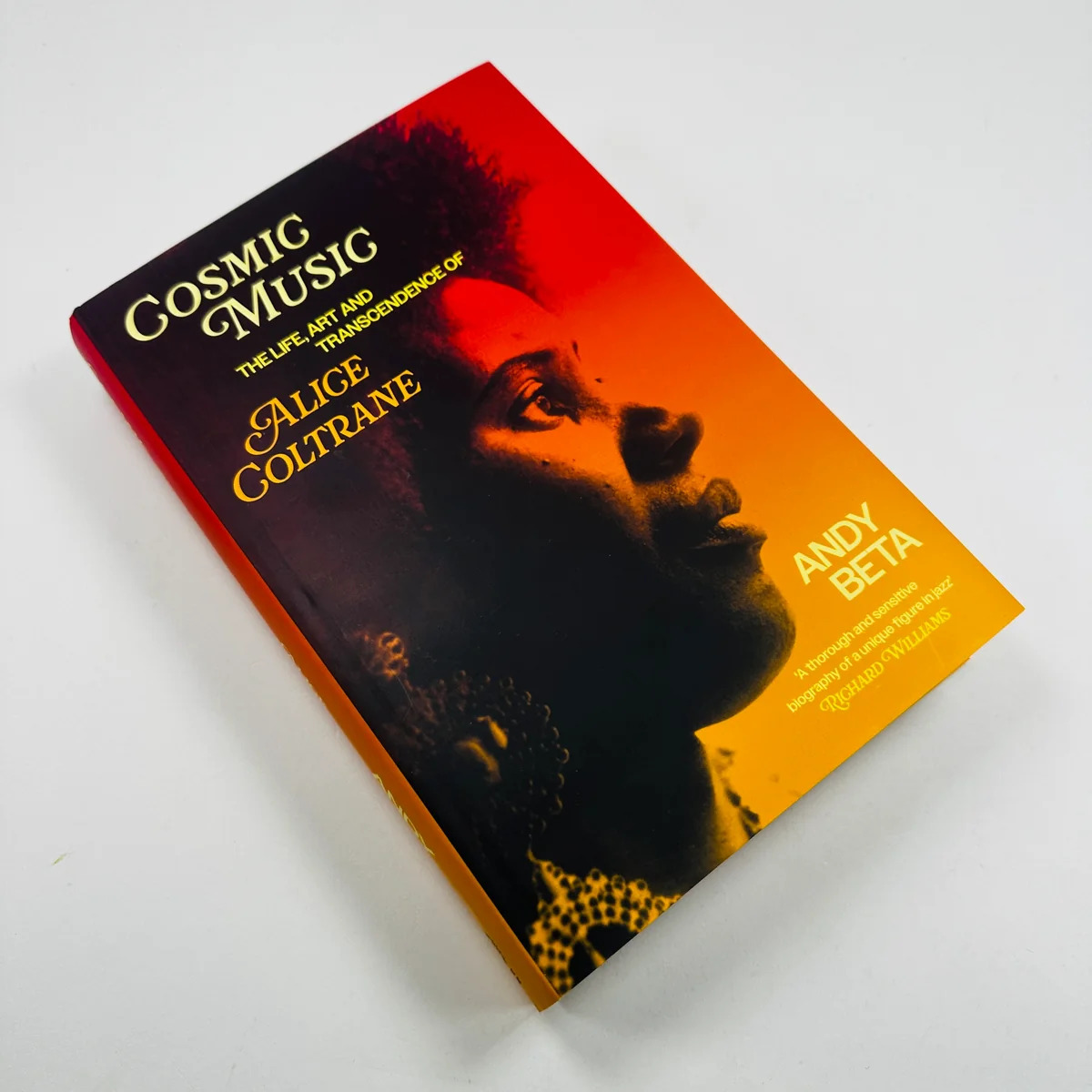
Top of the list is Andy Beta’s deep dive into the life of pianist and harpist Alice Coltrane – Turiyasangitananda
I was wandering along Lower Clapton Road in Hackney when I spotted a copy of Cosmic Music; the Life, Art and Transcendence of Alice Coltrane in the window of the Pages bookshop. Hot off the press I was immediately drawn the cover image, a warm profile shot of the woman who had given us albums like ‘A Monastic Trio’, ‘Journey In Satchidananda’, ‘Ptah The El Daoud’, ‘World Galaxy’, ‘Kirtan: Turiya Sings’, ‘World Spirituality Classics 1:The Ecstatic Music of Alice Coltrane – Turiyasangitananda’. As an accomplished pianist, Alice Coltrane shared the same spiritually charged musical vision as her saxophonist husband, John Coltrane. Tragically he died from liver cancer in 1967. He was only 40 years old. Alice was grief stricken and retreated into deep meditation to confront her inner devastation. It was the arrival at their home of a “Lyon & Healy style 11 double-action, hand gilded, concert grand crowned pedal harp with a resplendent gold finish” that John had ordered a gift a year earlier that signalled her re-emergence to the world and the arrival of her own musical and transcendental path. Basically, I needed to read this book.
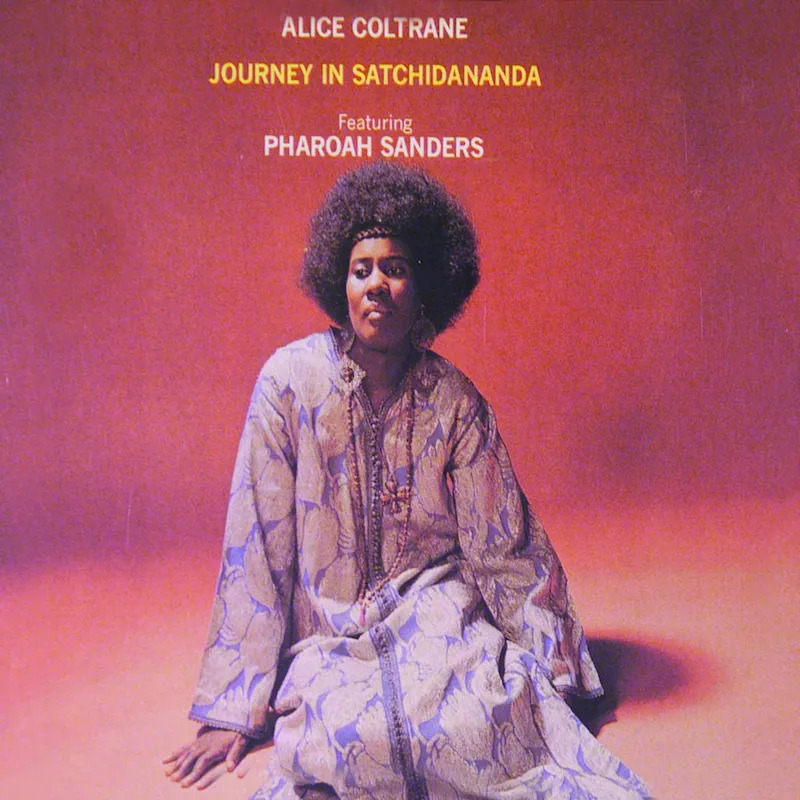
Back in the early seventies I was at art school in Cheltenham and the student union controlled bar was managed by my good friend Fraser, a devotee of improvised music and the blues. Between us, the selection of music that permeated that space was decidedly expansive, embracing classics like Charles Mingus – ‘Oh Yeah’, Howlin’ Wolf – ‘Moanin’ In The Moonlight’, Rahsaan Roland Kirk – ‘Volunteered Slavery’, John Coltrane – ‘Live At The Village Vanguard’, Curtis Mayfield ‘Live, Van Morrison – ‘Astral Weeks’ / ‘Veedon Fleece’, The Wailers -‘Catch A Fire’, Pharoah Sanders – ‘Tauhid’ / ‘Karma’ and Alice Coltrane’s ‘Journey In Satchidananda’. I have lived with that Alice Coltrane album for 50 years and it still sounds both fresh and uplifting. In this current era, it is rightfully regarded as a cornerstone of what is defined as “spiritual jazz”.
Andy Beta’s goal with Cosmic Music is he says, “clarity and understanding, to trace the biographical and musical events that transformed Alice McLeod into Swamini Turiyasangitananda”. Our journey begins in Detroit, Michigan. Alice McLeod was born on August 27th in 1937. She was the fifth of eight children who were crammed into their two room apartment in a neighbourhood called ‘Paradise Valley’. Her parents were working class, educated and church going. Music was an essential part of life in the McLeod household – piano and choir practice – and Alice’s biographer draws us into a complex inner city narrative as he paints an evocative picture of the thriving but potentially turbulent Motor City. We get a taste of the energy and shared experience in the neighbourhood where Alice’s experiences in the Mt Olive Baptist Church ran parallel to those of one of her close neighbours, Berry Gordy, who would later go on to form Motown records and introduce the world to the Sound Of Young America.
This 392 page book is built on 28 relatively short chapters making it an easy read. As I knew nothing of Alice McLeod’s life prior to her meeting John Coltrane, the opening chapters of this book are a fascinating read. As Berry Gordy says, “It was church three evenings a week and all day Sunday.” which makes Alice’s transition from the sanctified ecstatic world of the Baptist church to the shady post be bop world of jazz particularly fascinating – especially for a woman.
It was a surprise to discover that Alice was married prior to meeting John Coltrane. In 1949 she married Detroit based jazz singer Kenneth ‘Pancho’ Hagood and they immediately set off to Paris to join a host of big name jazz musicians who were tired of lack of respect and opportunity in the States. While Alice set her sights on learning from the troubled be bop genius Bud Powell, her husband sadly got busy reviving his smack habit. Paris also provided a fleeting live encounter with John Coltrane who had not long left Miles Davis’ classic quintet. Check out 22 year old Alice playing at the celebrated Le Blue Note here: https://www.facebook.com/reel/467202594091803
Upon discovering she was pregnant a somewhat shell-shocked Alice headed back to Detroit minus Hagood. However, within a couple of weeks of arriving back in the city she got her first real taste of the music of John Coltrane who was playing at the Minor Key on the West Side of Detroit with a band that included McCoy Tyner, Steve Davis and Elvin Jones. According to Alice: “It was something I recognised, like this is something from him or going through him… an energy, a power that I could identify with.”
Beta has done his homework and traces Alice’s arrival in New York City set against the emerging ‘avant garde’ and Loft scene. It’s in NYC, following the departure of female pianist Terry Pollard from the band of vibraphonist Terry Gibbs, that Alice lands a spot in the band. A joint booking at Birdland of the Terry Gibbs’ band and the John Coltrane Quartet was to provide that moment for Alice and John – two apparently quiet and shy individuals – to finally come together. A whirlwind romance ensued.
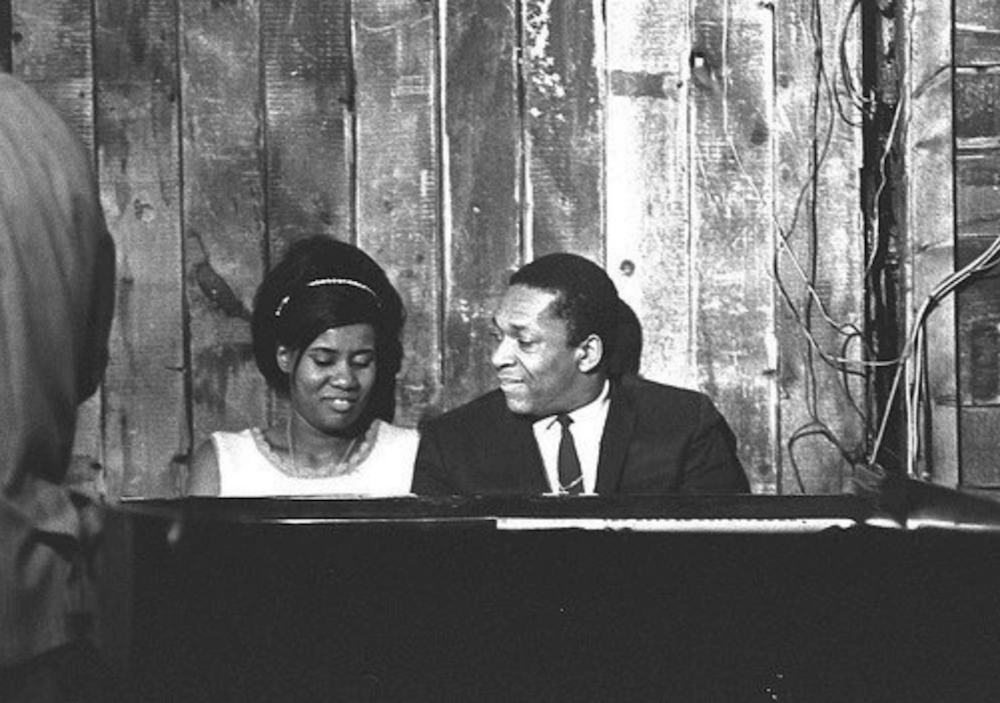
The book succinctly defines Coltrane’s rapid evolution at that time. He was signed to Impulse and following on from ‘Africa Brass’ his trajectory was assured. His live sets with the quartet along with the addition of Eric Dolphy were becoming legendary. Meanwhile, Alice who was used to hustling and scuffling as a jobbing musician to support her child was enjoying married life (even if they weren’t married at that time). At the tail end of 1963 – following release of ‘A Love Supreme’ – the couple conceived their first child and planned their move to Dix Hills on Long Island.
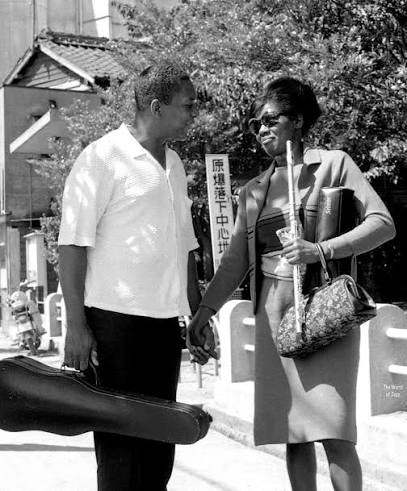
By the mid Sixties, Martin Luther King Jr.’s nonviolent integration strategy was giving way to the more militant, self-reliant calls of the Black Power movement. Malcolm X had been assassinated and the Black Panther Party was on the rise. The sounds of resistance were embodied in the so-called “new thing” in jazz… freedom in all forms. Coltrane was going deeper and deeper and Beta maintains that Trane experimented with LSD. Both he and Alice would meditate together and that would set Alice on a path that would take her into transcendental states and out of body encounters. It was only a matter of time before Alice would step in to replace McCoy Tyner who was embarking on his own remarkable musical journey. As they set off to tour Japan the band now featured Alice, Pharoah Sanders, Rashied Ali and Jimmy Garrison. It was a profound experience.
While many Coltrane fans fled in the face of the intensity of his music, which gathered momentum from sources as diverse as numerology, eastern religions, Ifa and Stravinsky, others gathered to experience a sense of the divine. I recall my own father regularly returning from record shopping in Manchester with second hand, near-mint copies of Coltrane’s Impulse recordings that the previous buyer or reviewer couldn’t handle. He was happy man!
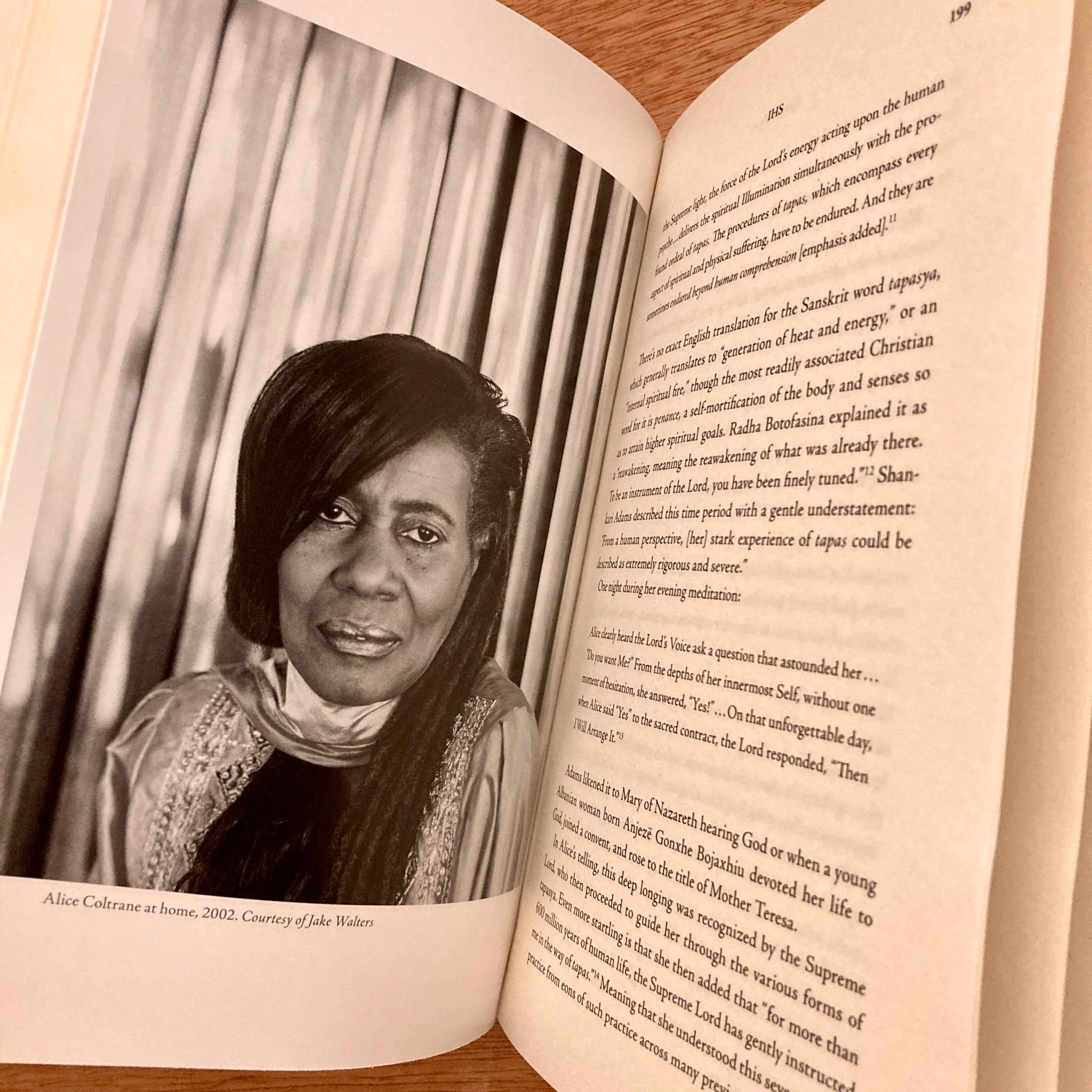
What’s clear from this biography is that Alice Coltrane, like her husband, was no ordinary person. She was looking after four children when her husband died. Her grief was off the chart and must have been scary to anyone looking in from the outside. This is where we get to meet the deeper side of Alice Coltrane and witness the emergence of Alice Coltrane as an artist in her own right. Beta goes in deep. He explores the backdrop and details of her own recordings as well as the controversial work she did on the unreleased recordings that Trane left behind. His words ensured that I dug out the albums I owned and also listened to one’s that I’d missed but are now accessible via streaming. Beta pulls no punches by including the brutal reviews that she suffered at the hands of the critics. All in all, it’s a wild ride and you as the listener have to make your own mind about the music in light of the context and what’s coming out of your speakers or headphones.
There is some wild stuff in this book and Alice – now a Swamini renamed Turiyasangitananda – is immersed in the esoteric practices handed down to her by eminent Hindu gurus like Swami Sachidananda and Sai Baba. Following her visits to India she initiated the Shanti Anantam Ashram community in California. During each step along the way she is clearly in search of a sound and her ongoing passion for electronic keyboards, Wurlitzers and synthesisers remains undimmed. I definitely have a soft spot for the ‘Turiya Sings’ album but if you wish to get true reflection of her Vedantic Center community we can thank David Byrne for releasing the album World Spirituality Classics: The Ecstatic Music of Alice Coltrane – Turiyasangitananda.
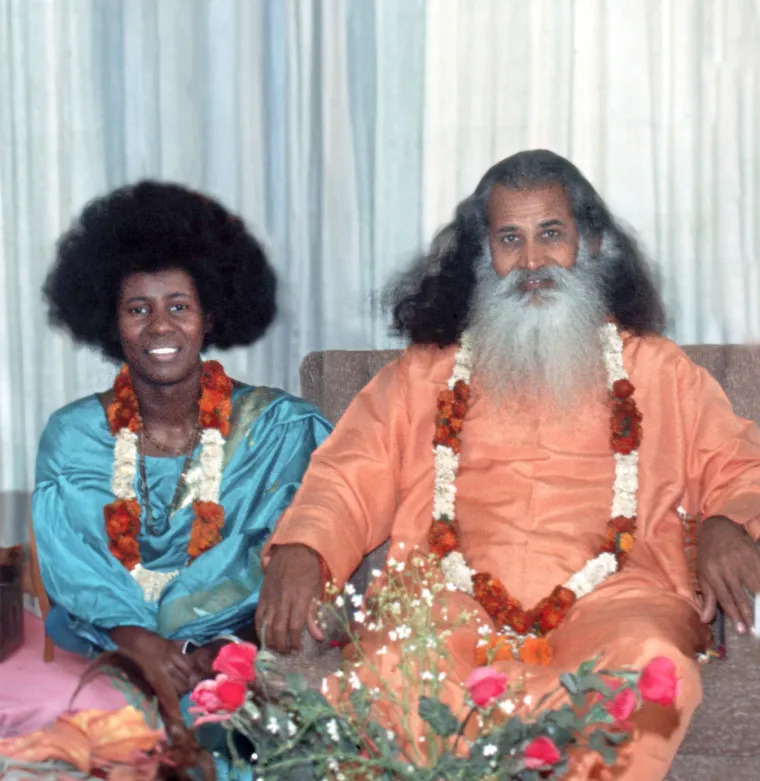
This book by Andy Beta is next level. It is littered with extraordinary stories and observations. It traces a remarkable spiritual and mind blowing journey which, as it evolves, has nothing to do with the world of jazz. It simply enters other realms of consciousness.
Swamini Turiyasangitananda left her body 12 January 2007 age 69 years.
Cosmic Music; the Life Art and Trancendence of Alice Coltrane is published by White Rabbit RRP £30. The softback is oiy July 2027. Order it for your public library.
NOTE: I still marvel at the decision of Kate Wharton – who was an aid to the Archbishop Of Canterbury and a Straight No Chaser contributor – to head off to California to live in the Shanti Anantam Ashram. Remarkably, she ended up accompanying Alice/Turiya on a trip to India. Check Issue #23 of Straight No Chaser magazine (Winter 2002)