The Award Winning British Library publication which was released in a hardback format to coincide with widely acclaimed exhibition is now available as a paperback!!
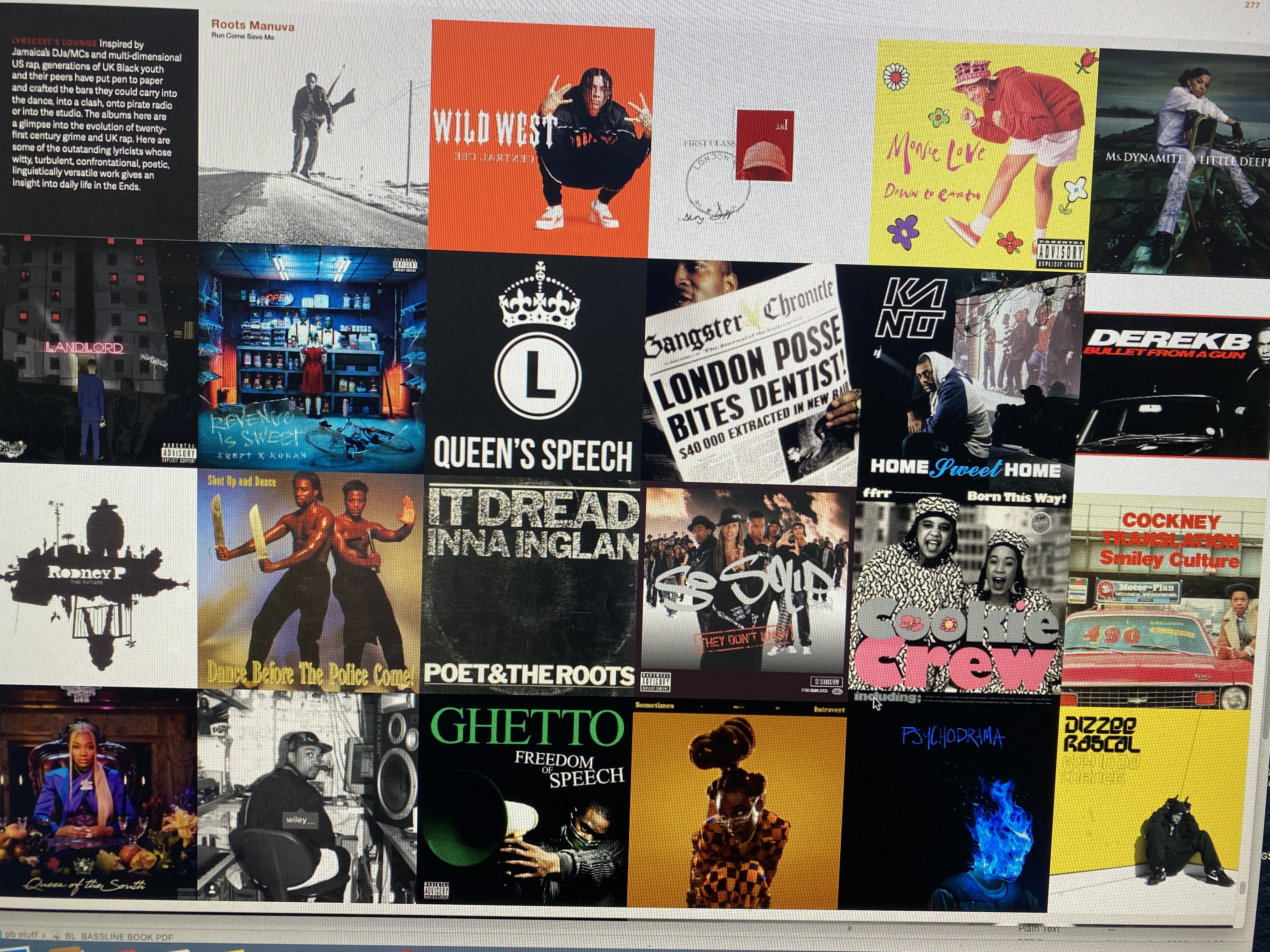
What’s in this book? Edited by myself, in consultation with the exhibition curators, Aleema Gray and Mykael Riley, the book gathers together over 40 contributors to take us on a journey from the court of Henry VIII to the digital warriors who reside in the ends of 21 century East London and beyond.
A new cover!!
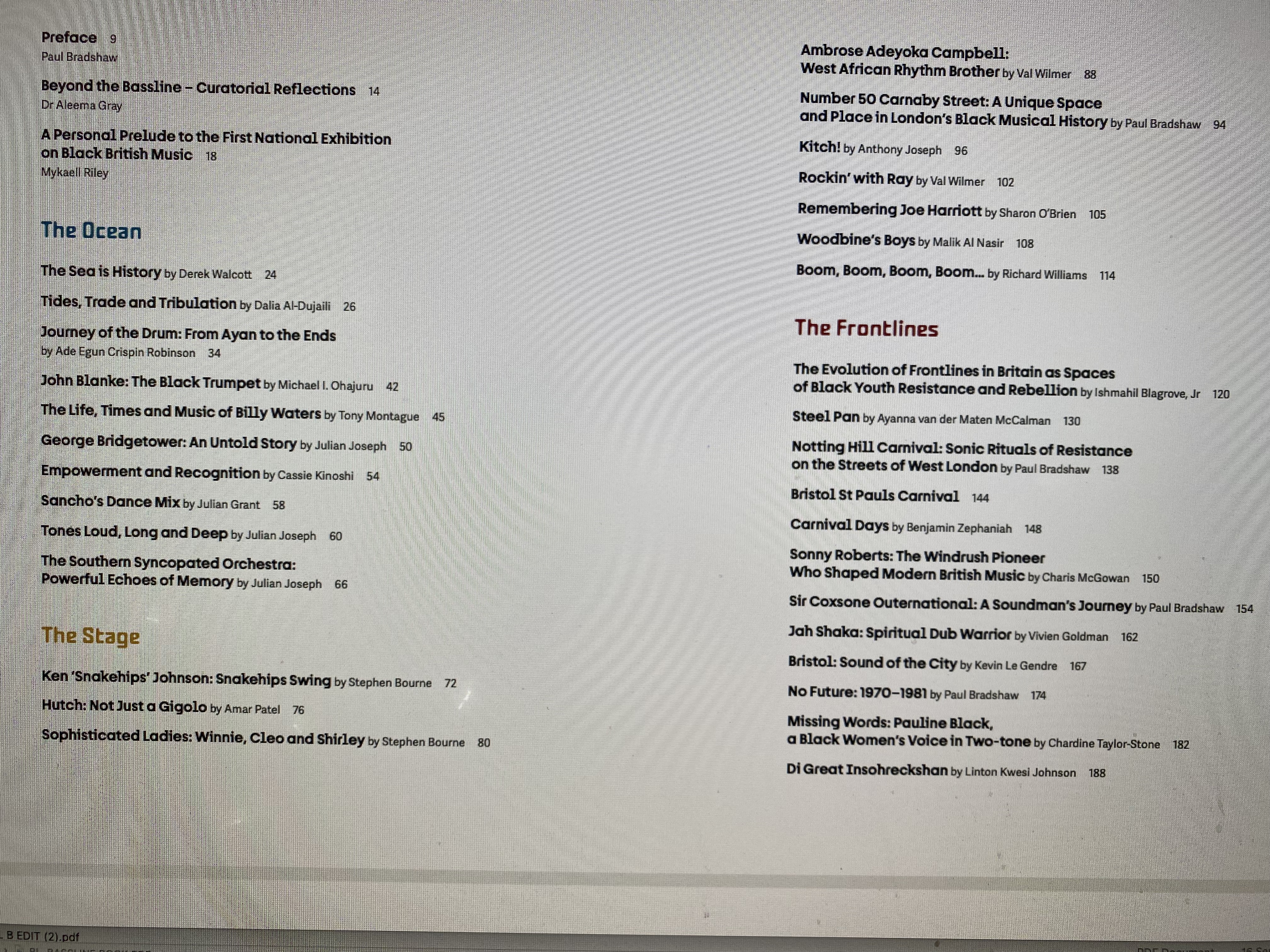
Scan the Contents pages below to get the vibe… Seen?
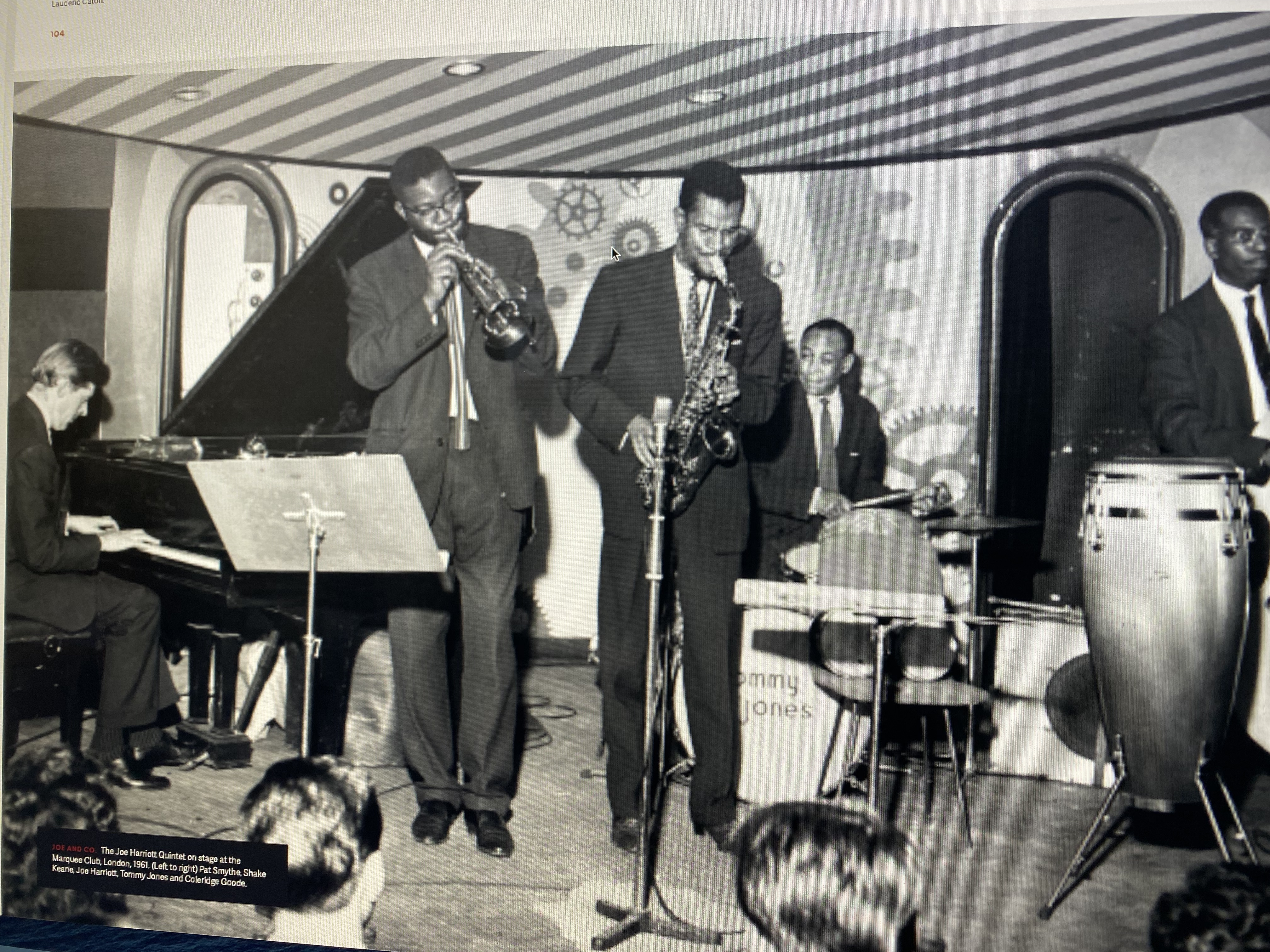
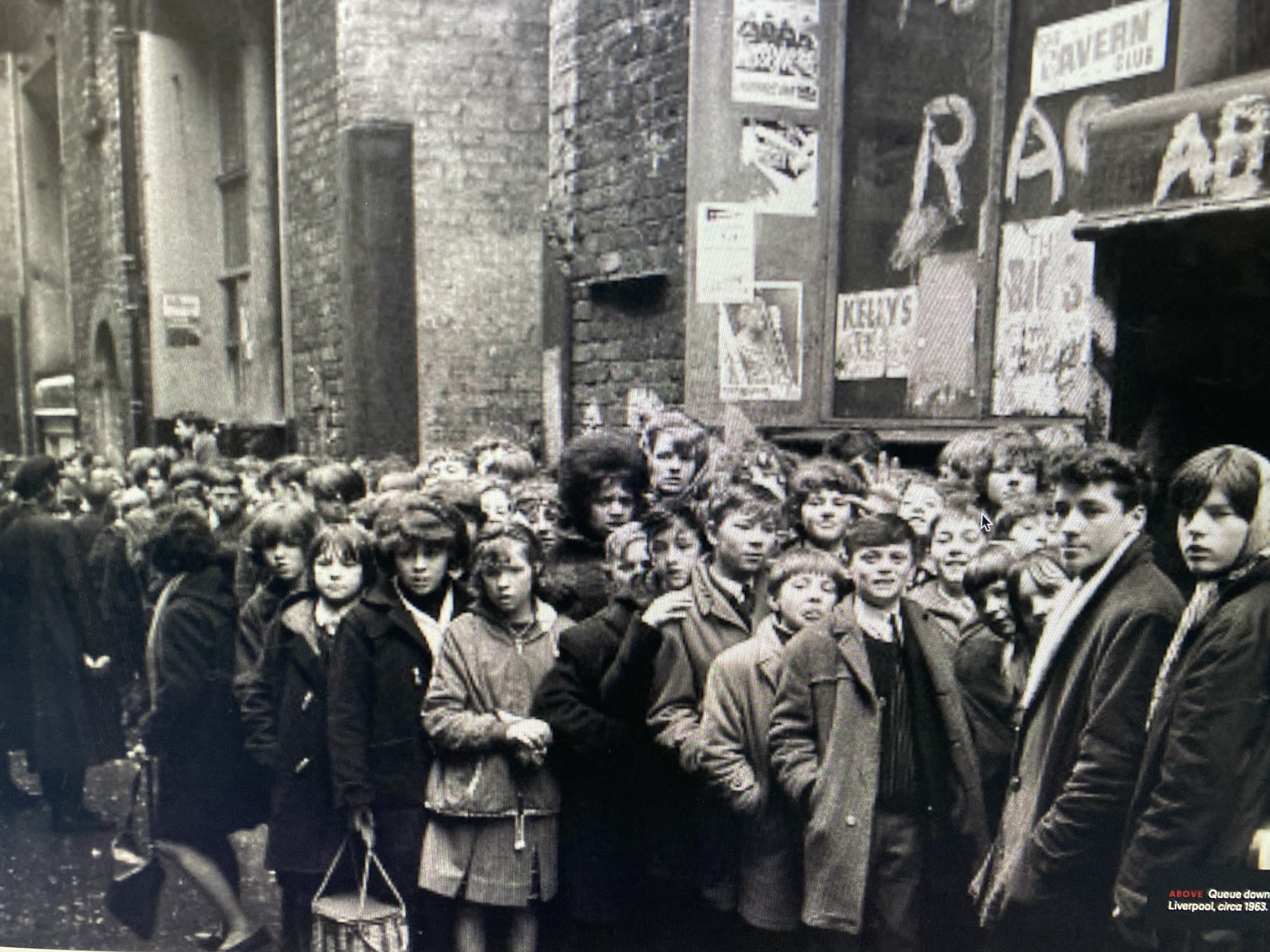
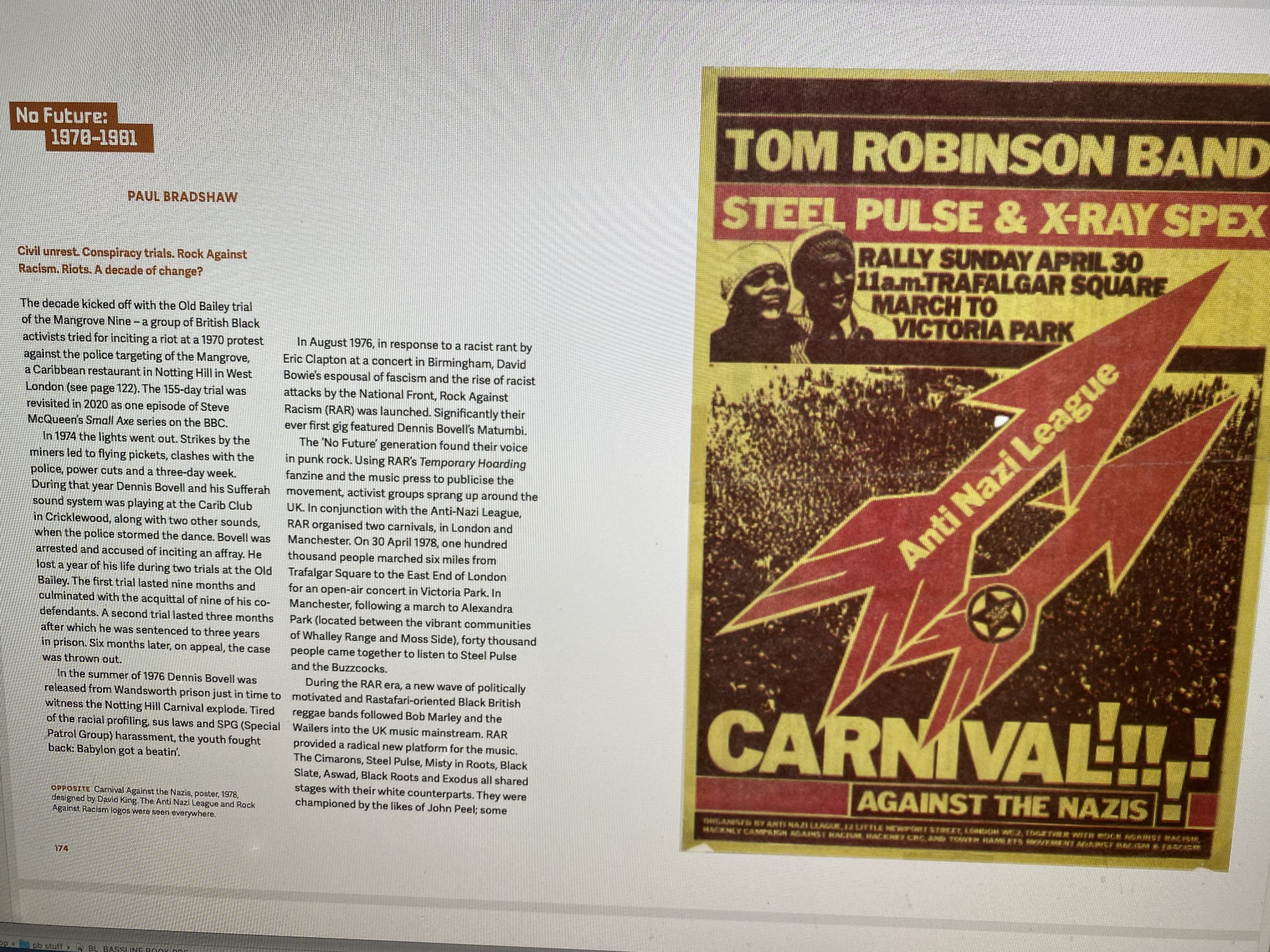
An assortment of influences: Digging in my archiveThe original 50’s/60s Jazz Warriors : Joe & Shake pave the way for the now generation.Saturday afternoon at the Cavern , Liverpool 1963Rock Against Racism: A Movement we need to revive?Jah Shaka RIP: Spiritual Dub WarriorUK Garage… Raving!UK Stylee…Dub Poets, Hip Hop, Ragga, Junglists, Grime,…Youth Bizniz.. The future…
There’s a whole heap of words in this book… check the contents above for the contributors and what they cover … it reveals a host of wonderful and knowledgeable peeps … too many to name here. It’s definitely a book I’m proud of… big respek to all those who contributed… and the team of Maria Ranauro, Steve Russell and Roland Hall.
If your looking for a present to give someone for Xmas or New Years… Beyond The Bassline might just fit the bill.
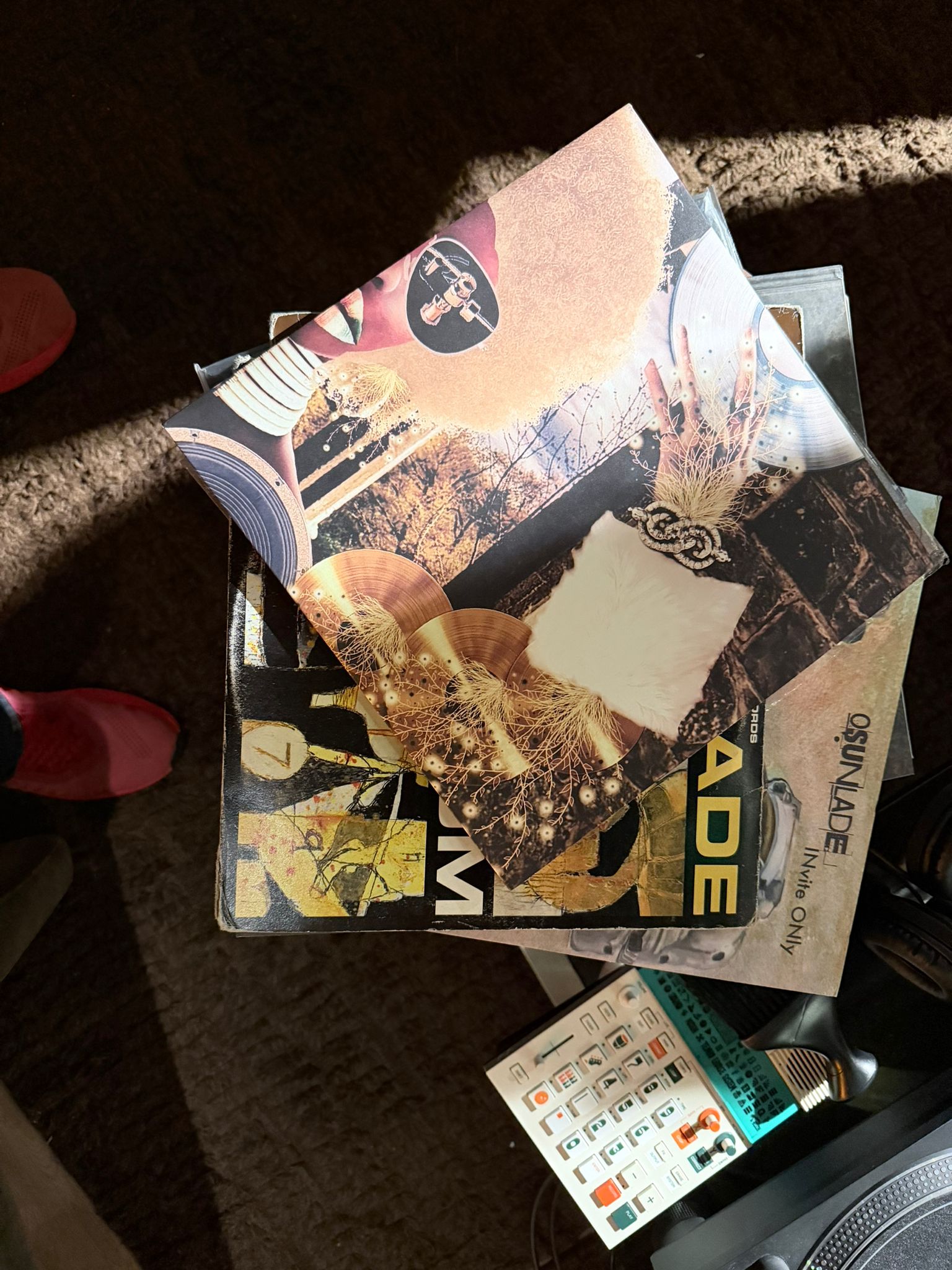
Live ‘n Direct from Mason & Fifth – Osunlade meets Straight No Chaser’s Paul Bradshaw… We go DEEPER! Tune in!
A couple a weeks ago, at Mason & Fifth in Westbourne Park, we were treated to a revealing ‘n’ wonderful un-filtered in conversation session with Osunlade The St Louis, Missouri, born DJ / Producer went deep into his childhood – summers in Chicago… musical discovery and sexuality, his A&R groundings in LA and his transition into NYC’s house community. He revealed in some detail his immersion into the spiritual practices and ancient belief / divination system of Ifa/Santeria and simultaneously projected a radical ‘in the moment’ perspective on life that reflects his nomadic lifestyle. For Osunlade it’s all about legacy and the music. He is a restless soul. Respect to those who turned out on a chilly Monday night… & to those who didn’t… you missed out.
Osunlade
That said, you lucky people, here is a recording of that precious and illuminating conversation done by the Mason & Fifths’ sound engineer. As someone who has done a whole heap of interviews over the years, this recording is most definitely up there! Herein lies a borderless approach to music, creativity and livity.
‘Nuff said, “Tune in… it kicks in at 4: 40 with ‘Blackman’ “
You can browse and buy Osunlade / Yoruba Soul releases /artists at
Investigative journalist, Paul Lashmar, delivers a searing, in depth exposé of how a single British family built – and preserved – its fortune through centuries of slavery, land ownership, and imperial exploitation.
Prior to sitting down at the Mac to write this piece I scanned the comments about Drax Of Drax Hall: How One British Family Got Rich (and Stayed Rich) from Sugar and Slavery on Amazon and tucked way at the bottom was a one line missive from someone called Hermione who declared the book to be “Utter bilge. Based on the author’s personal animus against Richard Drax.” Clearly this was someone who has not read the book. Basically, should you pick and read this book you will need to wade through 352 pages of Drax family history –16 generations – plus their political and economic impact on Dorset and Barbadian life in order to arrive at the few pages in the book that are dedicated to life and career of Richard Plunkett-Ernle-Erle-Drax, the former Conservative MP for South Dorset and current head of the Charborough Estate.
As someone who has read the book, I can honestly say – in defence of the author – that he has been incredibly fair handed and extremely diligent when it comes to his research in laying out before us the history of this family of landed gentry and former slave owners, Our journey commences in 1627 when James Drax boards a ship and heads for the West Indies. Just for reference, he embarked on his journey during the reign of King Charles1 and just 15 years before the English Civil war broke out. Landing on the island of Barbados, Colonel James Drax was set to make his fortune despite the odds. He had arrived on the island with £300 – a substantial sum of money (look it up) – which was invested in sugar and rum. According to one visitor to the island, Drax “lived like a king” and as the estate expanded so they they moved beyond indentured labour and into dark exploitation of chattel slavery. This is a the story that bonds Barbados to Britain over centuries and offers up a complex history which gives us a genuine insight into the huge amount of wealth that was generated by the labour, trauma, torture and death of tens of thousands of enslaved people.
I have long known Paul Lashmar through our shared passion for music from around the world – ancient to future. Both he and I had long wondered about that brick wall on the A31 which seems to go on forever ever as one drives toward Dorchester and the West. It’s a formidable piece of bricklaying that seals the Charborough Estate off from the prying eyes of the general public. However, it was the the rise of the Black Lives Matter movement globally that finally turned the spotlight on Richad Drax MP and his 15,000 acres estate plus his ancestors’ role in slavery in Barbados and Jamaica. In 2025, Richard Drax remains the inherited owner the Drax Plantation in Barbados . It is described locally as the “killing fields” as there is no marked graveyard on a plantation which would have contributed to and witnessed the deaths of potentially 30,000 enslaved African people.
Around 5,000 slaves are thought to have been shipped annually from Gold Coast (Ghana) to the New World. Photo Credit: Aeon.co
In 2025 it is estimated that just 50 acres of the 617 acre Drax plantation would currently be worth around £3 million. The current Barbadian Government recently withdrew an offer to buy part of the plantation switching to the more radical view that the whole estate should be handed over to the nation as part of a reparations settlement.
To go back to the beginning, Lashmar illuminates how James Drax revolutionised sugar production on the island of Barbados and correspondingly introduced slavery into his production process. This was the age of piracy and colonial wars between European nations and the author paints a detailed picture of how the economy of sugar and slavery evolved and what the lifestyle of these colonisers entailed. As for the slaves who arrived from West Africa, life was brutal and short. The harsh conditions of sugar production on the Drax estate combined with yellow fever and malaria, poor diet, and physical violence led to a life expectancy sometimes as low as five years after arrival.
“It is deeply regrettable, but no one can be held responsible today for what happened hundreds of years ago.”
Richard Plunkett-Ernle-Erle-Drax
While some archaeological findings from Barbados suggest a birth-to-death expectancy of around 29 years (with low infant mortality), this conflicts with historical accounts showing high infant death and shorter overall lives, often placing the average around 20 years or even just a few years after landing.
James Drax returned to England around 1658 and died there in 1662, having achieved his goal of becoming a wealthy landed magnate at home while continuing to profit from his Barbados estates. It was down to his son, Henry, who, in preparing to depart for England in 1679, drew up detailed instructions for his overseer on how to manage the plantation and its enslaved people in his absence. This established a pattern of absentee ownership, with management handled by attorneys, estate managers, and overseers on the island while the wealth was channeled back to the family’s estates in Dorset, England.
Drax Hall – Charborough
Sugar and cotton fuelled Britain’s industrial revolution. For the Drax family it apparently provided around a quarter of their annual income profit, the rest coming from their estates. Basically, if in 1823 the Drax family made £3000 from their plantation in Barbados that amount today would be £250,000 – a quarter of a million! History is complex and nuanced and my own class-driven preoccupations were more than satiated by Lashmar’s willingness to build a picture of how, over centuries, one family still controls a hugely disproportionate amount of land in this country. Building on Guy Shrubsole’s book Who Owns England? Lashmar homes in on the county of Dorset to reveal how, in great detail, these people maintained their control – politically and economically – while the English working class, laboured and lived in comparative squalor. The devil is indeed in the detail.
The landed gentry controlled the courts. They had representatives in Parliament. The working people didn’t even have a vote. The local elections were a rowdy and often drunken events. The 1865 Wareham election which was won by the scoundrel and “squire from the north”, John Drax, is vividly depicted in this book.
Basically, those who owned the land also owned (and still own) the properties on it. In turn they owned the people in them. The name “tied cottages” says it all. The dwellings were squalid and cold. Life was hard for the landed farm labourer but Lashmar’s research shows the land owners continued to rake in the money. In the case of Drax family it was a combination of profit from slavery combined with the exploitation of local labour on their farm land. It might be said that it was the same, albeit distant hand that wielded the whip on a Barbados plantation which cast a shadow over the judgement of six men from the Dorset village of Tolpuddle.
The Tolpuddle Martyrs
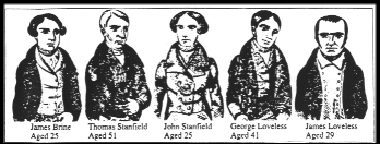
The landed gentry were seriously spooked by the French revolution and by the English Captain Swing Riots. In 1834 six farm workers from Tolpuddle – a mere 8 miles from Charborough – were arrested. They were charged with having taken “an illegal oath”. But their real crime in the eyes of the landed establishment was to have formed a trade union to protest about their meagre pay of six shillings a week – the equivalent of 30p (or roughly £50 when adjusted for inflation to today’s money) and the third wage cut in as many years. They were found guilty and sentenced to seven years of deportation to Australia. After this brutal sentence was pronounced, the English working class rose up in support of the Tolpuddle Martyrs. A massive demonstration marched through London and an 800,000-strong petition was delivered to Parliament protesting about their sentence. It was this movement that led to the sentences being revoked and gave rise to the formation of the Trade Union movement.
I was delighted to see that Paul Lashmar was invited to join in and give a reading from his book at that annual gathering in Tolpuddle that celebrates the victory of the the Martyrs over the establishment. One can’t help but feel his book should be made mandatory reading for the Reform, Tory, Labour voting residents of Dorset. It should at least be in every local and school library in both Dorset and its neighbouring counties.
A farm labourer’s dwelling in Morden (on the Charborough Estate)
As the book moves into the 20th century Lashmar gives credit where credit is due to generations of Draxes who have played a role in the higher echelons of the military including the current incumbent, Richard Drax who has followed the well worn path of the upper classes going from prep school to Harrow and eventually onto Sandhurst and into the Coldstream Guards where he rose to the rank of captain. During his seven years in the army he served in numerous countries and did three tours of Northern Ireland during the Troubles.
After a 17 year long career in broadcasting – nine of which were spent as a local reporter for regional TV / BBC South Today. Drax opted to follow his ancestors into Parliament as a Tory MP. On the advice of Prime Minister David Camerom he dropped his full name of Richard Plunkett-Ernle-Erle-Drax and stood as Richard Drax. He was elected to parliament in 2010 standing as an ardent anti-immigration Brexiteer (while accepting millions of pounds in EU Common Agricultural subsidies). He was acknowledged as the wealthiest land-owning member of the House Of Commons and his voting record shows that Drax generally voted against climate change mitigation, equality and rights legislation, same sex marriage and gay rights. He opposed tax rises for higher earners, windfall taxes and a bankers levy. Though he had a sizeable majority of 7000+ in his constituency his nine year stint in Parliament was ended when Reform split the Tory vote and allowed a Labour MP to nick the seat. Drax simply returned to Charborough to focus on the more traditional activities of farming, hunting, shooting, fishing and horse riding.
Richard Plunkett-Ernle-Erle-Drax / Drax Plantation – Barbados
Lashmar estimated the 2020 value of Drax / Charborough estate at around £150,000,000. It’s undoubtedly much more today and therefore no surprise that Richard Plunkett-Ernle-Erle-Drax maintains a very low profile. He keeps well schtrum about the issues of slavery and reparations. He is against reparations and is on the record as saying, “It is deeply regrettable, but no one can be held responsible today for what happened hundreds of years ago.” That said, the fraught, controversial issues surrounding the Drax Plantation in Barbados are far from over, especially if Prime Minister Mia Mottley QC has anything to do with it. Stay tuned.
To conclude, as one Observer reviewer succinctly put it: “Lashmar’s book is a necessary, damning reminder that the ghosts of empire are not distant – they are living, breathing and, in some cases, still collecting rent.’
Drax Of Drax Hall: How One British Family Got Rich (and Stayed Rich) from Sugar and Slavery is published by Pluto Press (Hdbk) and is available at all good bookshops and online.
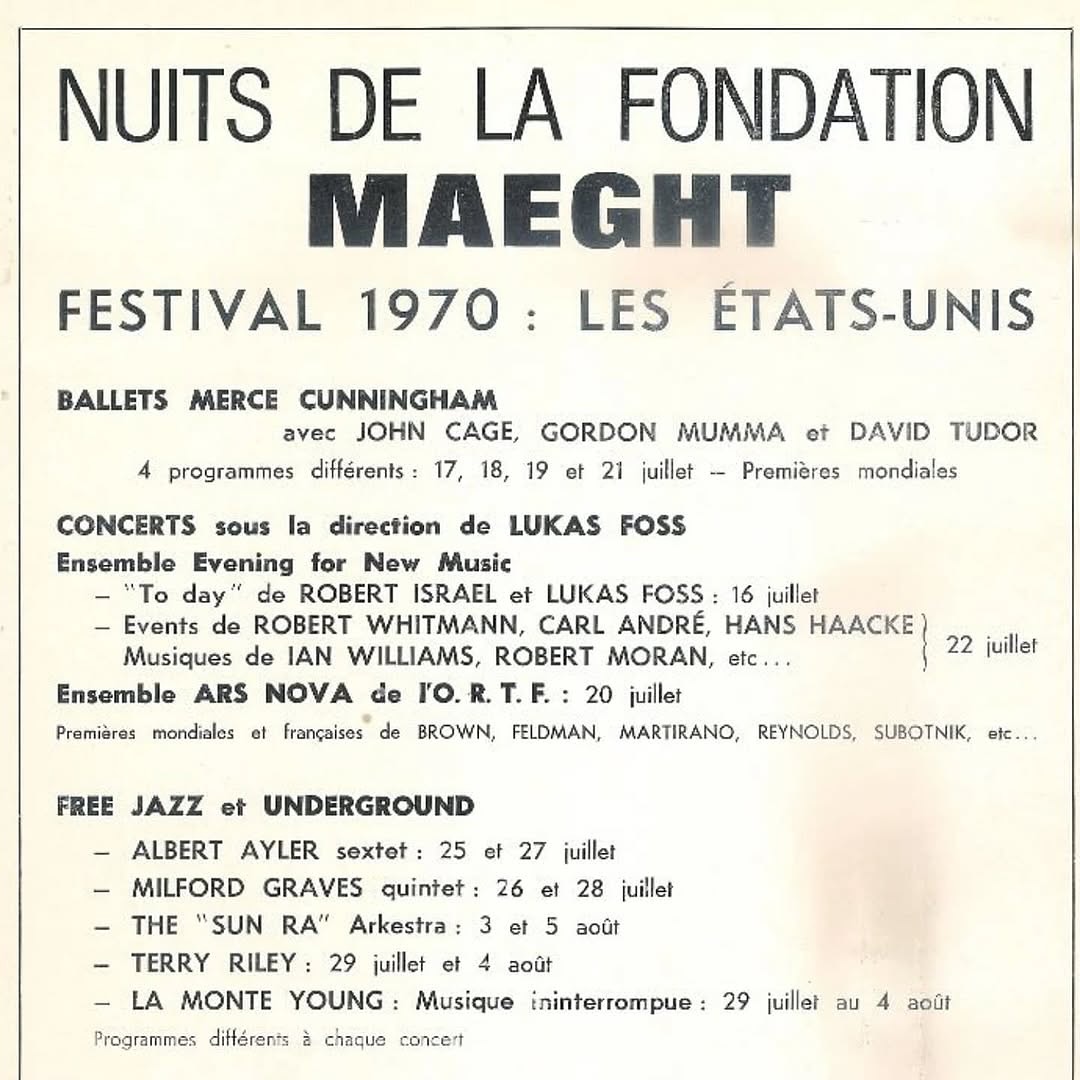
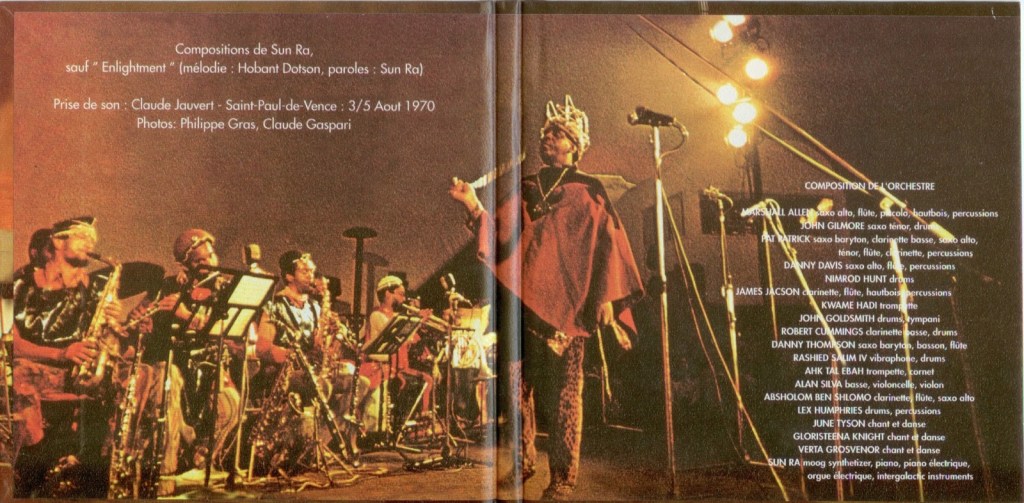
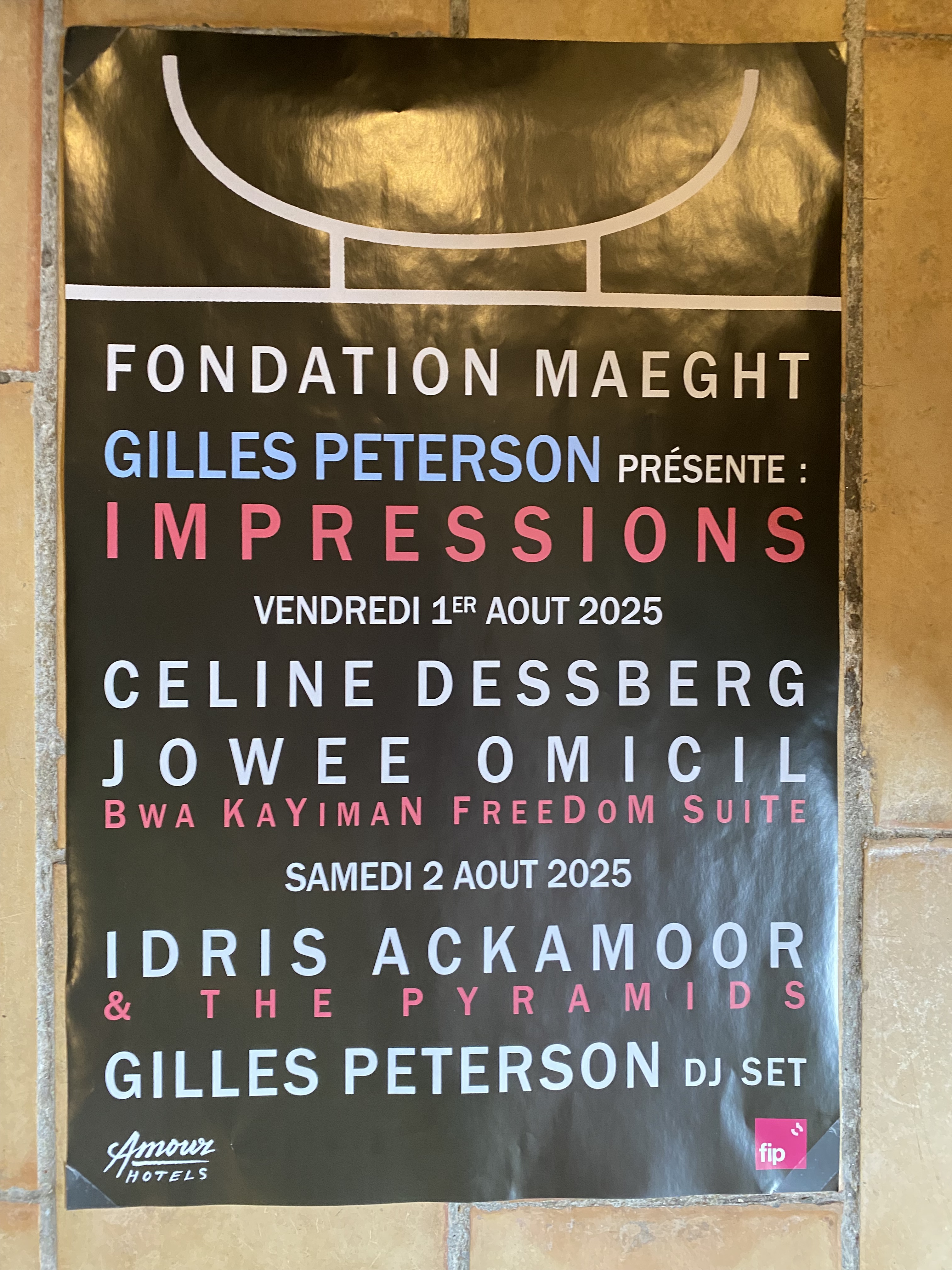
In July 1970 La Fondation Maeght in the South of France hosted a series of concerts, curated by Daniel Caux, a French musicologist, essayist, journalist, music critic, and radio producer. These extraordinary events showcased both electronic / minimalist music and avante garde free jazz alongside with the bold visual and conceptual art of the time. Fifty five years on – almost to the day – La Fondation Maeght , along with DJ/broadcaster/producer Gilles Peterson, has just hosted ‘Impressions’, their second 2 day event at the gallery, and it was a blast. It revived the groundbreaking musical spirit of the now legendary 1970 concerts – Sun Ra, Albert Ayler, Terry Riley, Cecil Taylor, Milford Graves, LaMonte Young, Terry Riley, Pierre Boulez, John Cage and Marian Zazeela – and introduced a new generation of listeners and art lovers to the works of Celine Dessberg, Joweee Omicil and Idris Ackamoor and The Pyramids.
As we ascend the hill that takes us to La Fondation Maeght, the commune of St Paul-De-Vence comes into view. One the oldest medieval towns on the French Riviera it had long held a serious rep as a centre for contemporary art. It has been home to both Henri Matisse and James Baldwin. Of all the galleries in St Paul-De-Vence it’s La Fondation Maeght that carries the swing. Upon arriving in the gardens surrounding the modernist buildings which host their impressive collection of artworks, you are hit by a mind blowing array of sculpture that shares the space with the towering pines. A carpet of sound is laid down by an army of crickets.
It’s Friday evening and the people have yet to arrive. We pass through the gallery entrance and exit onto the courtyard which is home to Giacometti’s The Walking Man sculptures. Everywhere is a gentle sound track of running water and it’s immediately obvious that three of the biggest sculptors of the 20th century – Georges Braque, Joan Miró and Alberto Giacometti – had a significant free hand in helping to create La Fondation Maeght.
Memories of the previous year’s event flooded back. Together with his good friend, the late Emmanuel Delavenne of Hotel Amour in Nice, Gilles Peterson had convinced La Fondation’s executive director, Nicolas Gitton, and the Maeght family that an event celebrating 1970’s Nuits De La Fondation Maeght could be of significant value both culturally and musically. If the event was deemed successful, an annual happening might have the potential to introduce La Fondation Maeght and its work to a new generation of art and music lovers both at home and globally.
The very first incarnation of what has become ‘Impressions’ arrived in August 2024 and showcased an eclectic, outernational line up that embraced AACM / Chicago based Kahil El Zabar’s Ethnic Heritage Ensemble; Mongolian jazz singer / songwriter Erkhembayar Enkhjargal aka Enji; Austrian alto, soprano, tenor saxophonist and composer Muriel Grossmann and finally, award winning Paris born / Syrian flautist/vocalist/composer, Naïssam Jalal Naïssam and her Rhythms of Resistance.
As I was there to select the music between sets I can testify as to the power of the music that was delivered over two spectacular nights. The line up for 2025 looked equally promising.
GP & Paul Brad SNC
Paris based Céline Dessberg proved an intriguing presence. A singer songwriter whose music echoes her roots on the steppes of Mongolia took the stage with acoustic guitar and the somewhat dramatic yatga – a large, traditional Mongolian zither-harp hybrid. As the rays of the setting sun slid through the trees she plied her audience with short evocative songs, sung in French. Though the lyrics were over this listener’s head, a good french speaking friend was smitten with her words. She was on the edge of tears. There’s a profound poetic nostalgia at work Céline’s songs that you can explore further on the EP – ‘Hödöö’- and the single ‘Selenge’ b/w ‘Chintamani’.
Céline Dessberg
Jowee Omicil is a Haitian-Canadian jazz musician and his set was destined to take us into another dimension. The posters for ‘Impressions’ session promised a Freedom Suite based on a pivotal moment in Haitian history – the Bwa Kayiman / Bois Caïman – a secret gathering of slaves born in Saint-Domingue or Africa which took place in 1791. It was led by the legendary Vodou priest Boukman and the ceremony sparked the slave revolts which led to freedom and independence from France in 1804 . Across centuries, the Bwa Kayiman has remained a controversial symbol of Haitian resistance and unity. Based on his current album – Spiritual Healing: Bwa Kayiman Freedom Suite – the ensemble filed onstage with Jowee blowing frantically into a long horn, a vaksin, that holds a central place in Haiti’s RaRa ensembles.
As the sun retreated and night time descended so the music shifted and morphed in intensity. Underpinned by two trap drummers and traditional tanbou drums, Jowee Omicil channeled the spirits. He offered us a dynamic range of sound born of an impressive familiarity with his instruments which included alto and tenor saxes, bass clarinet, flute, pocket trumpet and an electronic device which replicated the sound of the accordion, evoking the sound of acoustic Haitian twoubadou music. It was down to their impressive pianist, Jonathon Jurion, to take flight from the propulsive rhythms of the drummers and open up space for his impressive solos. As a possessed Jowee stalked along the wall in front of the stage he regaled the audience seeking their vocal participation. Both impressionistic and intense, the shape shifting music of Jowee Omicil won the ensemble a well deserved encore that took them right up to curfew.
Saturday night a La Fondatiom Maeght offered something different. Headlining the night was Idris Ackamoor and the Pyramids who had flown in from the West Coast in the States and their set was to be followed by a “late night” two hour DJ set by Gilles Peterson.
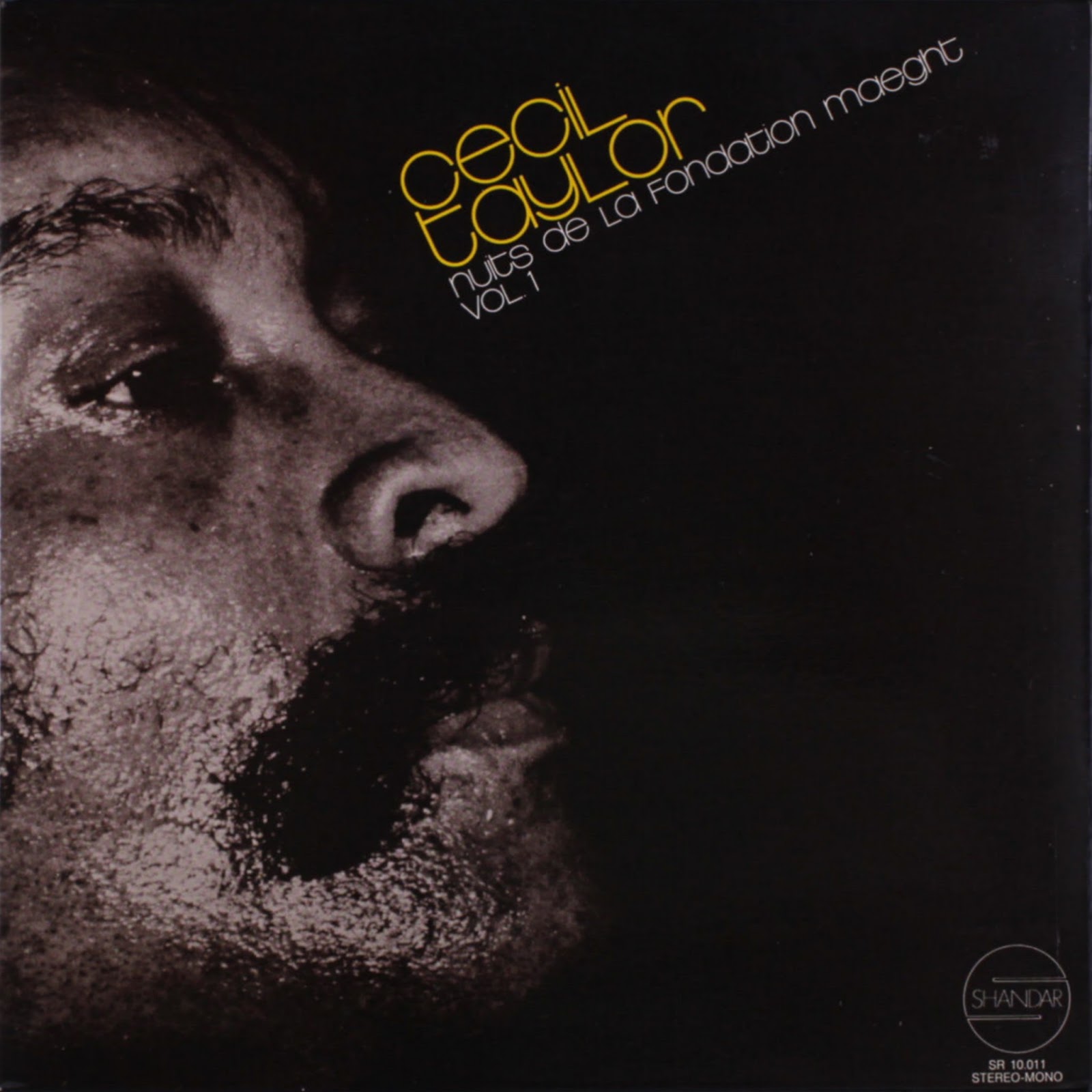
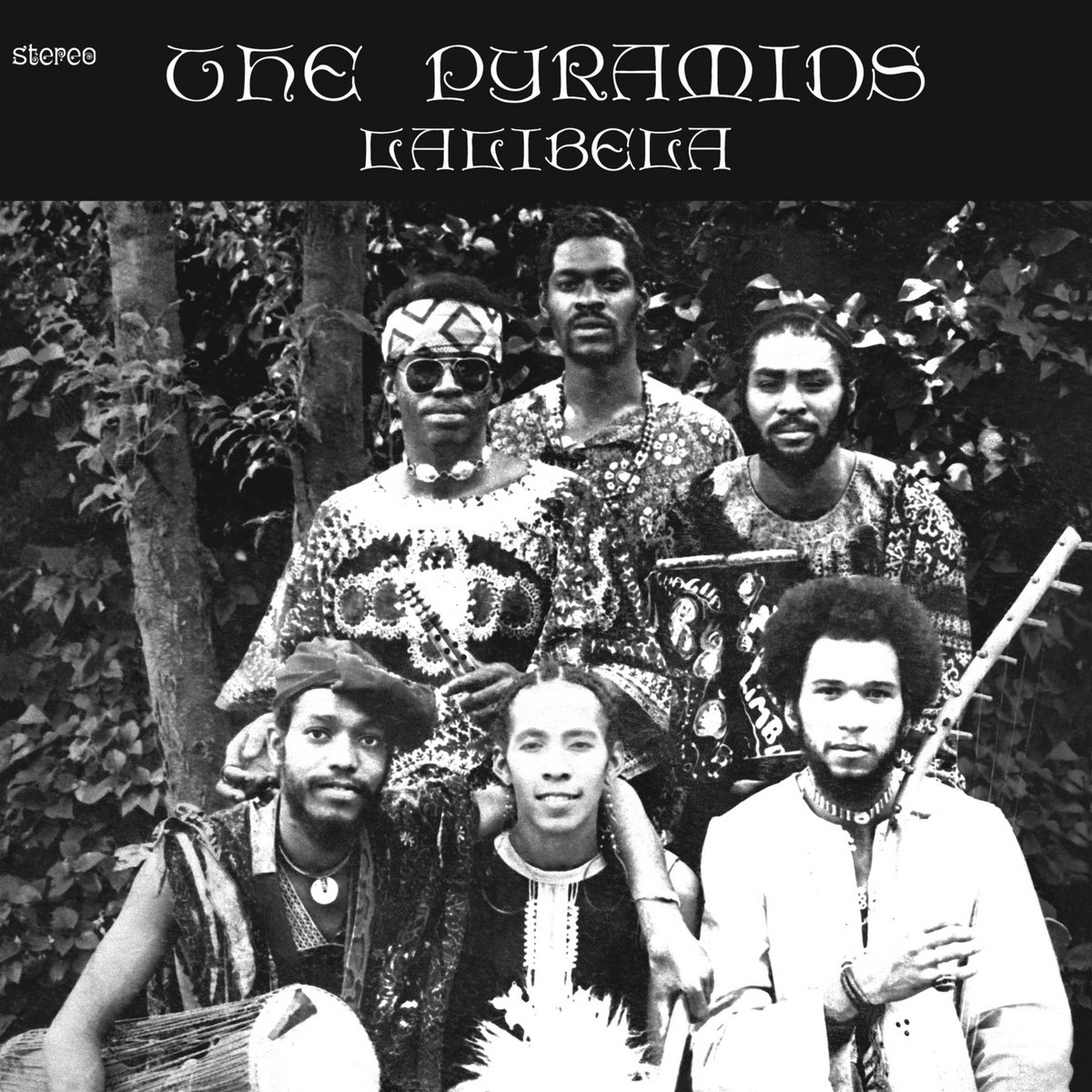
The choice of Idris Ackamoor and the Pyramids was, in part, inspired by their connection to pianist / composer Cecil Taylor who performed at Nuits de la Fondation Maeght on July 29, 1969. As students at Antioch College, a private liberal arts college in Yellow Springs, Ohio, the founding members of the Pyramids –Idris Ackamoor, Margaux Simmons and Kimanthi Asante – all grew as musicians under the tutelage of the Visiting Professor of Music and Artist In Residence, Cecil Taylor. The pianist had arrived at Antioch in 1971 with a whole entourage that included Jimmy Lyons (alto) , Andrew Cyrille (drums), James Thompson (poet), Sam Rivers / Kalaparusha Maurice McIntyre (tenor) and Clifford Sykes (percussion) and Ken Miller (dancer). For Idris: “working with Cecil was like being on another planet” and for Margaux: “It was all music from there on in.”
According to Idris, there was one class that Cecil taught which was to significantly shape his life along with Margaux and Kimathi’s: “He also taught a class on black music history, the history of black music, which involved not only jazz, American jazz, but it involved history, and a lot of history of Africa, going back a long time ago. He brought in a multitude of historical information that we had not received elsewhere, we learned a lot about ancient traditions.”
Cecil Taylor Nuits De La Fondation Maeght Vol. 1 1972
Upon finishing the course at Antioch, Idris and Margaux decided to form a band and go to Europe and Africa. Through Antioch International’s ‘Your Own Plans’ project they secured round the world tickets and a $300 monthly stipend. Kimathi came on board and the trio’s first stop was Paris which was overflowing with jazz musicians. After an intensive six week course of learning French at the University of Besanson they decided to name their group the Pyramids. Following an encounter with beat poet Ted Joans in Amsterdam they set off for Africa, first landing in Tangiers. From there they travelled to Dakar and then onto Ghana where they took up a residency. From Accra they ventured north to Bolgatanga and Tamale to explore the traditional music – which they professionally recorded. In Bolgatanga they encountered the animist / juju beliefs of the Fra Fra and In the Islamic kingdom of Dagbom they played with the drummers of the royal court. Their stop off in Uganda was cut short when Idi Amin took over and one soldier declared, “Cut your beard or we will cut your neck!”
During their two month stay in Kenya they travelled from village to village studying the music, singing, dancing and food of the Masai and the Kikuyu. Idris maintains it was a miraculous time and it paved the way for the next journey. While Kamathi headed for Egypt and the pyramids, Idris and Margaux traveled to Ethiopia in search of Lalibela and the rock churches that Cecil Taylor had told them about.
“Lalibela was like, wow. That was the place to be, ” says Idris. We had a guide take us to the rock churches, we must have visited three or four of the churches. But the most unbelievable [part] of all of this is that the priests were making all this amazing music inside the churches, and they allowed me to tape their ceremonies. It was unbelievable.”
From there it was back to the USA. Now working as the Pyramids they recorded three, seminal, self produced albums – ‘Lalibela’, ‘King Of Kings’, ‘Birth /Speed/Merging’ – which were built around the deep experiences of traveling and living across the African continent. Over the decades these LPs ensured the cult status of an ensemble that was sadly short-lived. Basically, the Pyramids were ahead of their time leading each member to go their separate ways. However, in 2010 through Strut records the Pyramids were reborn.
After years in the trenches dealing with activism, theatre and music in the San Francisco area, Idris was ready to deliver a 21st century version of the Pyramids with a vivid, wide screen, musical vision that embraced their own roots from the Cecil Taylor workshops to the drummers of the Dagbom to the funk of Sly Stone and Funkadelic to the militancy of Fela Kuti to the Afrofuturism of Sun Ra. They have cut four albums for Strut – ‘We Are All Africans’, ‘ An Angel Fell’, ‘Shaman’, Afrofuturist Dreams’ – which has put them back on the global stage including the La Fondation Maeght.
Onstage at La Fondation the Pyramids are a joy to behold. The flamboyant Idris is accompanied by Margaux on flutes, the magical Sandy Pointdexter on violin and the long, tall, Bay Area don Bobby Cobb on guitar and they are joined by their excellent Italian rhythm section of Giole Pagliaccia on drums, Lorenzo Gasperoni on percussion and Ricardo Di Vinci on bass. The 700 strong audience are clearly in the presence of four life loving elders, possessed with both deep musical knowledge and skills born of the African diaspora.
The timeless, call and response, afrobeat driven ‘We are All Africans Now’ launches the set and sets the vibe with its tuff drum ‘n’ conga rhythms, Idris’ raw tenor solo has shades of Pharaoh and offers us a stratospheric violin solo. The follow up ‘Erotictress’ is not a composition we’re familiar with and it segues into ‘Thank You God’ with its uplifting invocation on alto and violin. It’s immediately recognisable, as is the sweet singalong chorus of.. “Jahova, Elegba, Allah, Jah … Oh Thank You Go, Oh Thank You… ” which is delivered by Margaux and Sandy. This is spiritual jazz that goes straight to the dancing feet and offers echoes of Leon Thomas, Trane and Ra. It’s a song for the healing of the planet and ‘Moonlight and Sunshine’, taken from Idris’ recent collaboration with choreographer /activist Rhodessa Jones and actor Danny Glover, continues the theme and elevates the spirit. There’s no mistaking the rootical funky intro of ‘Rhapsody In Berlin’ which grooves hard and has this listener watching guitarist Bobby Cobb closely. There are rippling conga riffs and hard horn solos. ”Now ‘ urges us to “live our lives NOW”… to look into ourselves to stop the hate and stop the wars. It’s a poignant message over a circular violin riff and bass line that heads straight to the heart of a troubled world from Gaza to Ukraine and beyond. ‘Shaman’ is the perfect culmination of a set that had those gathered, on their feet and cutting some steps on the gravel. Building on Margaux’s flute and Idris’ spoken word intro ‘Shaman’ gives an opportunity for all to shine. Solid Afro-Funk drums with crisp rhythm guitar, an ethereal flute, soaring violin, bubbling bass and congas… a sax solo that rises up in the trees and a night sky that is lit by a dramatic half moon.
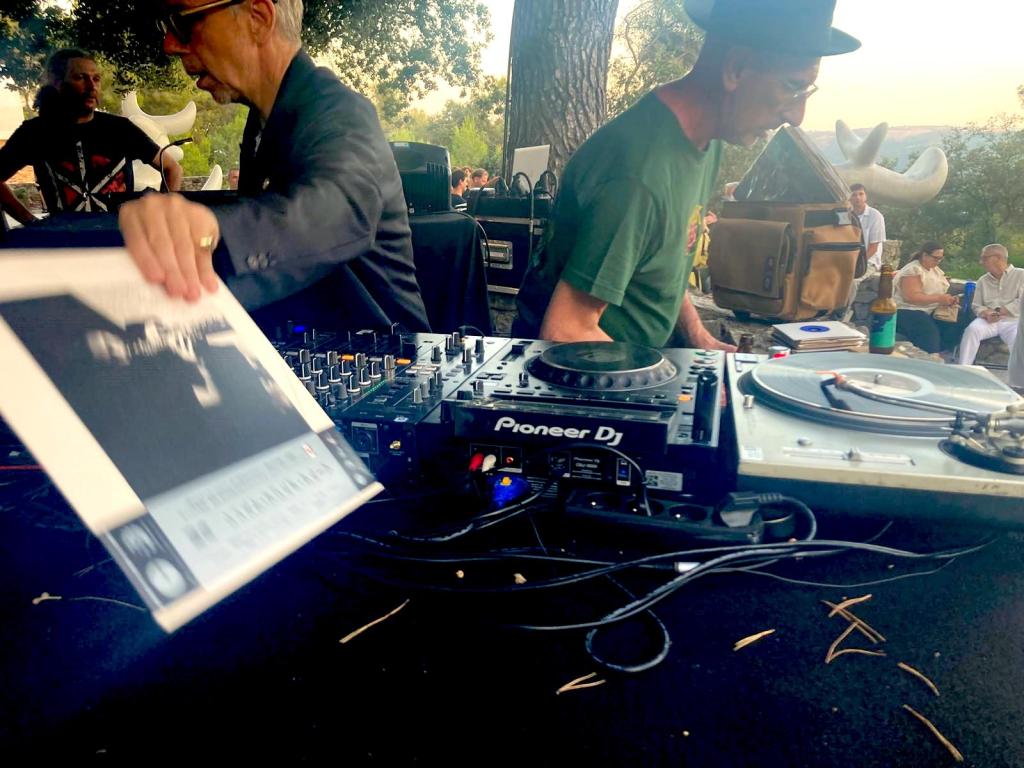
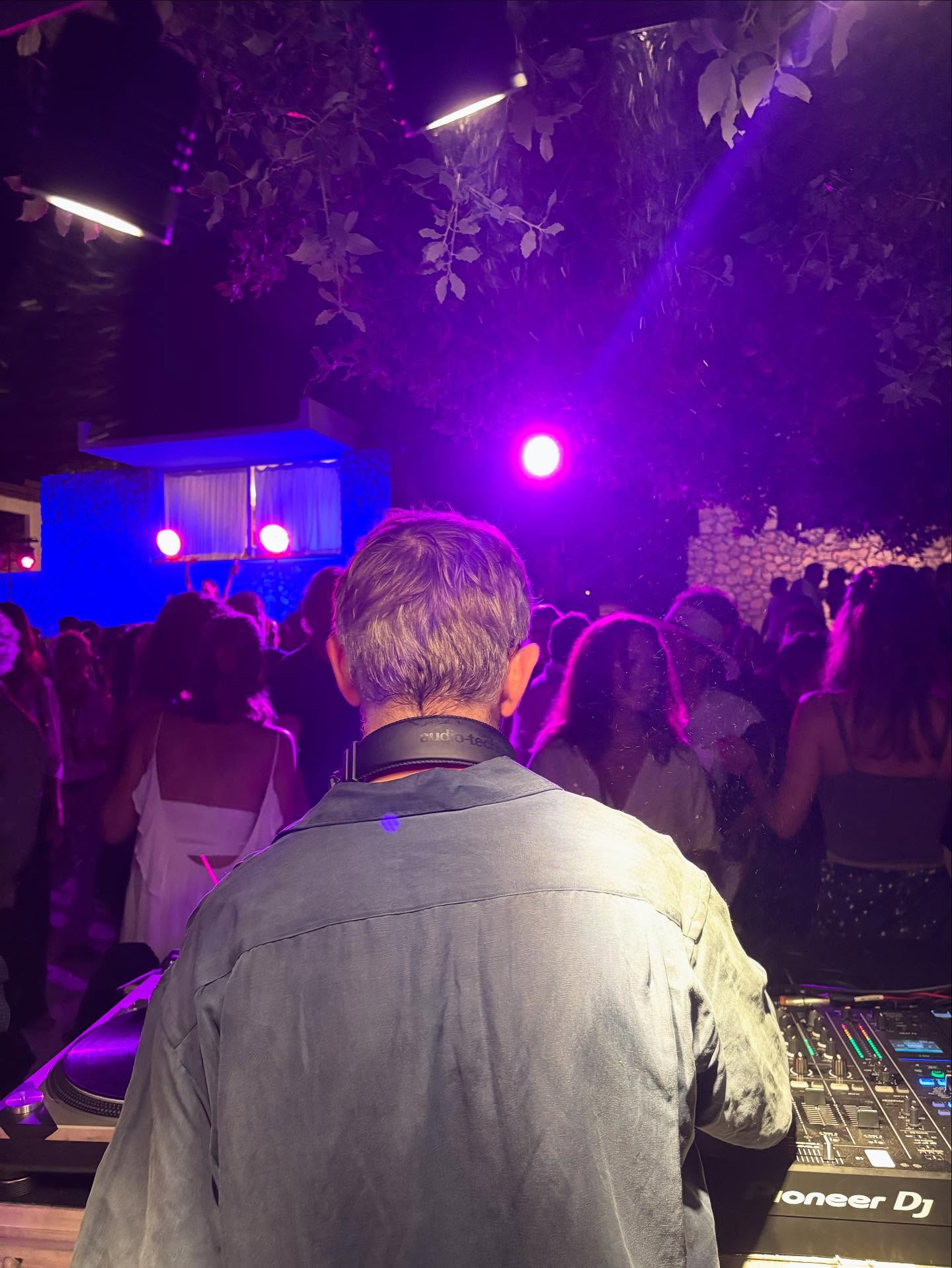
Gilles Peterson at work! Rocking Universally!!
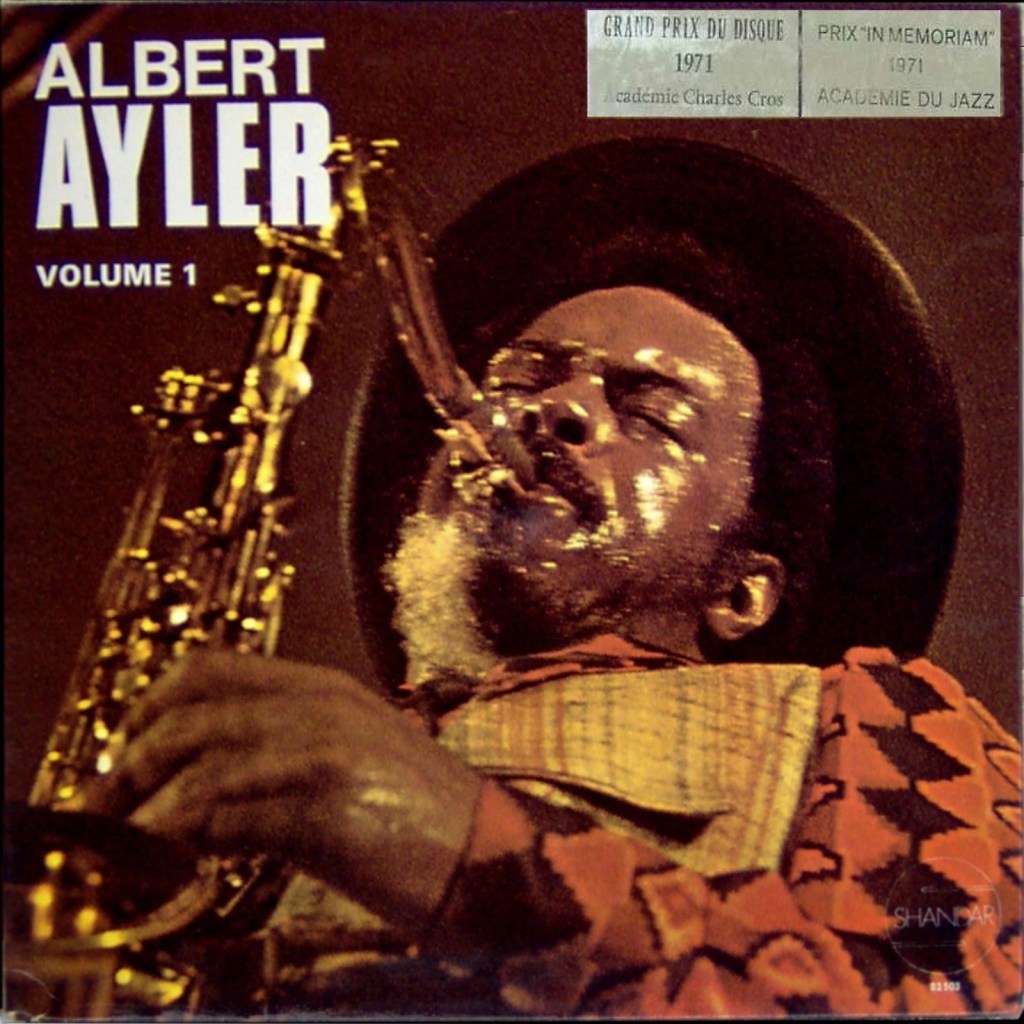
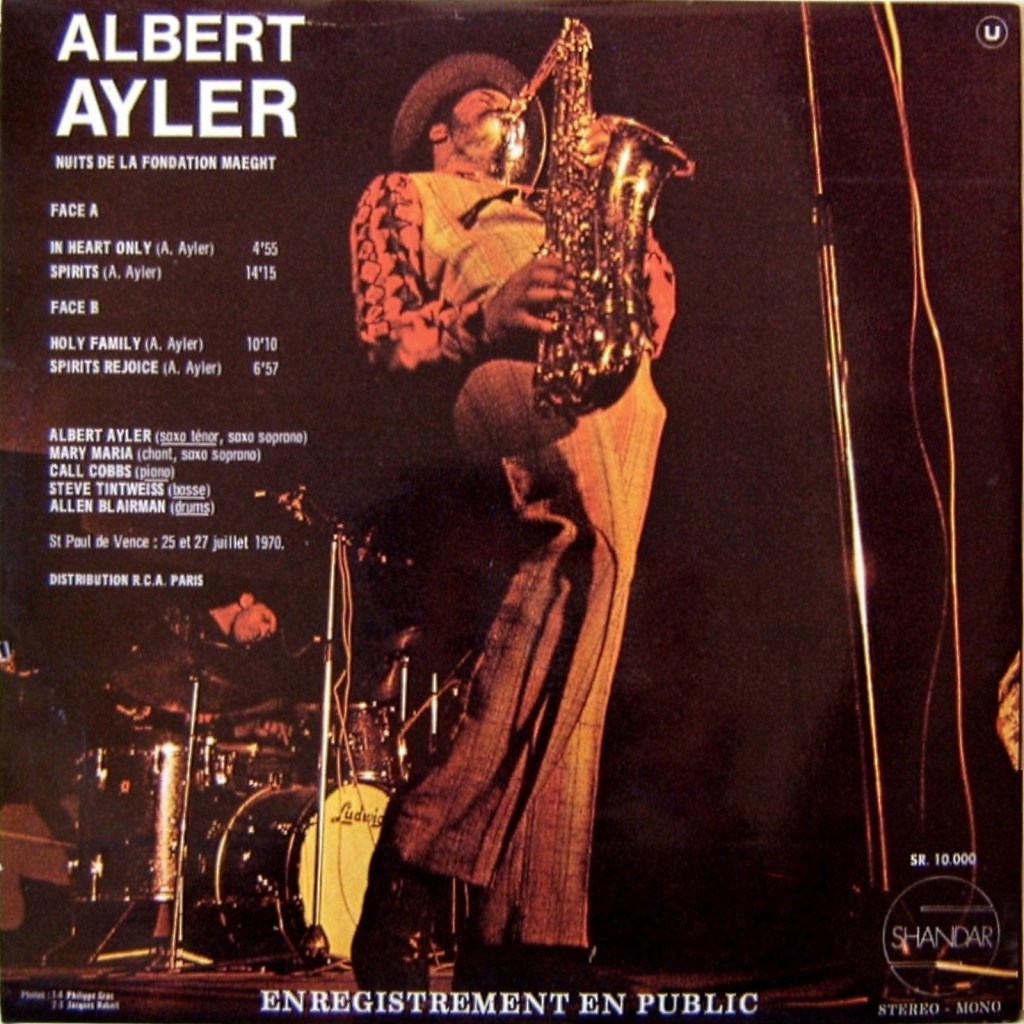
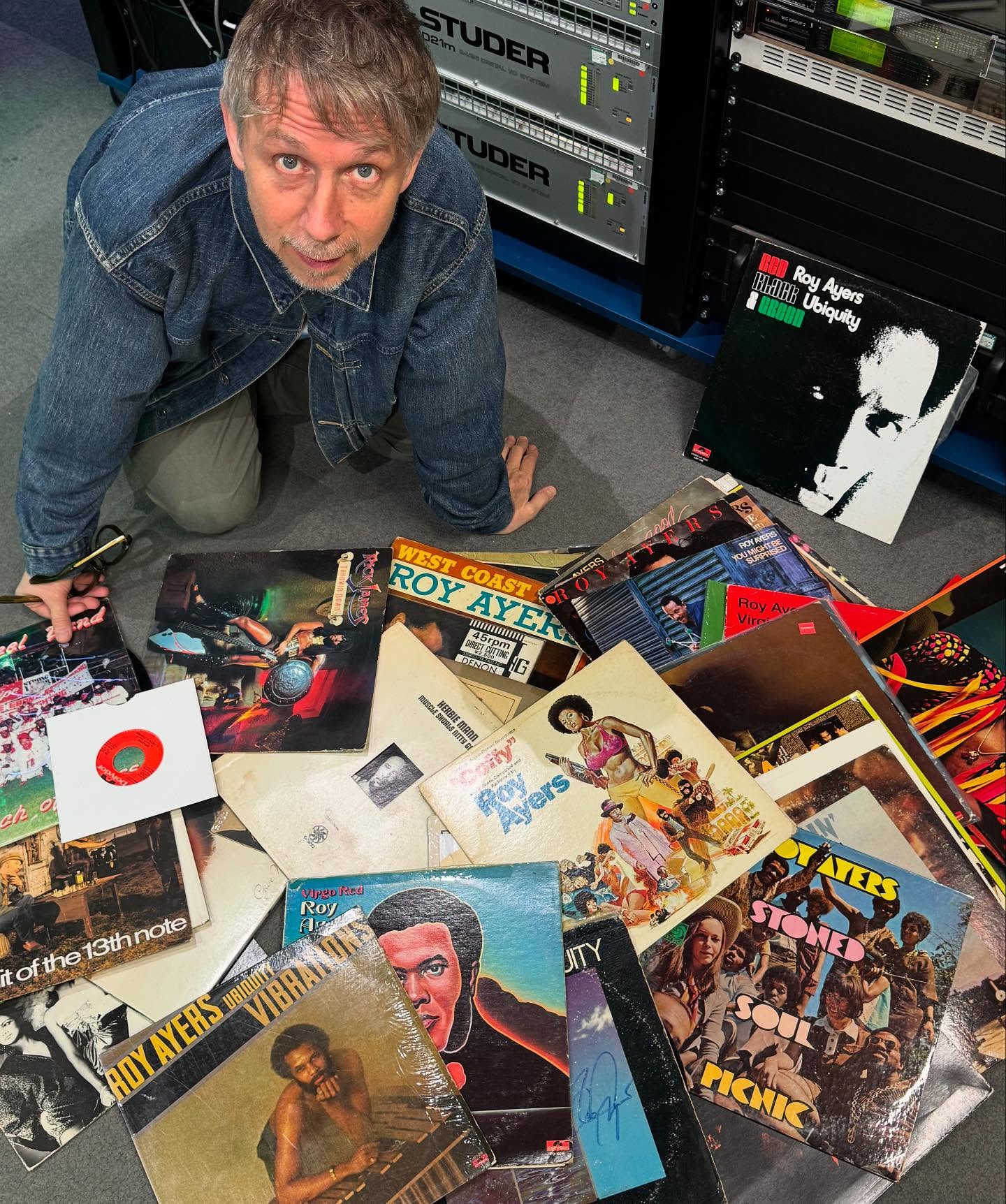
There’s a sense of euphoria in the air as the musicians leave the stage and Gilles Peterson takes on the challenge of maintaining and building the vibe. The Maeght’s director, Nicolas Gitton, is curious to see how that’s done. He’s not sure if it’s actually possible. That said, Peterson rapidly lays that question to rest. He gets busy plundering a large bag of vinyl and commences building a typically innovative eclectic set consciously free of a 4-to-floor mindset. There is a genuine sense of improvisation as he shifts rapidly from on tune to next dropping in a range of voice samples including Albert Ayler and Sun Ra. Watching him work a crowd is a joy to behold. I’m sure most of those present have never heard him play before. There’s jazz, funk, Latin, Brazil… I spot my good friend Janine Neye’s bucket hat dipping and bobbing in time to the music. She’s captured a spot to the side of the DJ booth. I’m sure her feet are flying. I also caught sight of the violinist, Sandy Pointdexter, grey dreads tied back, boogieing with a posse of women overlooking the dance space. As the two hour set neared its end it was tremendous to hear Ra’s version of ‘Enlightenment’, recorded at The Maeght five decades earlier, and experience it connecting with today’s dancers. As Gilles said after the session and the space emptied, “That was a moment. It felt like the circle had been completed.”
The first time I played Roy Ayers on the radio was March 2nd, 1982 from his ‘Feelin’ Good’ album… ‘Turn Me Loose”. I was 16 sharing the airwaves with my next-door neighbour and pirate buddy Ross Tinsley (aka Ross Travone to avoid recognition by the DTI). Our station was Civic Radio and used our recently acquired aerial and transmitter purchased from local boffin Stuart from who’s garden we broadcast as it had the highest elevation on our road. We never actually got busted by the DTI, but we were discovered by other curious pirates including Chris Phillips and Jeremy Vine with their tracking devices but that’s another story…
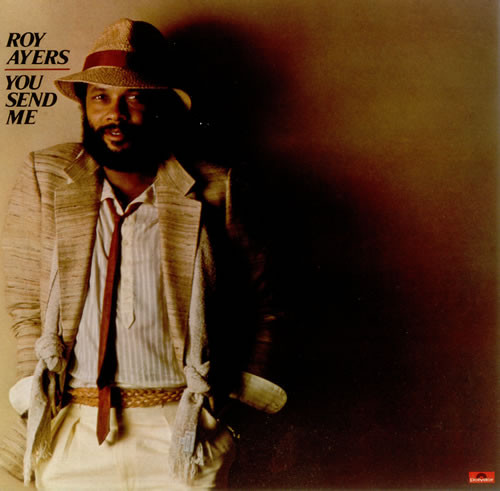
Let’s rewind back to my first introduction to Roy. Many would imagine ‘Running Away’ or ‘Love Will Bring Us Back Together’ as the entry point and indeed I would have heard those tunes on Invicta 92.4, Robbie Vincent’s show on Radio London or Greg Edwards’ Best Disco in Town on Capital. But the album that had a profound impact on me was ‘You Send Me’. Featuring an impeccably dressed Roy on the cover – wearing a rakish Panama hat and crushed linen jacket (perhaps subliminally channelling the sartorial excellence of Trevor Eve as Detective Shoestring from the TV show of the same name). And then I heard the entirety of Side A on repeat (remember those turntables that went back to the start of the record?) that night at Anne Marie’s house in Epsom in what was another seminal moment in my young life…
Roy Ayers – You Send Me (1978)
The fact is Roy Ayers – both the man and his music – became enduring companions throughout my entire life. No artist encapsulates the full spectrum of music flowing from jazz through funk, soul, disco into house, hip-hop and broken beat quite like he did.
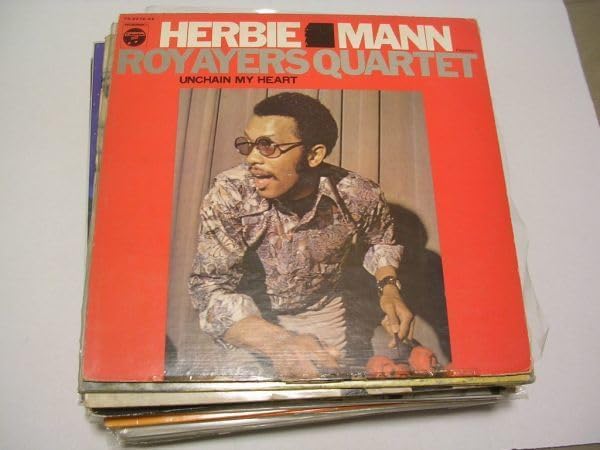
From his heyday as a purveyor of West Coast vibrational cool, he cut his teeth playing with the likes of Curtis Amy and Jack Wilson under the wing of Bobby Hutcherson and following in the footsteps of Milt Jackson and Cal Tjader eventually joining forces with Herbie Mann who gave him a valuable lesson on the intersection of hip playing and commercial appeal.
From there he travelled East where his chilled elegance, fused with New York’s urban grit, helped define the core components of his musical DNA. His 3-album tenure with Atlantic saw him combine forces with new scene heavyweights such as Charles Tolliver and Gary Bartz as well as still young veterans like Joe Henderson and Ron Carter. This sequence of albums really highlights that moment in which acoustic jazz is going electric, when records like Max Roach’s ‘Members Don’t Get Weary’ or Herbie Hancock’s ‘Fat Albert Rotunda’ are bringing modal jazz, the Fender Rhodes and late 60s politics into the mix. To my ears this is one of the most important and exciting inflection points in the history of jazz and for Roy to be in the thick of it is a testament to his journey. What I wouldn’t give to travel back in time to that moment!
As that decade faded into the rear-view mirror, Roy made another major move signing to Polydor and deciding to leave the more conventional Roy Ayers Quartet name behind by baptising his group Ubiquity as a better descriptor of the fluidity, openness and universality he was exploring through his music.
At this point it’s really worth checking the ‘Live At The Montreux Festival’ album from his June 1971 date where this new group made up of Clint Houston on bass, David Lee on drums and a new young creative force on piano… Harry Whitaker…laid down a set for the ages. This line up also tells you how hip Roy was to finding the best emerging talent. Harry would go on to write several big tunes for Roy including ‘We live in Brooklyn’, as well as making major contributions for Roberta Flack, Eugene McDaniel’s and of course his own iconic Black Renaissance project…
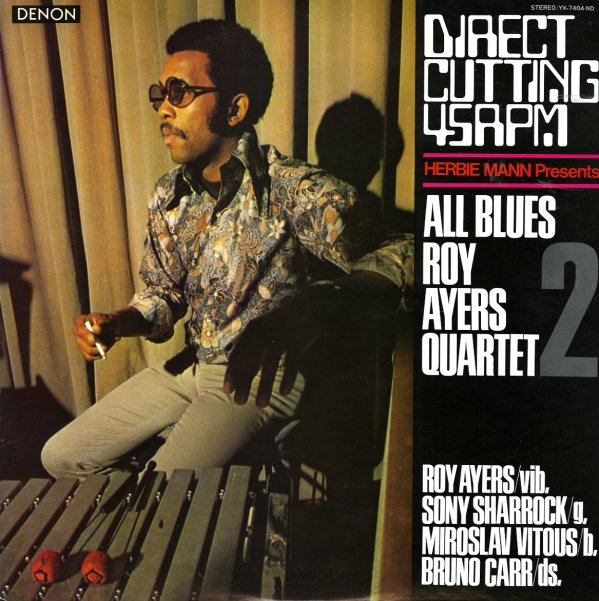
The music on the Montreux album ranges from open ended jazz into an extra spaced out ‘In a silent way’ to the first known live recordings with Roy using his voice to bring his subtle funk to proceedings… another fascinating recording from the period is the ‘cut at 45’ 2 disc set recorded for Japan with Sonny Sharrock , Bruno Carr and Miroslav Vitous – check the stoner vibrazonic take of ‘Scarborough Fair’!
Nippon Columbia 45rpm Direct Cutting Series – 1969
From here an utterly mesmerising (indeed ubiquitous) sequence of 13 stone cold classic albums ensued that could easily constitute a life’s work for most. ‘Mystic Voyage’, ’Vibrations’, ‘Red Black and Green’, ‘A Tear to a Smile’, ‘Virgo Red’, ‘He’s Coming’, ‘Everybody Loves the Sunshine’… on and on!! And the singers… Dee Dee, Carla Vaughn, Chicas… wow! And lets not forget the players… Philip Woo, James Mason, David Davis (before he left for Bowie and Young Americans) … arranger William Allen and percussionist Chano O’ Ferral who both came from the Latin jazz scene. -a secret ingredient into the mix.
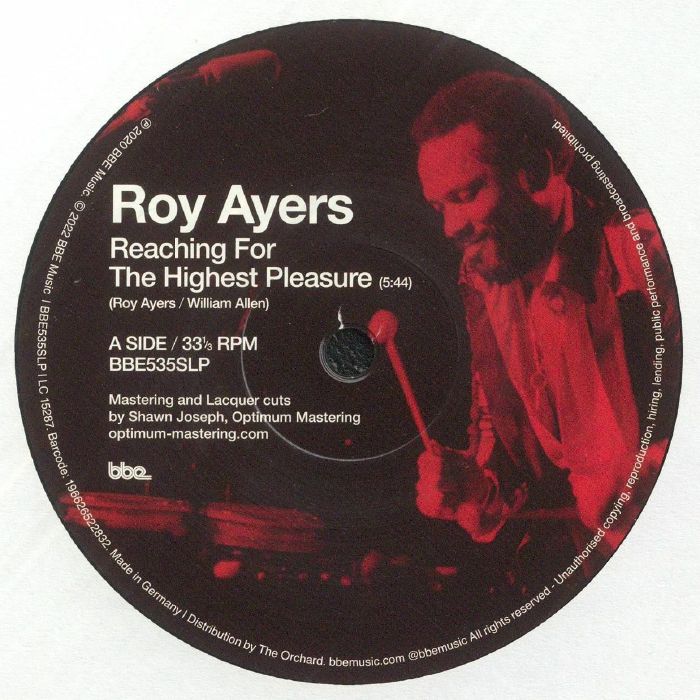
As if this body of work wasn’t enough, in 2003 while still at Talkin’ Loud records I receive a call from Pete Adarkwah at BBE who tells me that he is with Roy in a warehouse in NYC going through boxfuls of unreleased Ubiquity treasures… The world stopped turning in this moment – a combination of envy and excitement – which ultimately resulted in the label releasing 2 LP’s under the title ‘Virgin Ubiquity’. But far from being the sound of the bottom of a barrel being scraped this find served up some incredible unheard gems and unearthed previously unknown collaborations with the likes of Merry Clayton, Terri Wells and more that would provide fuel for future hip hop classics notably the song ‘Liquid Love’ which was sampled by many from Knxwledge to Kali Uchis. One of Roy’s many Ninja moves was taking home the master tapes from his Polydor studio sessions without ever telling the label – a rare example of artistic expropriation. Meanwhile, Pete was kind enough to give me one of those tracks as an early taster which I released on my Worldwide Exclusives album… I don’t think Pete realised quite how spectacular ‘Reaching for the Highest Pleasure’ was when he passed it to me though… and finally released that track himself a few years ago!
From 1977 while being adored by the disco movement and played in all the clubs from Studio 54 to Le Palace in Paris, his ‘disco adjacent’ sound continued to build his music edifice further demonstrating his hipness to sounds that could connect with new ears. But unlike many at the time, before he got lost in the mirror ball, he did two significant things that kept him fresh and relevant.
First, he created his own independent label Uno Melodic where he developed new artists and created classics like Ethel Beatty ‘s ‘It’s your love’, Eighties Ladies’ ‘Turned On To You’, Sylvia Striplin’s ‘You Can’t Me Turn Away’ as well as producing the legendary RAMP (Roy Ayers Music Productions) album with what some consider an equally good version of ‘Everybody Loves The Sunshine’ – a debate that will run forever.
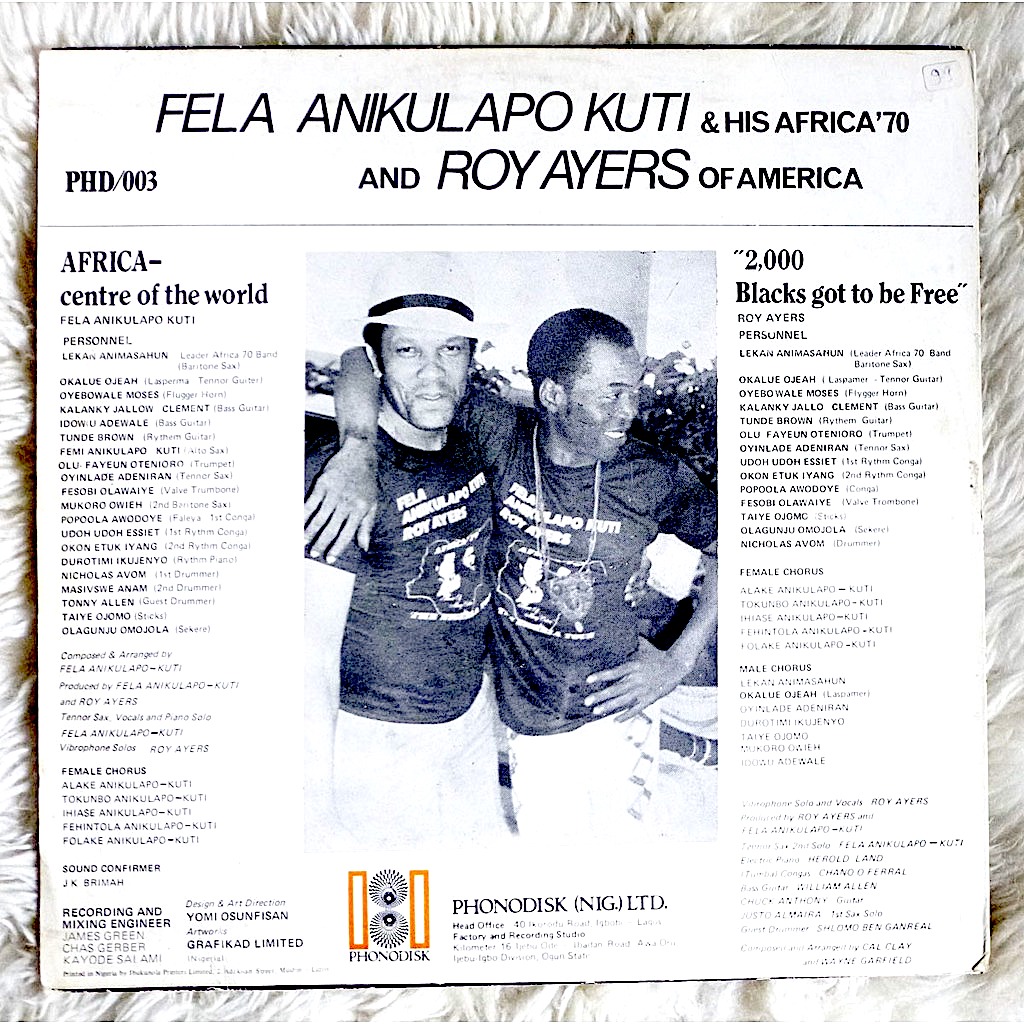
Second, he went to Nigeria where he found a new comrade in music adventurism – the mighty Fela Kuti – playing at the Kalakuta Republic which led to the 2 of them recording the song ‘Africa Center of the World’ on Fela’s ‘Music of Many Colours’ album. Roy then took that song home and made a whole album with his band based on his African experiences… a must have… in fact, I gave my copy to Thundercat for his birthday in the knowledge that they would inevitably work together some day…
Another memory I have connected to this period in Roy’s life was watching the film of that Kalakuta Republic concert with him on a dusty VHS at his NYC apartment and thinking about how it needed to find a wider audience! There is a great bit in the film where Fela’s band is performing, and you can make out Roy’s silhouette and vibes shimmering in time and space. Two further anecdotes about that apartment were that he had bought it from James Baldwin and that in the corridor there was the original painting of Virgo Red which I was sorely tempted to make an offer for…
And then – full circle to Epsom and the ‘You Send Me’ moment – to the first time I ever saw him live at Ronnie Scott’s around 81/82 with a band that I remember featured original member Philip Woo and the voice of Chicas. At the time bands used to do one-to-two-week residencies and I had my Ronnie Scott membership card which allowed me £2 entry Monday through Thursday – needless to say I went every night.
But this 80s period also corresponded with a shift in jazz listening tastes in America. Jazz radio had gone smooth and labels like GRP and Verve were championing a new saccharine version of the music which would be of great value to the musicians but would also consume them. From Jeff Lorber to Lonnie Liston Smith to Bobbi Humphrey to Roy Ayers. Smooth jazz was now the enemy for us bass and drum heads.
It was at this point in 1985 when I first met him in person at the New York Jazz Explosion at the Hammersmith Odeon where I had been invited to present the concert as a Radio London DJ with my Mad On Jazz show.
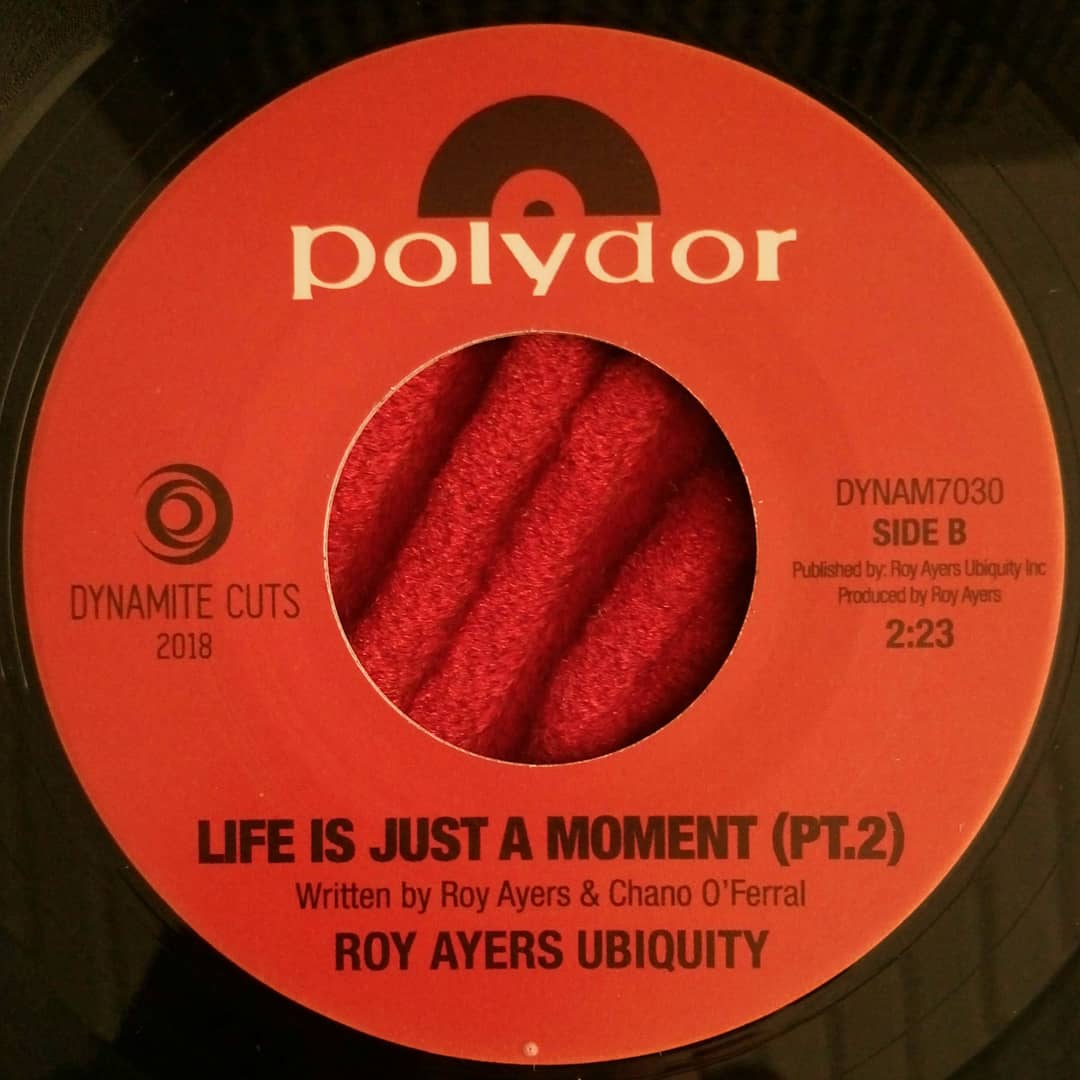
And this is where the special role of the UK in making sense of his music and then helping “export” it back to the US comes into the story. That moment of British discovery of his old records arrived with the growth of the Rare Groove scene. Built around warehouse parties and back-room energy DJs like Jonathan Moore, Dez Parkes and Jazzy B – Roy’s music was foundational with ‘Life Is Just A Moment’ as its bedrock!
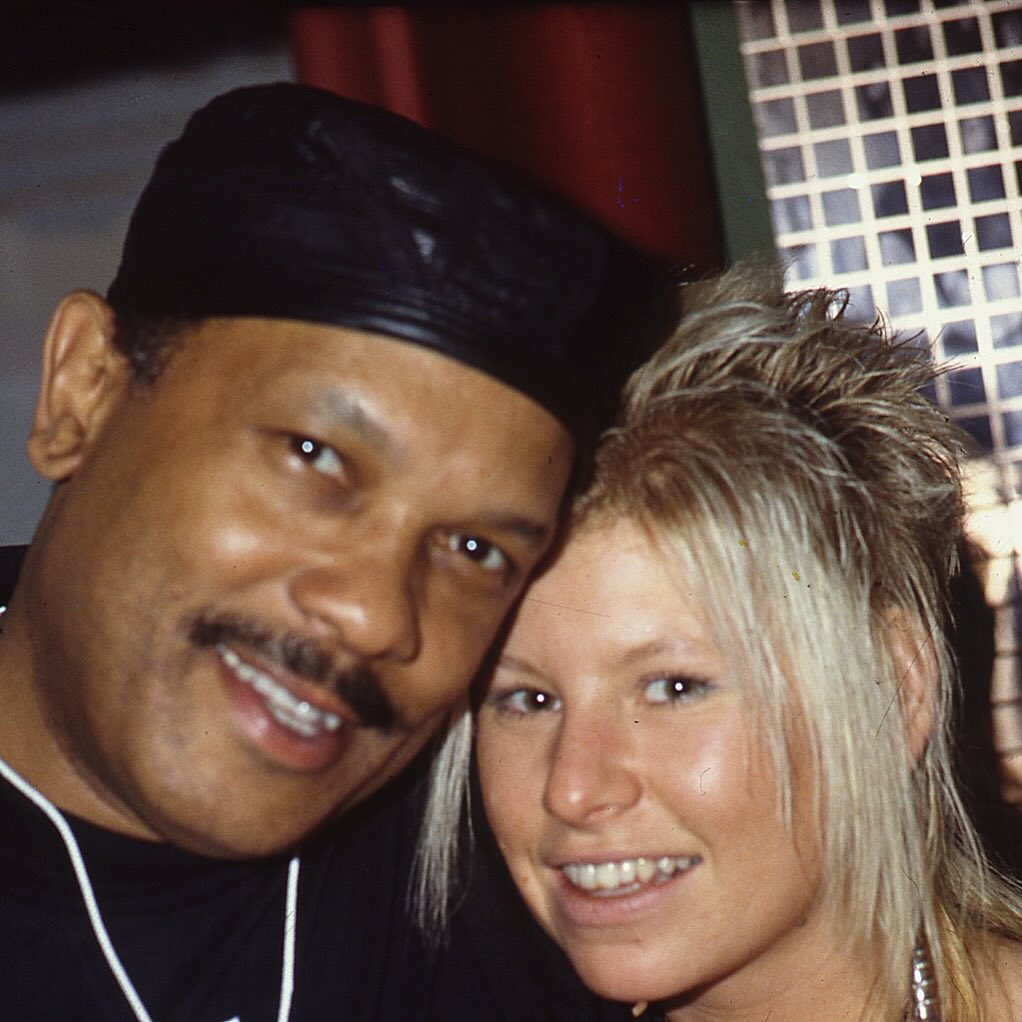
Roy and Janine “Dingwalls’ Neye
It was here that we were able – thanks to my dear friend and co-pilot of Dingwalls, Janine, with her enterprising spirit and convertible 2CV – to get Roy down to the club on his one Sunday off from a 2 week Ronnie’s residency. As soon as he entered and felt the energy, he immediately said he wanted to play there and so the following Sunday there he was and when I suggested he do one of our favourites ‘We Live In Brooklyn” he did and it became a staple in all his future sets.
Worth noting that Roy was taking a huge risk in playing for us as he was exclusively contracted to Ronnie’s so we had to promote in secret – no fliers, no web, just word of mouth and over 800 people turned up – but Ronnie’s had no clue and we got away with it. Props to Roy for doing it in the first place as we wouldn’t have been the only ones in trouble!
Luckily for all of us, Roy realised through these visits to the UK that there was an audience desperate to hear the music that he was not being recognised for in America. And this rediscovery then led to his elevation in the ears of his home market as the nascent producers of the golden era of hip hop became aware of his extensive and highly sampleable back catalogue.
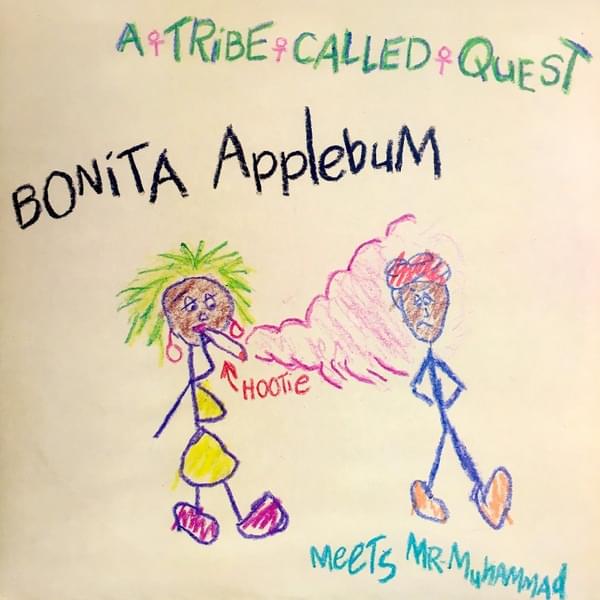
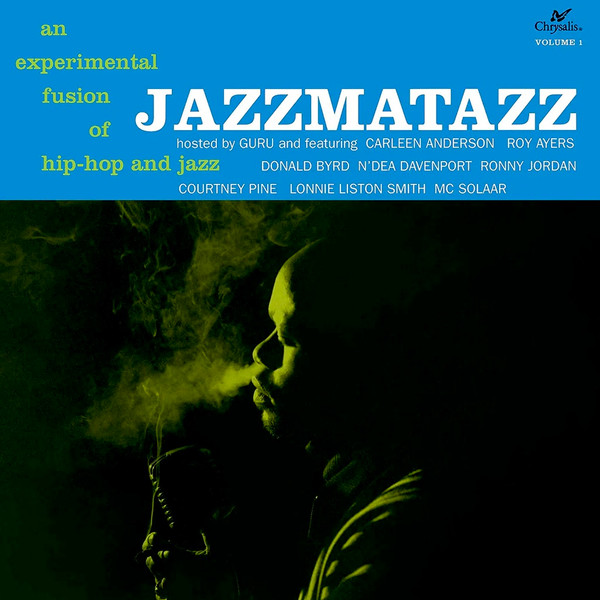
The earliest instance of this was A Tribe Called Quest – the first American group that dug deeper than the obvious using ‘Daylight ‘by RAMP for Bonita Applebum. The other key pioneers in this were Gangstarr – DJ Premier and Guru would come to Dingwalls when they were in London, often borrow records from me for remixes they were doing while over and with whom I forged a relationship in music leading to me advising as well as being at the recording sessions for Guru’s Jazzamatazz which featured both Roy and Donald Byrd.
Further cementing these trans-Atlantic connections, it was a source of great pride and pleasure to bring together the US and British scenes at the 1990 Jazz FM Weekender at Camber Sands which featured Roy, Pharoah Sanders, A Tribe Called Quest, Steve Williamson, Working Week, Galliano, Brand New Heavies, Incognito, Snowboy and a host of DJs. I suppose looking back on it, what seemed like a crazy idea made total sense and at the heart of it was Roy Ayers who gave it its meaning… I must confess there was another first for me in his presence which we will save for the memoir…
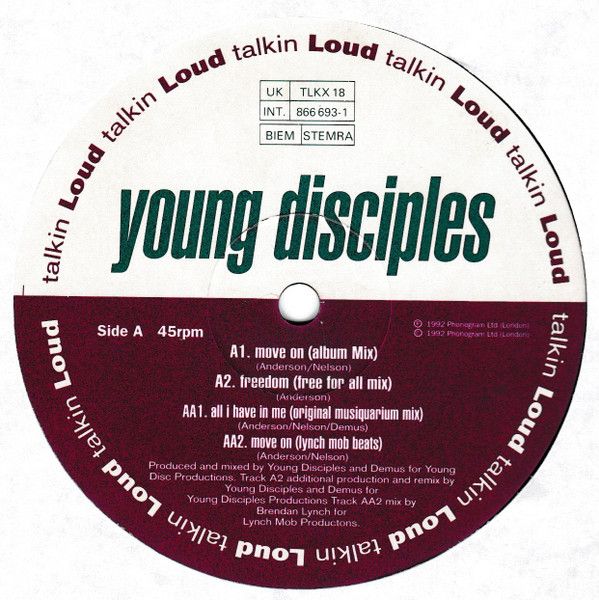
Through all these interactions, Roy became really close to us as a community and would often hang in the house on Brownswood Road. As I started the label Talkin’ Loud he was an artist I championed to the deaf ears of money men in an attempt to sign him, but we managed a golden moments on Galliano’s debut album ‘In Pursuit of the 13th Note’ where he guested on the track ‘57th minute of the 23rd Hour’ absolutely nailing the accompaniment to what is one of the high points of Rob G’s spoken word poetic output. This also led to demos featuring him with the Young Disciples, Paul Weller and Dill Harris as well as an unreleased version of ‘All I have In Me’ with playing vibes. Wow I had totally forgotten about that – raw to the floor – I’ll play it on my next radio show!
Over the years I went on to promote and book him for multiple gigs including the Montreux Miles Davis hall event in 2003 when I was able to get Jamiroquai to join him on stage. The deep relationship with Roy stuck to the very end and I was eventually able to put him into the studio with Thundercat and Ommas Keith as well as on stage with Bad Bad Not Good and Ed Motta on two separate occasions at the Worldwide Festival in Sete. I’ll never forget Ed using Roy’s ‘Searching’ to describing how his music was modernist and architectural on the same level as Miro or Mondrian.
We also got to work together on the Nuyorican Soul project. This concept record released in 1997 is up there as one of my most cherished releases and a vital node joining club culture with Jazz and Latin blood lines. A record helmed by Kenny Dope and Louie Vega -who remain to this day two of the most vital and impactful music producers in the game – this project was one of a kind and within it Roy delivered another key moment with an incredible version of ‘Sweet Tears’ bringing his voice, vibes and Vince Montana Jr’s string arrangement to the proceedings. I was talking to Orphy Robinson the other day and he made a good point about the sound of Roy Ayers throughout the Polydor years being the product recording at Electric Ladyland in NYC or Sigma Sound in Philadelphia. For Kenny and Louie to add that authentic Philly sound by recording the strings at Sigma was a master stroke. Even though it was a tune recorded by Roy on other occasions – this version took forcefully into the present.
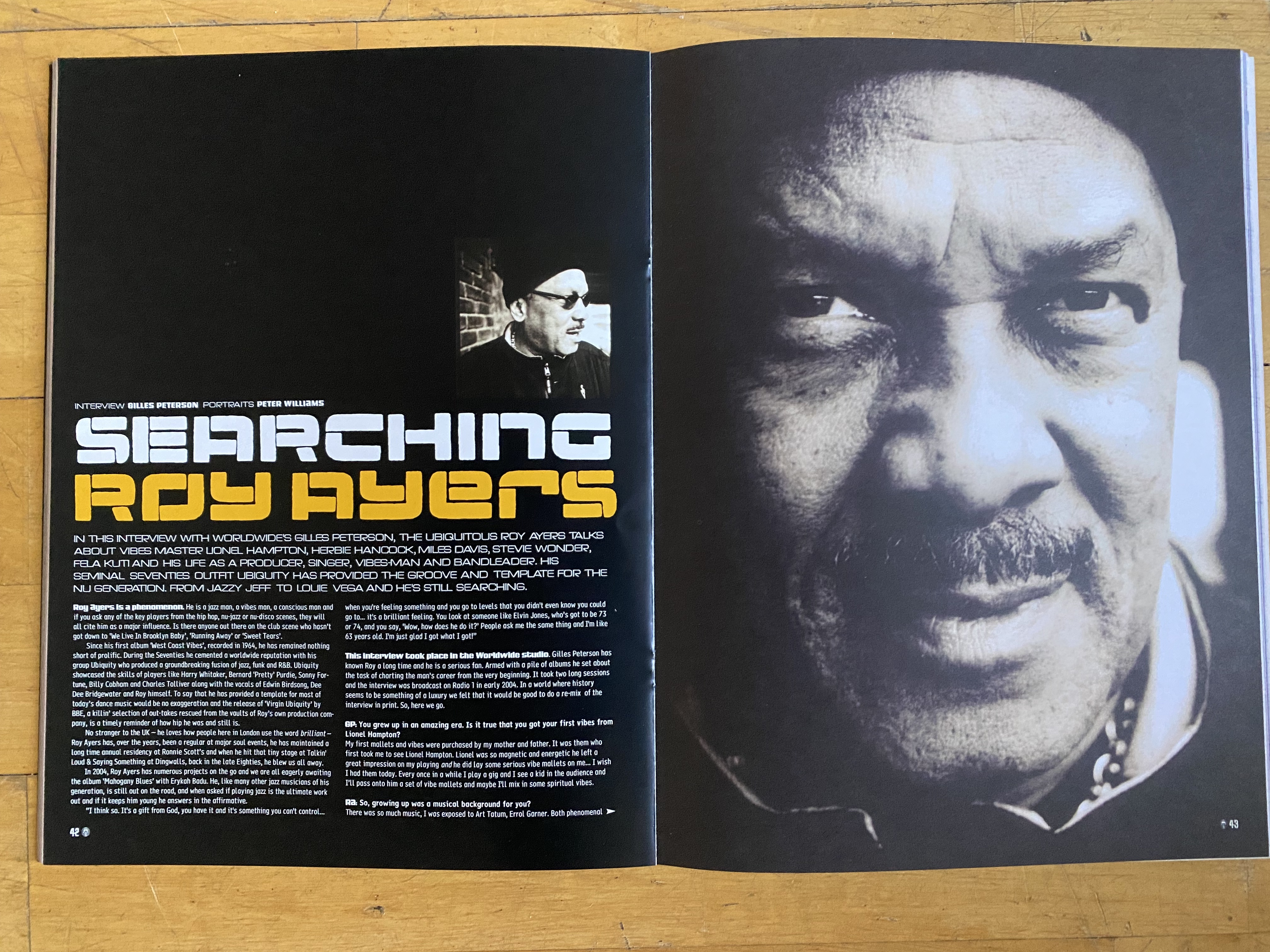
Gilles talks to Roy: Straight No Chaser Vol 2 Issue 29 Spring 2004
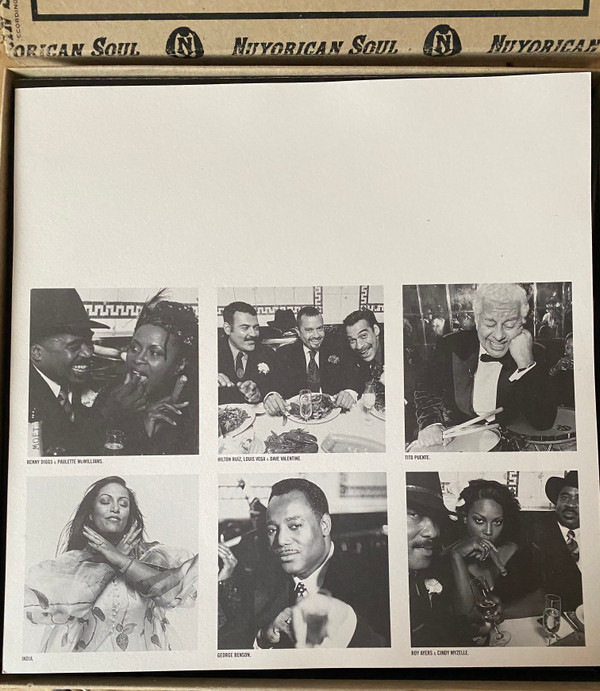
This time also carries with it memories of seeing him with some of the titans of music like Tito Puente, George Benson, Eddie Palmieri , Jocelyn Brown and La India at an unforgettable launch party in Times Square’s ’Supper Club’ … what a night! As well as going on a radio tour with him and being present for a special show he presented with Isaac Hayes on WRKS-FM 98.7… legends
Everything we ever did together was predicated on my deep desire to see him elevated to the level of giants such as James Brown, Donald Byrd and George Clinton – the plane on which he rightfully belonged.
So it was very moving to see such extensive coverage of his passing across the board and particularly to read Alexis Petridis’ article in the Guardian especially so soon after his piece on James Hamilton’s crucial Disco Pages which illustrated that peculiar alchemy that makes the UK such a unique and potent place for discovering and championing music regardless of fortune or fashion. In that spirit, I hope that this reflection on Roy’s life and work shows this – he was so important to us and in some way we were for him.
Rest in peace Roy and thank you – been a pleasure travelling with you for the past 45 years.
Roy & GP. Respect. One Love.
Check : Gilles Peterson’s tribute to Roy Ayers on BBC 6 Music – 15th March 2025. Tremendous.
Words from @questlove @louievega @deedeebridgewater @femiydfem @orphyvibes @bigbirdkuti @bartzoyo @tone2679
Tracklist
Roy Ayers – Love from the Sun Roy Ayers – Fikisha (To Help Someone To Arrive) Roy Ayers Ubiquity – The Black Five Roy Ayers – Liquid Love feat. Sylvia Cox Roy Ayers – Reaching For The Highest Pleasure Roy Ayers – The Memory Sylvia Striplin – You Can’t Turn Me Away Erykah Badu – Turn Me Away (Get MuNNY) Roy Ayers – Coffy Baby Roy Ayers Ubiquity – A Tear To A Smile Roy Ayers Ubiquity – This Side of Sunshine Vi Redd – Summertime Roy Ayers – Ricardo’s Dilemma Jack Wilson – Harbor Freeway (Blue Note Version) Curtis Amy Featuring Victor Feldman – Liberia Roy Ayers – Lil’s Paradise Lionel Hampton – Rhythm, Rhythm (I Got Rhythm) Bobby Hutcherson – Montara Roy Ayers Quartet – Scarborough Fair Claude Nobs – Introduction for Roy Ayers (Live at Montreux Jazz Festival, June 20, 1971) Roy Ayers Ubiquity – In A Silent Way (Live at Montreux Jazz Festival, June 20, 1971) Herbie Mann – Can You Dig It Roy Ayers Ubiquity – Everybody Loves the Sunshine Roy Ayers Ubiquity – Searchin’ Eighties Ladies – Turned On To You Rick Holmes – Remember to Remember RAMP – Daylight Roy Ayers Ubiquity – Ain’t No Sunshine Young Disciples – Fire Weaver feat. Roy Ayers (Unreleased) Young Disciples – As We Come feat. Roy Ayers (Unreleased Demo) Tyler, The Creator – Find Your Wings Roy Ayers Ubiquity – Mystic Voyage The Roots with Roy Ayers – Proceed II Roy Ayers Ubiquity – We Live in Brooklyn, Baby Roy Ayers – Intro / The River Niger Fela Aníkúlápó Kuti & Roy Ayers – Africa, Center of the World Roy Ayers – Chicago Roy Ayers Ubiquity – Running Away Roy Ayers – Can’t You See Me (12″ Version) Roy Ayers – Untitled Roy Ayers – Our Time Is Coming Roy Ayers – Don’t Stop The Feeling Nuyorican Soul – Roy’s Scat Nuyorican Soul – Sweet Tears feat. Roy Ayers Ubiquity G. Keith Alexander – A Mother’s Blues RAMP – Everybody Loves the Sunshine Galliano – 57th Minute of the 23rd Hour Buster Williams – Vibrations
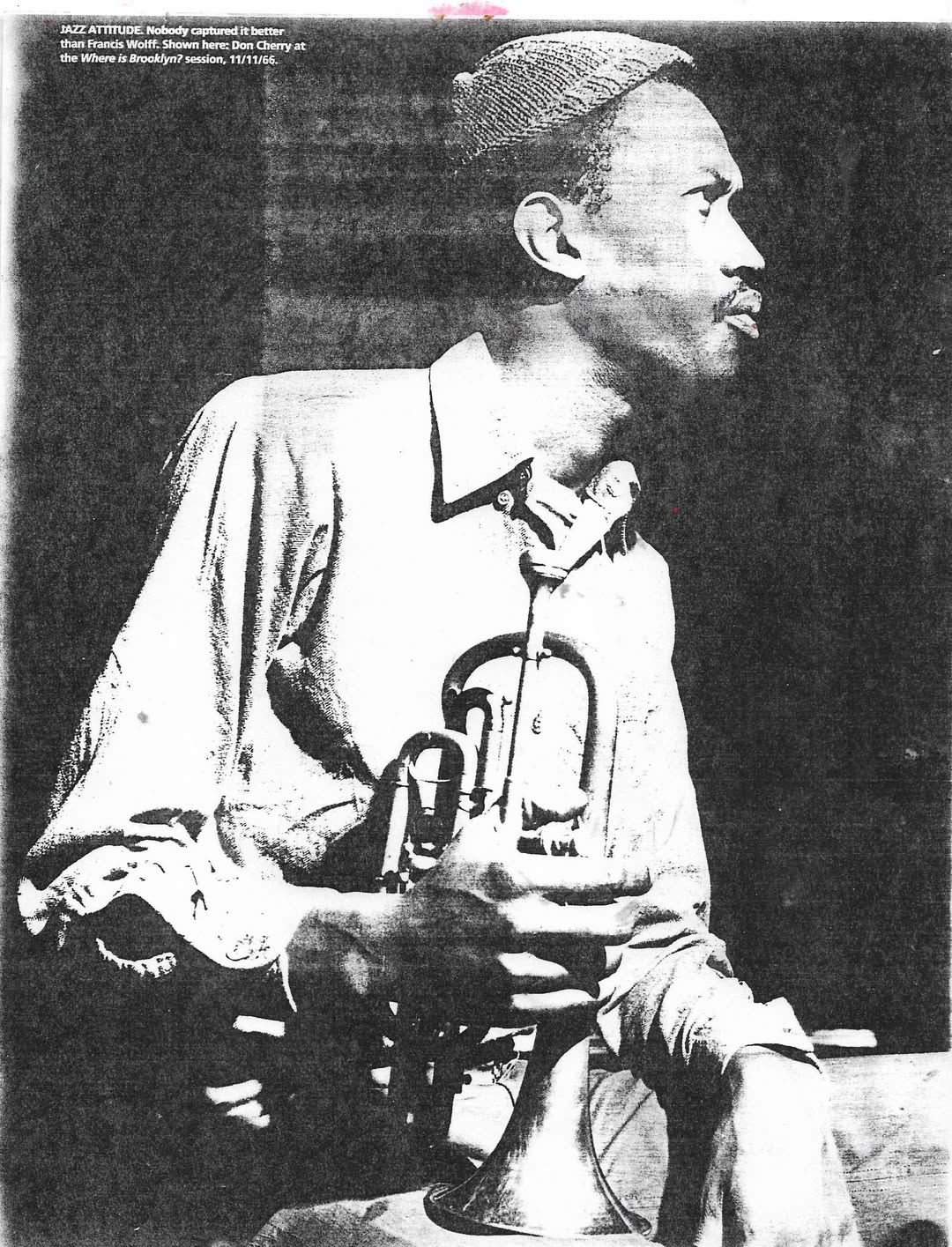
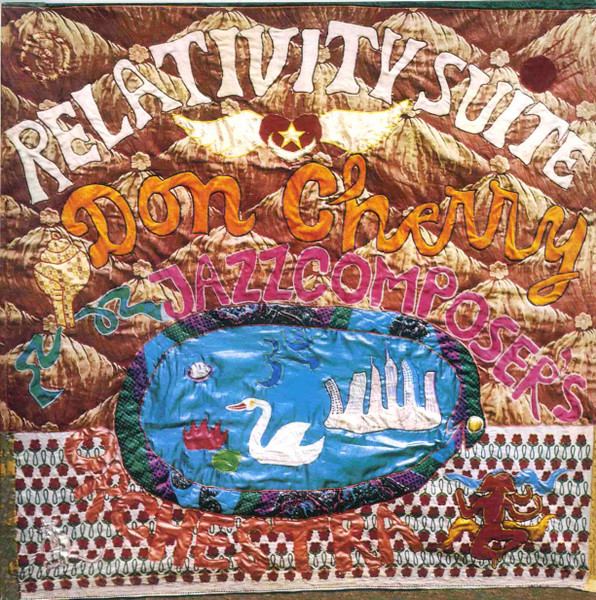
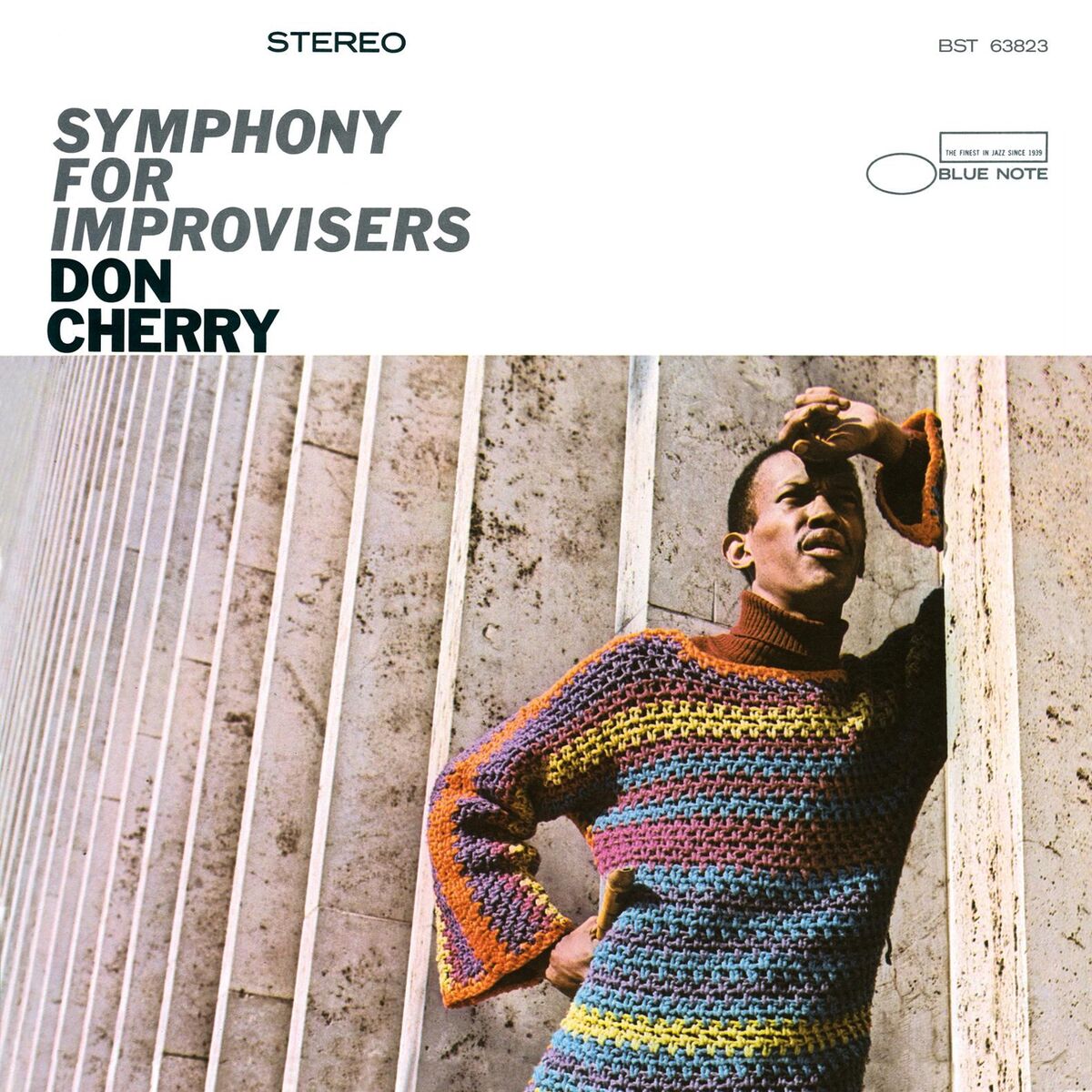
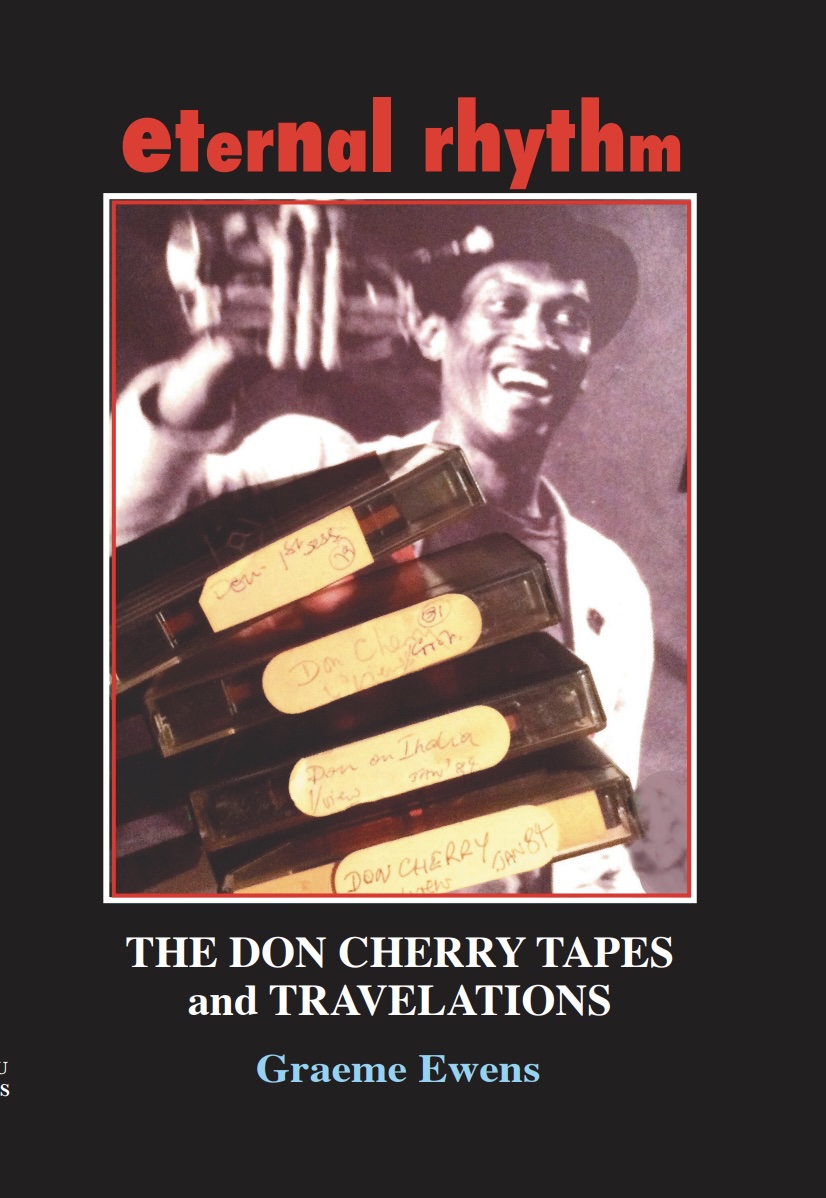
Eternal Rhythm : The Don Cherry Tapes & Travelations is a collection of priceless cassette taped interviews woven together by writer Graeme Ewens – a confidant, travel companion and friend of the late great trumpeter and visionary. It’s a project that began back in 1979 and it gives us an unfiltered insight into the evolution and the working life of a musician who is globally recognised as one of the most unique and innovative voices to have emerged from the Sixties free jazz movement.
While Don Cherry’s rep and status as a jazz musician might just be set in stone he was more than that. He was nomadic, free spirited, natural mystic whose openness and command of a universal musical language allowed him to travel and break bread with like-minded souls wherever he touched down. I have a vivid memory of a concert, at the Old Vic in South London, with Codona – the incredible trio that featured Don Cherry, Brazilian master percussionist Nana Vasconcelos and the brilliant Colin Walcott who had studied sitar under Ravi Shankar and tabla under All Rakha. The ECM recordings of Codona were fresh and spiritually charged and ensured that there was a serious sense of anticipation in the theatre. There was rumour that Don had not yet arrived. He was reputedly on the “Magic Bus” that travelled regularly between London and Amsterdam. Colin Walcott and Nana took to the stage and commenced playing. It was while we were immersed in the conversation between these two master musicians that Don stealthily arrived onstage, sat down cross legged and proceeded to unload his duffel bag which contained his pocket trumpet, his flutes and his beloved Doussn’gouni. As he hit that first note it was as if he’d been there from the very beginning leaving all of us with an indelible imprint of the man and the moment.
Don Cherry’s roots through his grandmother were in the native Choctaw people while his father was a free black man born of formerly formerly enslaved African people. His life began in Tulsa , Oklahoma but in 1940 the four year old moved California. It is in Los Angeles that the story truly begins. I love this part of the book. Don’s own words transport us into another time. Hard times for sure but in post WW2 LA music is every where. I would love to have seen footage of Don and his sister Lindy Hopping or doing the Texas Hop or the Shake It’s also great that Don is so specific about the tunes of the day. It set this reader off on a mission listening to Jimmy Rushing, Lester Young. Johnny Otis, the Coasters amongst others. Central Avenue in Watts was the epicentre of the LA jazz scene. His father was head barman at the Plantation Club and from experience, he was reluctant for his son to follow the way of jazz. Dope and jazz, in his mind, were synonymous.
Don’s first experience of racism was at school where the role of first trumpet was always given to a white kid. But once his mother bought him his own trumpet he was gone, there was no going back. It was the radio shows that satiated his musical appetite – Louis Armstrong, Duke Ellington, Charlie Parker. The Shrine Auditorium was where he eventually got to hear, live and direct, giants like Pres, Bird, Illinois Jacquet and Johnny Hodges. Musically, it was all going on… R&B, vocal groups, devotional music / gospel and jazz. As high school kids they they were busy playing the “dozens” – which is the roots of rap.
Don Cherry playing in Ornette Coleman’s famous Free Jazz quartet, ca. 1959
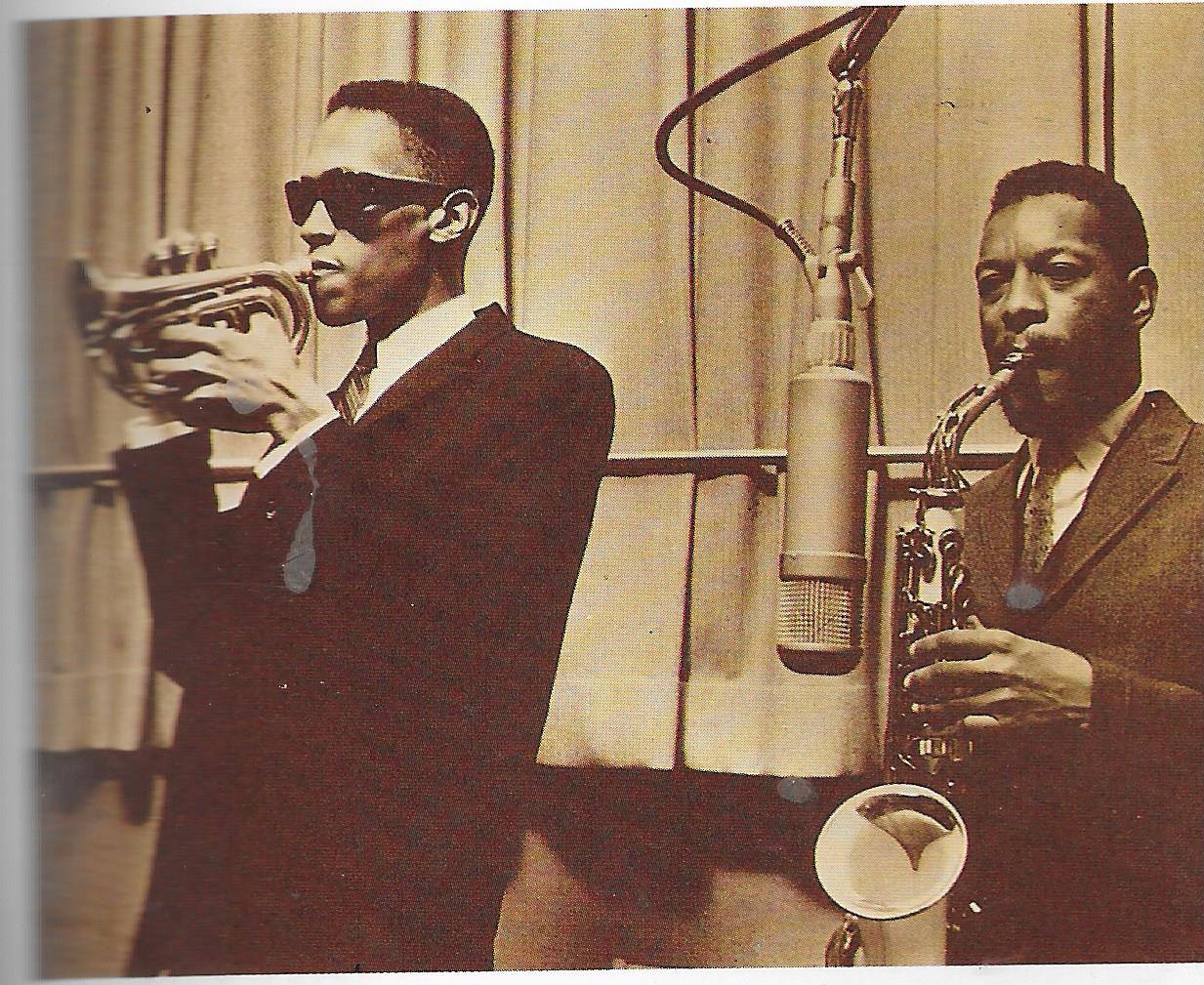
Watts in the Fifties had its own thing going on in he same way that Compton had its own thing compared to the Bronx in the late Eighties. In Don’s own words we follow him as he meets alto toting genius Ornette Coleman and gets immersed in the radical concept of Harmolodics. He reflects on feel within the music and players who could and couldn’t read music. I was amazed to read that James Clay didn’t read, especially when I hear him playing alongside David ‘Fathead Newman or much later playing flute on ‘Pavanne’. Don playing in Ornette Coleman’s famous Free Jazz quartet, ca. 1959
As one would expect his arrival in NYC was a trail by fire. There are encounters with Miles and being firmly in Ornette’s orbit ensure he was inevitably drawn into musical controversy. That said, it was radical time and the gates had been kicked open and the recording sessionss followed. Once he secured a passport Don’s ‘travelations” began. There were tours with Sonny Rollins and the spiritually possessed Albert Ayler… and once they were done he opted to stay in Paris. From there it was a hop, skip and a jump to Turkey and North Africa… Tangiers where Randy Weston was resident, as were Beat generation writers like Bryon Gysin and William Burroughs. There were musical dialogues with Turkish drummer Okay Temiz, the Master Musicians of Joujouka, the Gnawa of Morocco, South African master musicians: Dollar Brand / Abdullah Ibrahim and bassist Johnnny Dyani and Camerounian supestar Manu Dibango. The way was open and without consciously knowingly it he pioneered what was to become known as “world music”.
The interviews in Eternal Rhythm are remarkably honest about the heroin habit which he developed in NYC and slipped in and out of for the rest of his life. It’s something he negotiated while travelling, playing and raising a family in Sweden, along with his partner Moki – an artist in her own right. As I said, this short book… 160 pages… shoots from the hip and remains un-cut when it comes to documenting what has been an extraordinary life. Whether travelling in India or playing with Ian Dury and The Blockheads or Rip Rig and Panic, there’s simply a sense that it’s all one continuum, which is there to be embraced. And in the end, it’s Don Cherry’s music which spans generations and like a river that follows its own course. It offers us a “multikulti” vision, that speaks to the future – a brighter future should we wish to embrace it. It doesn’t feel like 30 years have slipped by since Don Cheery left this world. Grab a copy of Graeme Ewens’ pocket size book. It’s funky. It’s peppered with graffix and pics. It’s a labour of love and a ‘Project’ for which the contact has now been fulfilled.
PB /
* Graeme Ewens’ Eternal Rhythm: The Don Cherry Tapes and Travelations is a slim 172 page volume packed with deep content and is available from bukupress@gmail.com – (UK p&p FREE)
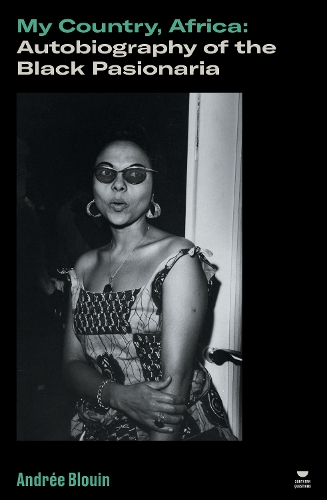
The long awaited reprint of My Country, Africa: The Autobiography Of The Black Pasionaria by that late Andrée Blouin has arrived. If you saw the award winning documentary Soundtrack To A Coup D’Etat and came way wanting to know more about the woman in dark glasses who stood at Lumumba’s side before the Belgian’s, the CIA, the UN and Mobutu orchestrated his downfall and death, you need to read this book.
It was back in November that I penned a few words about an excellent documentary that did indeed provide a “soundtrack to a coup d’etat” which took place in 1961 in the capital of the fledgeling Democratic Republic of the Congo. It resulted in the overthrow of the democratically elected Prime Minister Patrice Lumumba who, along with his allies, had spearheaded the movement for decolonisation and independence from Belgium. At his side was an activist, a woman called Andrée Blouin, who had thrown herself into the struggle, campaigning and working tirelessly on the front line, in the countryside, in the villages, with the women, against tribalism and the psychological legacy of their Belgian overseers. Back in the metropolis of Kinshasa after victory was secured, she took her life in her hands and did everything in her power to unite the different movements to stave off a Belgian / US backed coup led by the Chief Of Staff Of The Army – Mobutu Sese Seko aka Mobutu. She travelled to other African nations to rally support for Lumumba and earned herself the title of the ‘Black Pasionaria’. Upon Lumumba’s arrest, she was placed under house arrest and was eventually expelled to Algiers while her children were initially held hostage in the Congo to ensure her silence.
It’s a riveting and nail biting story, that deserves a film in its own right. This book – My Country, Africa: The Autobiography Of The Black Pasionaria – delivers a deep dive into the colonial mind-set and the psychological damage inflicted on the African people by their colonizers, whether they were from Belgium, France , Portugal or Britain.
The book! Essential read.
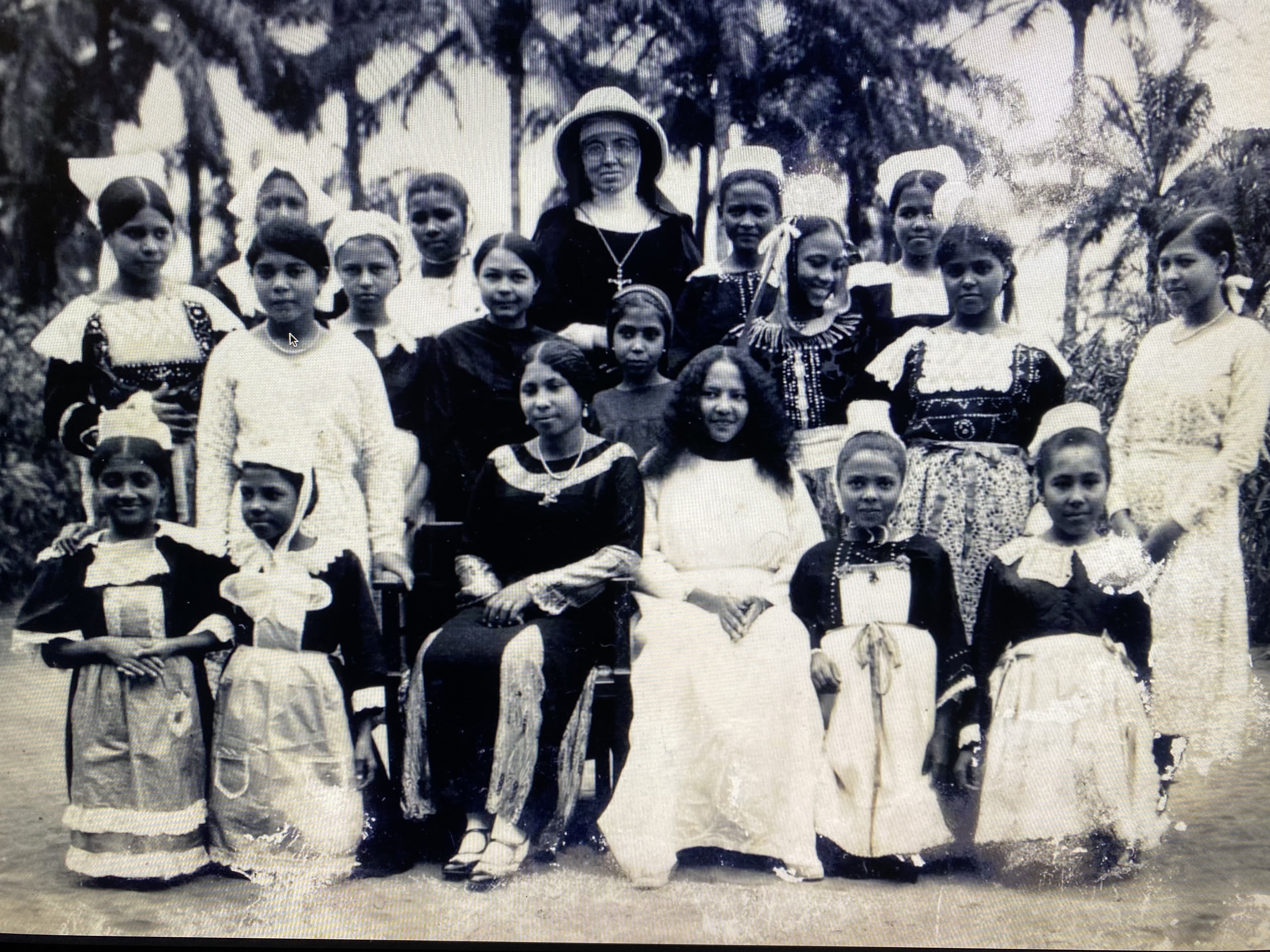
The story begins in French Equitorial Africa, in the remote village of Bessou on the Oubangui river where her motherJosephine Wouasimba was married at 13 years old to a 26 year old Frenchman with an iron will to succeed. His name was Pierre Gerbillat. Their daughter, Andrée, was born in 1921 and at the age of three years old she was dropped off by her father and his Belgian wife, Henriette Poussart, at an orphanage run by brutal Catholic nuns in Brazzaville. She was to stay there for the next 14 years. Along with other “metisse” mixed heritage girls she was instructed, along racist lines, to stay away from the black girls in the orphanage. In the eyes of the nuns she embodied the wickedness of her father and the primitive nature of her mother. It was living hell. They were slapped and whipped. The food was vile and rotten – she preferred to eat clay! They learned to recite their prayers but were never taught to read and write. There was little contact with the outside world but one day, as a flow prisoners in chains passed the orphanage gates chanting , “We want French citizenship, while being whipped by their captors, it opened up a sense of injustice.
André Blouin (second from bottom right) lived at the Order of Saint Joseph Cluny convent in Brazzaville. Photograph: Blouin estate
At the age of 17, she and two others scaled the orphanage wall and fled. After being caught by the police Andrée made here case to the mayor Brazzaville offering up a detailed litany of the abuse they had suffered at the hands of the nuns. She was not to return and took up residence in the the district of Poto-Poto. The girl who’d lived on starvation rations loved the market.. the fruits , the vendors, the smell of cooking… it was “fabulous, fabulous, fabulous”. Sunday afternoon in the Grande Place was a feast for the ears and the eyes. Music, dancers, griots, vendors of all kinds. After a short stint with her father back in Bessou she returned to Brazzaville and earned her money on a sewing machine. It was hard. Exhausting ad pften humiliating. A chance encounter with a former inmate at the orphanage led to an enlightening trip up the Congo river and her meetingc a handsome Belgian of aristocratic birth. She was eager to LIVE… to live her life but she soon became painfully aware that she was repeating her mother’s humiliating history – that of the African concubine. Her first child was called Rita.
Ironically. her next relationship was with one Charles Greutz – a man from Alsace who had no love for the African race. WW2 was raging. During Greutz’s time away in South Africa it was Andrée who created an 800 acre plantation in the jungle. Quite a feat and testimony to her organisational and leadership skills which would come the fore in the future. Life was hard and it was the death of their son René from malaria that forced a radical shift in Andrée’s consciousness. René had been refused quinine because he was not white. He died while the son of a white neighbour survived. Her relationship with Greurz ended in divorce. Andée had already met the next love of her life – André Blouin a Frenchman man who seemed “to have escaped the colonial menatality”. They lived in Siguiri in north eastern Guinea on the river Niger for seven years where she gave birth to two children Patrick and Eve. It was during this time that Andrée became aware of the Reassemblent Democratique Africain (RDA) – a decolonialization, liberation movement led by the charismatic Sékou Touré. She had never heard anyone speak of rights for Africans as he did.
And so we enter Part II of the book. World War II is over and African’s who volunteered to assist their respective “mother” countries in the fight against fascism had returned home adding momentum to the independence movements. The Cold War between Russian “communism” and the “free world” had also kicked in and the western powers were desperate to ensure the newly independent countries in Africa and elswhere did not fall under the spell of Socialism and into the orbit of Kruschev’s Russia. The West sought – as they do today – to maintain a grip on the precious minerals and natural resources that Africa offered by any means necessary.
It was while browsing a small Guinean shop that Andée Blouin was mesmerised by a photo on the wall of Sékou Touré. At moment, she knew that her destiny was to join the African Liberation struggle. She thrived as an organizer for the Feminine Movement For African Solidarity whose charter outlined projects for women’s health, literacy, and their recognition as citizens of the emerging postcolonial nation. During 1960 Blouin joined the Democratic Republic of the Congo (DRC) campaign for independence alongside activists Pierre Mulele and Antoine Gizenga in the fight for independence.
Andrée Blouin’s biography delivers the inside story to a most significant moment in global history. It was a campaign that led to Patrice Lumumba, a charismatic Pan Africanist and socialist becoming DRC’s first Prime Minister. On becoming PM, Lumumba appointed Blouin as his “chief of protocol” and speechwriter — demonstrating how important she had been to the fight and eventual winning of independence. But despite a frenzy of action and calls for unity his party and his allies were unable to halt an anti-communist plot that was hatched between the Belgians who didn’t want to leave, the CIA and the UN. Mobutu and the army stepped in. Lumumba was captured and murdered. All that remained of him was a gold capped tooth.
Isaïe Tasumbu Tawosa / Patrice Lumumba 1925 – 1961Blouin with the Congolese revolutionary Pierre Mulele in 1959.Photograph: Blouin estate
Today, his name lives on, a martyr in the war against colonisation and the ongoing influence of outside forces. It’s a war that persists today. Hopefully, with the reprint of her book – My Country, Africa: The Autobiography Of The Black Pasionaria – and the praise heaped on Soundtrack To A Coup D’Etat we will see Andrée Blouin recognised as a groundbreaking pivotal political figure during the rise of the African liberation movements that flowered in the Sixties and Seventies. A luta continua.
My Country, Africa: Autobiography of the Black Pasionaria – Andrée Blouin (Verso’s Southern Questions) Paperback – 7 Jan. 2025
Note: “Pasionaria” refers to Isidora Dolores Ibarruri Gomez, a Spanish communist who fought on the side of the Republicans during the Spanish Civil War of 1936-1939.
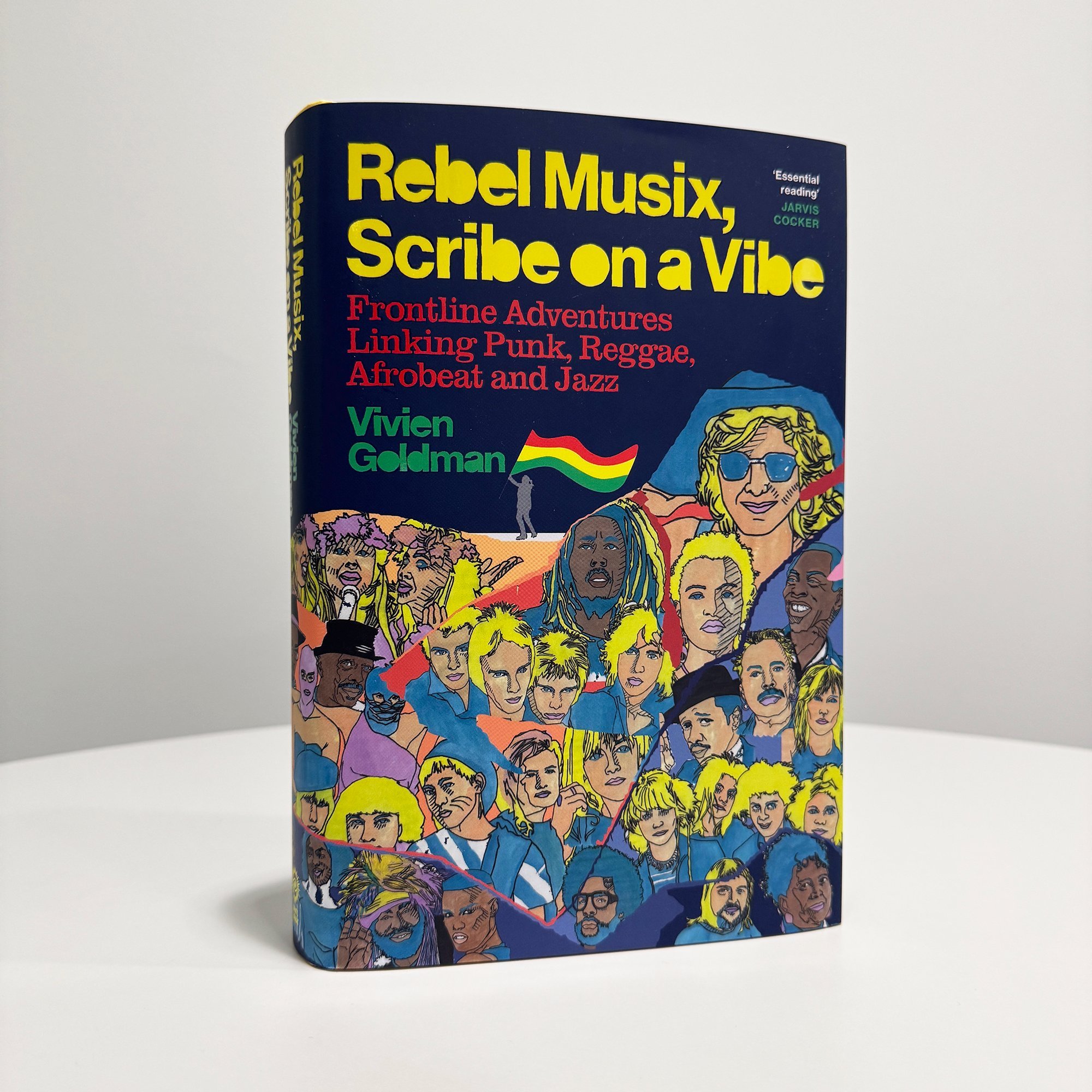
Let’s take a deep dive into the ‘Collected Works’ of celebrated music journo, feminist, roots radic and professor of punk
The Professor Of Punk : Vivien Goldman 2024
First , let me say this, in the world of music journalism Vivien Goldman is a one-off. I myself entered the world of music journalism, as a cub reporter / scribbler, not long after Vivien made her debut in print. In the mid Seventies she was working for Island records and liaising with Bob Marley and The Wailers amongst others. Her writings initially entered our musical consciousness via Sounds – a music weekly launched in 1970 to rival the Melody Maker and NME. With Alan Lewis as editor, Sounds was quick of the mark with punk rock and Vivien locked down the role of features editor. However as one scans the credits for the excellent pieces chosen to represent her work in this book – ‘Rebel Musix: Scribe on the vibe’ – she clearly emerged as an in-demand journalistic gun for hire. Vivien was getting commissions from both the NME and the Melody Maker. That in itself was unique, as partisanship was serious when it came down to rivalry between the music papers. Vivien was – and still is – the original hot steppa. Her energy fuelled writings transport us back in time and are consistently illuminating and positively refreshing.
I got to know Vivien during that culturally volatile time. Our tastes in music definitely coincide. We both wrote for the NME when the paper was edited by Neil Spencer. It’s worth saying that the weekly circulation of the NME peaked under his guidance at 230,000 – we need to reflect on that!! The dots were being joined. Punk rock, Rock Against Racism, reggae, NYC new wave, P Funk, Go Go, hip hop, “world music”…. it was a radical time.
The first section of the book – The Sound Before The Storm – has our scribe engaging in conversations with icons like Eno, Robert Wyatt and Can before heading off to an all-nighter Wigan Casino – a classic encounter. She rounds it all off with a reflective piece on the futuristic funkateer Betty Davis, whose influence on the ‘Dark Prince’ is well documented and whose ‘Nasty Gal’ LP Vivien promoted while working for Island.
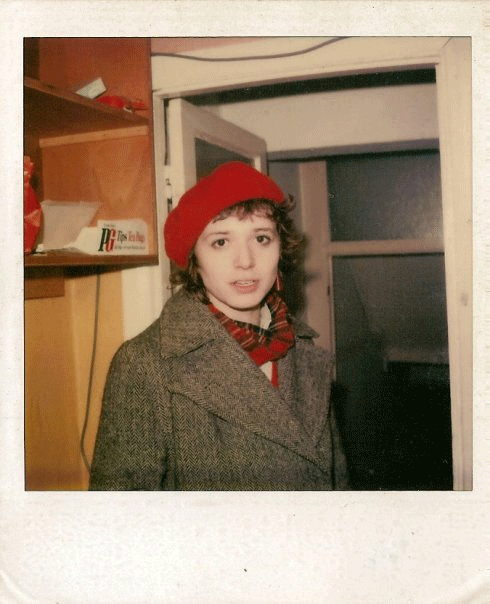
Viv{: Back In the day.
You can dip into this book or follow the editorial flow. It’s up to you. I definitely remember reading many of these pieces at the time. Vivien was always on it. As you read them you feel l like you are in the room. She’s a persistent, strong presence. She’s direct, she’s always got something to say and is not afraid to push the boundaries with whoever she’s talking to. She’s proud of her Jewish roots and she’s smart. Let’s face it there were very few women music journos at that time. There were pioneers like Val Wilmer, there was Caroline Coon. Cynthia Rose, Sheryl Garrett, Julie Burchill … but Vivien Goldman was culturally, the most expansive and a quick glance over the list of those interviewed in this book gives us a genuine sweep over the times: 1975 – 2024
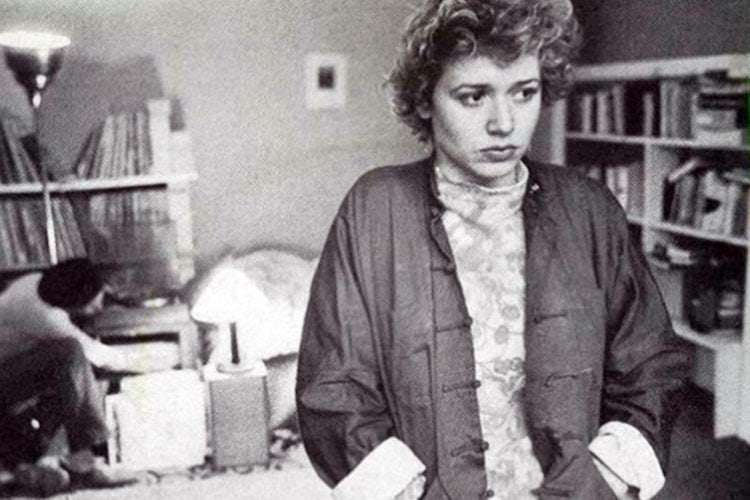
Classic shot of Viv and Archie Poole from the Dirty Washing EP – Photography by Jean Bernard Sohiez RIP
Vivien was Grove-ite and a regulat at Weasel’s shebeen. Her flat often felt like the epicentre of punk. She was close to John Lydon, the Clash… Don Letts and Aswad… but it’s in Chapter 3: The Original She-Punk Sisterhood that she burns brightest. This is her posse – Neneh Cherry, Chrissie Hynde, The Raincoats, The Slits – I loved that piece. Viv and Ari Up in NYC. Magic.
As a reader, you are drawn to her orbit. She is mostly at one with those she writes about – except maybe Peter Tosh. Now there’s a classic ideological / Biblical clash, and there’s no way she gonna let the stepping razor off the hook. Similarly with Bob Marley, they were friends, good friends, but she is still game for a good reasoning. Other good friends leap off the pages of this book… Grace Jones, August Darnell, Ornette Coleman. A serious trio… n’est-ce pas?
Hip Hop is represented by Chuck D and Hank Shocklee being interviewed in the shadow of Spike Lee’s Do The Right Thing and Rodney King’s murder. Of course, Fela is is the mix, both at the Shrine and following a concert in Brixton, at the Country Club in Hampstead where his spiritual brother and sorcerer, Professor Hindi, cuts a man’s throat and then buries him in the cold January ground only for him to be “resurrected” the following night. True story.
Vivien has since spent decades living between New York City and Jamaica, with the occasional visit to London town. This is the cultural axis around which this collection is built. She is a documentarian and adjunct professor of punk and reggae at NYU and an adjunct professor of musical cultures and industry at Rutgers University. She continues to write songs and make music. In the late Seventies she was part of the Paris based duo Chantage with Eve Blouin and her ‘Dirty Washing’ EP (1981) has quietly fuelled her enduring cult status. 2024 saw her release an album of self penned songs – ‘Next Is Now’ – which was produced by the acclaimed producer and her long time friend, Youth. Her book, Revenge Of the She-Punks (2019), introduced her to a new generation of young women pursuing their own paths in today’s rapidly changing musical world and this most recent volume , Rebel Musix: Scribe on the Vibe is a valuable addition to that. A thoroughly entertaining and genuinely inspiring offering. It offers a taste, a glimpse into a window of time when writers like Vivien were given the freedom to pen a few thousand words to illuminate the music and thought processes of those who were boldly shaping a fresh, new culture.
Basically, Rebel Musix: Scribe on the Vibe deserves a place on your bookshelf, at your bedside or on your iphone. Dive into the words. Dig out the music and play it. Enjoy!
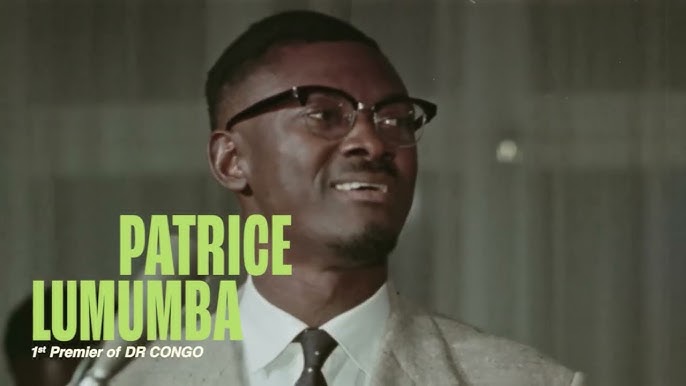
In this documentary, film maker Johan Grimonprez links the CIA’s use of Jazz in the Cold War against Russia with a deep dive into the divisive, murderous political machinations of Belgium and the USA which resulted in the 1961 assassination of Congolese Prime Minister Patrice Lumumba.
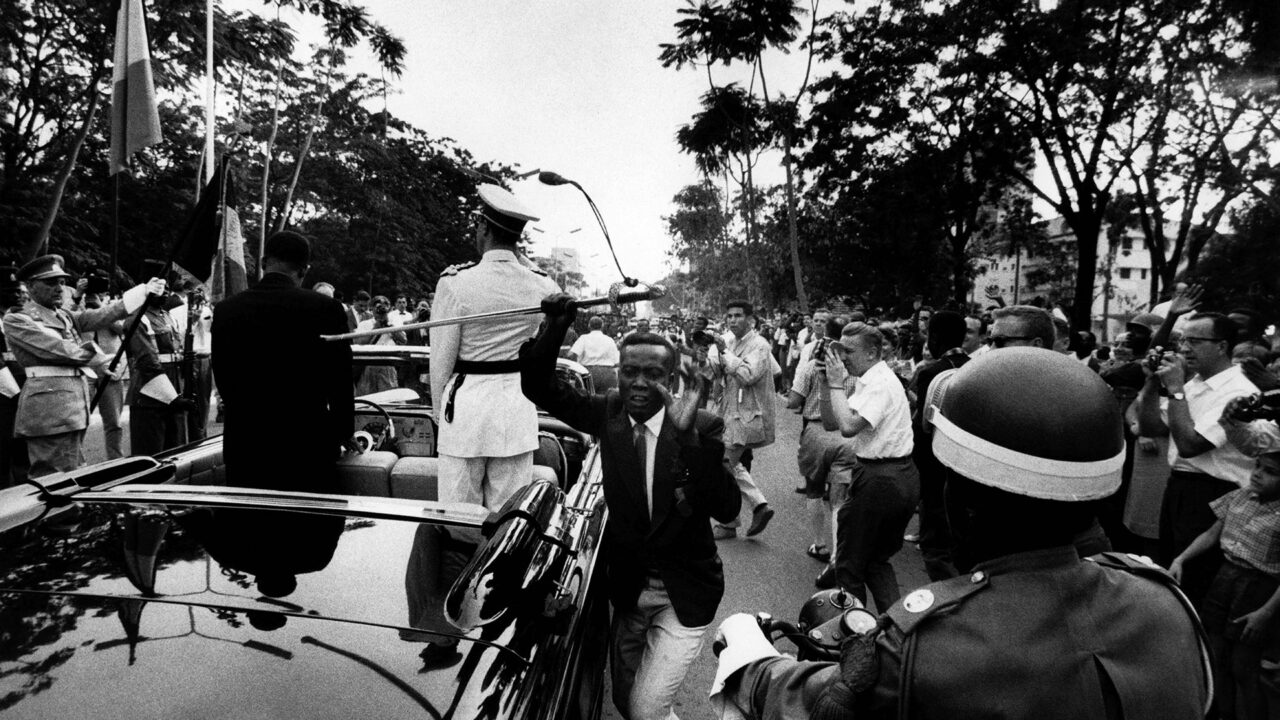
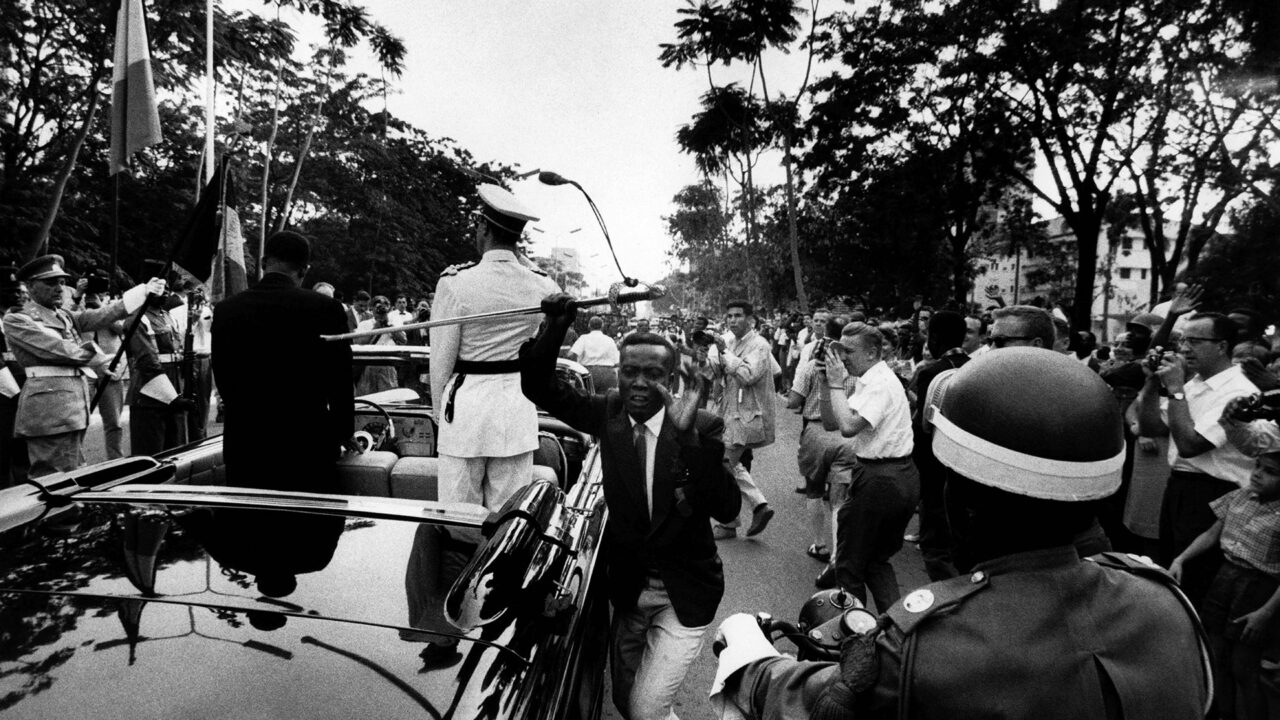
A Congolese citizen seizes the sword of Belgian King Baudoin at the independence parade.
On Tuesday night we braved the wind and rain and headed to the ICA to take in Johan Grimonprez’s documentary, Soundtrack For A Coup D’Etat. Being a jazz-head and a staunch supporter of the post war anti-colonial , anti-imperialist African liberation movements, I was super keen to see this documentary on a big screen.
Though I was aware of Patrice Lumumba’s assassination, after the Congo won its independence from Belgium in 1960, I was not prepared for the story this film delivered via interviews, archive film footage – from the UN and other news sources, along with written communications by politicians from Belgium, the USA and elsewhere.
Belgium has a deranged and deeply dark past in the Congo. In the late 1800’s, during the rule of King Leopold II, 15 million Congolese were murdered. This remains the highest known figure of genocide in world history.
However, this film is concerned with a more recent chapter in Belgium’s colonial history and is located in the post WW2 era, when momentum was gathering in the African nations for an end to colonisation and independence.
While Nkrumah was active in Ghana, so the independence movement in the Congo was also gaining traction. At the forefront of this movement emerged a young Pan Africanist, Patrice Lumumba. In1958 he became the leader of the Congolese National Movement and he was instrumental in leading the people to independence. He was elected the Congo’s first African Prime Minister.
Tragically, in the eyes of the USA and Belgium – and the British – he was branded a communist. In the shadow of the Cold War with Russia he was therefore a threat that needed to be dealt with, especially as the Congo was uranium rich. Even after independence, Belgium’s Union Minière controlled the strategically important Shinkolobwe mine – the uranium mined there was used in the Manhattan Project which produced the atomic bombs that destroyed Hiroshima and Nagasaki during World War 2.
The Congo could not go “Communist”. As such, every shadowy branch of the Western intelligence communities set to work with the intention of dividing and ruling the Congo. First the uranium rich state of Katanga declared independence from the Congo and then recruited Belgian backed, mostly South African mercenaries, to institute a reign of terror. It was then left to a Congolese army officer – Mobutu Sese Soko – to deliver the coup and oversee the capture and assassination of Lumumba.
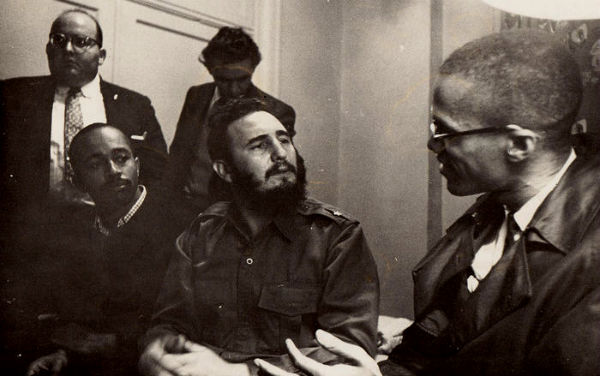
It’s a complex tale with numerous pivotal players. At heart of it is the role played by the US controlled United Nations. It’s fascinating to see the Soviet Union’s Khrushchev in full anti-imperialst flight and thumping the table at the UN before heading off to Harlem to meet up with Fidel Castro and Malcolm X.
Fidel meets Malcolm X at Hotel Theresa , Harlem 1960
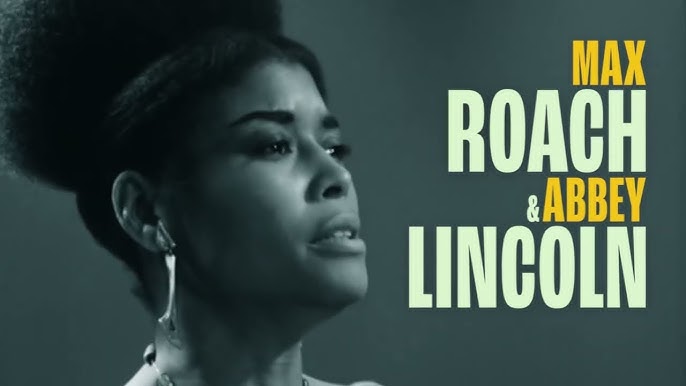
This complex tale is intercut with footage of jazz musicians who, on the one hand aligned themselves with the Pan African struggle, and, on the other, were recruited by the CIA to take America culture – Jazz – into the Soviet Union and beyond. This footage provided a fresh dynamic to the narrative. Along with Louis Armstrong, Dizzy Gillespie, Melba Liston, Duke Ellington – all of whom were recruited for various tours – we also get footage of Art Blakey, Mingus, Eric Dolphy, John Coltrane, Max Roach and Abbey Lincoln (who took part in an invasion of the UN) which, I guess, is included to reflect the intensity of the Pan African and Civil Rights struggle on the home front. A good friend, with whom I watched the film, was not impressed with some of that footage, which appeared annoyingly whimsical in the context of the deeply disturbing Congo footage. She also felt it had been somewhat shoe-horned into the narrative.
My own sense of deja vu was eased when I recalled having seen Hugo Berkeley’s excellent, 2018, PBS documentary ‘Jazz Ambassadors’ – a film we reviewed in Straight No Chaser. In 1955, Adam Clayton Powell, Jr. convinced President Eisenhower that jazz was the best way to intervene in the Cold War cultural conflict. It’s a documentary (now available on YouTube – https://youtu.be/u6wErAZkXEw?si=rjBMcIowELW6Zk06 – that provides a wealth of research combined with quality footage to give an insight into the Cold war clash between the Soviet’s Bolshoi Ballet and New Orleans’ Louis Armstrong.
There are many enduring moments in Soundtrack For A Coup D’Etat. The story of Madame Andree Blouin is one. A writer, political and human rights activist, she remained a dynamic force behind the actions of Lumumba. It’s a story that comes to an end in the film when Mobutu’s soldiers arrive at her house. She is deported but forced to leave children behind in order to secure her silence.
On reflection, I think if anyone asks me why, in the past, I was a communist, I would today say, ‘Go and see this film.”
ON THE 30TH ANNIVERSARY OF THE FALL OF APARTHEID SOUTH AFRICA CHILA NATHI AND TRC HOST THE FIRST INTERNATIONAL PERFORMANCE OF CAPE TOWN BASED ENSEMBLE, KUJENGA.
It’s a wintery night with a bright half moon and I am greeted at the door to the Total Refreshment Centre by two shadowy figures, well wrapped against the cold. One of the duo is Theo, the co-organiser of tonight’s Chila Nathi Special: In The Golden Wake. Three decades have passed since the defeat of the apartheid system In South Africa and tonight’s event asks its attendees to consider, “How do we memorialize an event that is still ongoing?”. It also plans to introduce London to Kujenga, a bold young ensemble described by one of their mentors – Siya Mthembu of The Brother Moves On – as “the future”.
As I am a touch late I ask Theo, “How’s it going?”. She happily informs me, “It’s packed”. Indeed, the room hosting the event is overflowing, spilling out into the corridor. As I edge my way in I am kindly offered a complimentary glass of wine which I readily accept and find a spot next to TRC’s Alexis Blondin and behind the night’s other co-ordinator, Teju Adeleye.
Kujenga : Photo by Theo
There’s a conversation going down between two members of Kujenga – Owethu Siphiwo (piano / keys) and Zwide Ndwandwe (bass) – and DemiMa, the granddaughter of late great pianist / composer Bheki Mseleku. It’s conversation that circles around tunes of their choice that have influenced them. It’s an intimate space and the audience response to the both the music and conversation clearly reflects the strong African presence in the room.
It’s down to Teju to introduce the music – ‘Not Yet Uhuru’ – Letta Mbulu / ‘Inhlupheko’ – The Soul Jazzmen / ‘Remember Sophiatown’ – Miriam Makeba, The Skylarks / ‘Idabi Labantu’ – iPhupho L’ka Biko / ‘Celebration’ – Bheki Mseleku – / ‘Boom Shaka’ – Gcwala – to the gathering but it’s down to the panel to contextualise, to frame, what is being heard. Context is King when it comes to the rich cultural and musical history of communities like Sophiatown, Meadowlands or District Six that were flattened, erased by South Africa’s apartheid regime. Questions are raised that reflect the ongoing struggle in South Africa, especially for them, as young activists – culturally and politically. Parallels are aso drawn with the Iraeli / Gaza conflict. It’s no surprise that South Africa was a prime mover in getting the ICC to issue arrest warrants for Netentyahu and Galant.
In 1995 I went to both Joburg and Cape Town as part of the Melt2000 project. It was a venture that united musicians from the London dance-jazz (acid jazz) scene alongside Brazilian master musicians, Airto Moreira and Jose Neto, with a host of brilliant South African musicians. There was an air of positivity and optimism about the future. The intense local struggle, led by the ANC, combined with consistent international pressure against apartheid had finally broken the system. A new dawn was declared. It was joy to sit and reason with veteran musicians like Pops Mohamed, Busi Mhlongo, Sipho Gumede, Fana Zulu, Dizu Platjes, Madala Kunene and Mabi Thobejane plus new generation dons like Moses Molelekwa and Max Ngcobo. It was also a privilege to encounter the belief systems of the traditional healers, the Sangomas, and others, like the members of the Inthelelo Yabalazwane Choir.
Thirty years have gone by since then and the ‘Rainbow Nation’ is still dealing with the shackles of global capitalism combined with the legacy and collective trauma of colonialism and a brutal, racist, South African regime. On this night at TRC the audience is drawn into the reflections of a generation who weren’t even born when apartheid was formally abolished. Their reflections embody a continuum that necessarily reflects a musical history which has all but been erased in their homeland, when it needs to be celebrated as part of the people’s modern identity.
When DemiMa chose to play Bheki Mseleku’s wonderful ‘Celebration’ we got a taste of the longstanding links between London’s jazz community and the South African musicians like Dudu Pukwana, Mongezi Feza, Louis Moholo, and Bheki Mseleku who were forced into exile during the apartheid era.
Kujenga : Photo by Theo
After a piano / poetry interlude featuring DemiMa, Kujenga filed into the room, picked up their instruments and treated us to a selection drawn mostly from their ‘In The Wake’ album. Electric bass, drums and piano are supplemented by a three piece horn section and a sublime electric guitarist – Thane Smith. You have to love Zwide Ndwandwe’s crystal clear bass lines and the slightly mournful but sonically uplifting combination of trombone was trumpet courtesy of Tamzyn Freeks and Bonga Tandekile Mosola.
Between songs, Zwide illuminates the story behind the composition and places us, the listeners in their shoes, during the isolation of the Covid pandemic and their need for community. ‘Remembrance’ draws us in with a spacey guitar and piano before the horns weigh in. The crowd are completely at one with the ensemble and as the set evolves it’s punctuated by shouts of approval. As they deliver compositions like ‘A World Within, A World Without’ and ‘It Was Wonder’ there’s a sea of arms in the air.
An encore consist of an unrecorded tribute to Fela Kuti and Tony Allen. What is initially, a breezy and chilled interpretation of Afrobeat suddenly explodes. The drummer, Keno Careise, gets his chance to lift the crowd and shine, as does tenor-man, Matthew Rightford. The room kicks off as bodies swoop and rise to the challenge of the music. The vibe is ecstatic and Zujenga – their name means “ to build” in Swahili – have, on their very first international gig, clearly proved they are an ensemble to be reckoned with. Zujenga are here to stay.
The night was organised by Teju and Theo along with their good friends Dexter, Retha and Nancy as part of a series called Chila Nathi: a colloquialism meaning ‘come chill with us’. In July they hosted Sky Dladla, Zolani Moholo, Eddie Hicks, Sekuru, Mrisi, and Aron Halevi to explore culture and spirituality.
Plum Publications
Excellent resource for run by Ted & Debbie in California, both long time martial arts practitioners…. lots of books, dvds etc with informed reviews based on experience.
SUPA DUPA rare 'n' old skool Nigerian Ju Ju, Fuji & hi life…
Just haul up the the groovemonzter, log on & stream the majestic sounds of Sir Shina Adewale, Dr Orlando Owoh, King Sunny Ade, Cardinal Rex Lawson, Queen Oludunni Decency, Tunde Nightingale, Alhaji Sikuru Ayinde Barrister…. wonderful!
the blue moment
Richard William’s exellent reflections on the world of music and….
Plum Publications
Excellent resource for run by Ted & Debbie in California, both long time martial arts practitioners…. lots of books, dvds etc with informed reviews based on experience.


























 ancienttofuture.com