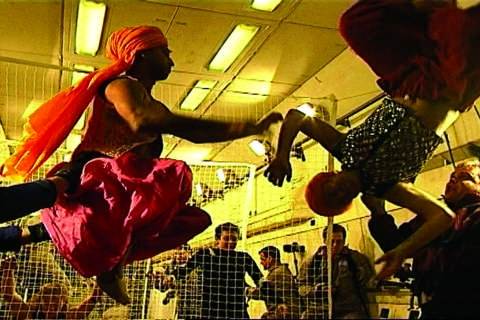
TOKIO AOYAMA: VISIONS Of A PSYCHEDELIC SOUL

In August – 23rd to 29th – Darren  Springer’s Ancient Future organisation joins forces with the Hoxton Gallery to showcase the paintings from Tokio Aoyama which mix the myth, music, spirit and the essence of nature into one palette of imaginative psychedelia.

This is Tokio’s  first visit to the UK and his art works draw inspiration from ethereal sources such as ancient mythology, the wonders of the cosmos, and psychedelic experiences and states of mind. While he is influenced by artists like Picasso, Dali, Frida Kahlo, Diego Rivera and Jean Michel Basquiat, Tokio channels through his art the essences of peace, ascension and love as embodied by musicians such as Bob Marley, Jimi Hendrix, Stevie Wonder and Sun Ra.

On the eve his visit I decided to shoot off a mail to Tokio in Japan and ask him a few questions. Enjoy.

J Dilla

Are your roots in the city or the country side?
I grew up in the countryside in the north of Japan. I never really grew up in a big city.  My roots along with most of my family can be found in the countryside.

Did you grow up in the Buddhist or in the Shinto traditions or both?
I grew up in both …we have buddhist funerals but we celebrate and go to festivals based in the Shinto tradition. We also go to shrine (Shinto) and pray during the New Year. Well most people in japan don’t know about what is Shintoism and what is Buddhism because everything is so mixed.

 Can you explain briefly how the practices of Shinto / Buddhism relates to your life in Japan and how these belief systems influenced your work?
It definitely influences my paintings especially after living in Seattle Washington for a few years. I say this because being away from home made me more aware of the cultural differencesbetween Japan and America so I instantly became more aware of myself as a Japanese person and my cultural practices.  The temple and shrines by themselves are so beautiful and their art influences me in many ways.  The festivals and practices of the peoples in the shrines are very inspirational and spiritual…very unique.

Are you self taught?
Yes I am.  But I went to graphic design school and studied drawing a little bit in Seattle but not painting.  I actually didn’t finish the school.

How do you relate to the graff / street art scene?
Movies, music, American culture, mostly inspired me.  Especially as a teenager when I first came to the USA I was mostly inspired by what I saw in the USA.  Yet as I got older, ancient and spiritual artifacts and culture mostly inspire me now. 

Psychedelia obviously rose to global notoriety in the Sixties…. 50 years later you are tapping into that culture. Having visited Japan it seems to me that immersing oneself in commercial drug culture (ganja, LSD, cocaine  etc) is a potentially risky business. Is there an undergound culture where, for example, people go hunting for mushrooms etc.
Yes, it is definitely there. Some people do go hunting for mushrooms in the forests and mountains.   Some people even grow ganja in the secrecy of their own backyard but it is so risky. I won’t do that because the laws in Japan concerning drugs or magic mushrooms are extremely strict and carries a heavy price for anyone caught in such a business.Many people don’t know that many people used to grow Ganja before the WW2 and it was a common and normal thing for Japanese people and people used the mushroom for certain ceremonies.  But that culture was destroyed by  the occupying Americans who made certain rules concerning drugs and morality in Japan.  Also ganja is closely relatedto Shintoism and everyday life, but people have forgotten about that fact and now it is a really bad thing to take ganja.

 Japan, like Britain is an island culture and post WW2 – like Britain – Japan has absorbed waves of Black culture from the US and Jamaica along with music from Africa, Brasil, Latin America…. is this a minority thing compared to J-pop… or is this where the creativity is?
A lot of Japanese people are inspired by the African american, African, and Jamaican artists that they see on TV or hear in the radio and it has been that way for a long time.  It is not a small movement.  I remember as a kid seeing Stevie Wonder, Ray Charles, and various Black artists in advertisements and commercials on TV.  J-pop is big in Japan but I am not really into J-pop of today.  Hip hop and Jazz is extremely popular in Japan.

How important was it connecting with Georgian Ann Muldrow and Dudley Perkins in taking your work international?
I had loved their music before they even know about me or my artwork.  Their music is very unique and pleasant for me to listen to.  They were very instrumental in getting my name out on the international stage. Each time someone saw their album they also saw my work so it was like handing my business card to thousands of people, something that would have been difficult for me living in Japan.

What is it in their music that inspires you?
The message that they are trying to say in their music really connects to my thoughts and beliefs about life and people.  Of course, I do love their beats and melodies.  

Have you traveled a lot?
I think so.  I have been to Colombia, Jamaica, parts of the USA, Canada, Italy, Thailand, and soon England.

Is there a particular shamanistic / transcendental tradition that you adhere to or in this age of information do you find yourself engaging with concepts and experiences born of other spiritual traditions from around the world.
I don’t have a particular  religion or follow a certain shamanistic tradition.  It’s a mix of everything for me.  I really do like Shintoism but for now, many things from around the world inspire me.  I like Shintoism because it respects many aspects of nature but I don’t strictly follow it.  Ayahuasca however is something that I would like to try in the future.

 Following the tsunami and the ongoing nuclear disaster at Fukushima daichi power plant have you as an artist been compelled to focus your vision on the physical impact this is having on the people, the environment and the culture?
Not as an artist but as a volunteer.  After the disaster me and my family and friends went to the disaster area and gave food and supplies along with helping to move debris.  It was an eye opening experience.  I don’t support such things as a nuclear power plant and I was in a protest using my art as a way to educate people about the dangers of nuclear plants.  I also did a few covers for a freepaper that was talking about the dangers of nuclear power.

I feel that one’s spiritual quest is inevitably linked to our immediate and global environment and therefore to activism of some kind. Has the nuclear disaster thrown up a new generation of activists and how important is it for the cultural /arts underground to get behind them?
This disaster has inspired many Japanese people to protest and speak out against the use of nuclear energy in Japan.  Just about every Friday, many Japanese people in Tokyo and around Japan are getting the word out about their anger and mistrust of the government using nuclear energy as a major power source, even with the dangers involved.  Many artists, popular and underground are doing their best to speak out against nuclear energy after seeing the horrifying events of March 11, 2011.On the other hand, many people think that the Fukushima disaster is over but it is still going on and we still need to think of a solution of the problem in the coming years. 

Thank you!

CHECK IT OUT @ HOXTON GALLERY, 9 Kingsland Road, London E2 8AA

Thursday 23rd August 6.30pm – 9.30pm: LIVE PAINTING SESSION w/Tokio Aoyama
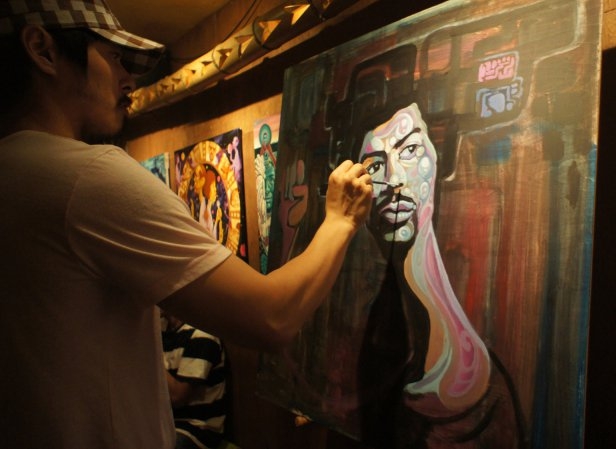

An opportunity to see Tokio at work in an interactive
session that will also see him share the techniques and
inspirations behind his work.

Saturday 25th August from 5pm: EXHIBITION CONFERENCE

The conference will be a panel-style forum featuring psychedleic art. They’ll be openly discussing their work, the current climate, and the future of the medium.

More info: http://www.ancientfuture.org.uk

(Please note:  Ancient To Future and Ancient Future are related only in attitude and spirit!)

Posted in Just Runnings | Tagged , , , , , , , , , , , | 2 Comments

Olympics 2012… takes me back…. way back… to discover a working class woman, welder and Olympian

It’s a muggy, grey day in London town and life has somehow returned to normal.  Having worked full-on for 4 weeks on the Word Sound & Power: Reggae Changed My Life exhibition –  including a week in the O2 – the Olympic Games definitely provided an adrenaline filled after-party.

The O2 was host to an array of Olympic activities including the ever popular gymnastics. That led us to partake of numerous tube rides with carriages full of vibed up volunteers and spectators, and undergo the venue’s airport style security manned by a sensible squad Royal Marine Commandos. By the time our installation at the British Music Experience officially opened I was stoked and ready to settle into an Olympic groove that promised some serious action.

Basically, during the final week  I took in just about everything. How could anybody resist the athletics… long distances, short distance, relays, hurdles…. mind blowing stuff… Usain Bolt & the Jamaican posse, the American women’s relay team… Mo Farah,  David Rudisha and Jessica Ennis?  The velodrome was intense and the carnage on the BMX track shocking. I got sucked into the boxing,  taekwando, diving… even the dancing horses. I was clear that Olympic athletes don’t need drugs, sport is their drug, and what we got on or TV screens was the culmination of  hours, weeks, months, years of devotion, hard work and sacrifice . No pain no gain combined with the thrill and energy of the moment.

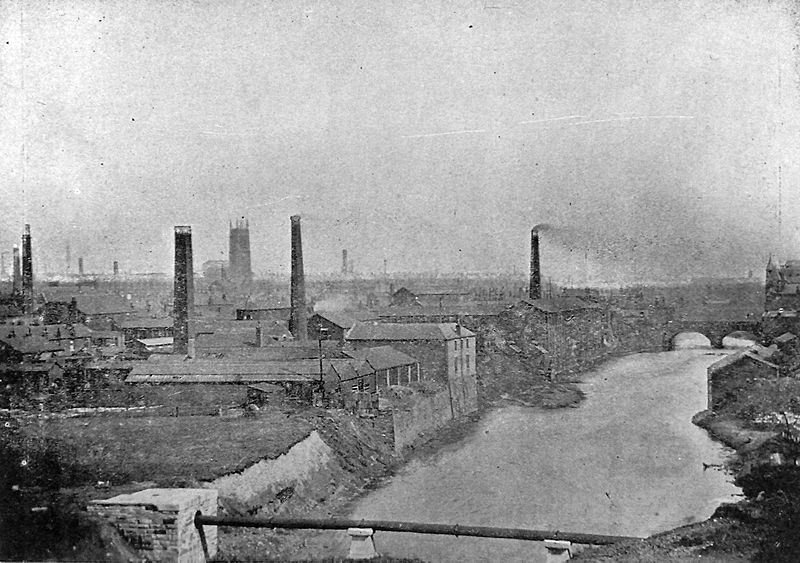
However, two events threw me back in time. Firstly, I was blown away by Danny Boyle’s vision for the opening. It was a wild ride and his version of this island’s history definitely resonated with my own experiences of being British. Boyle and I grew up in the same northern mill town. A town where England’s green and pleasant land gave way to dark satanic mills. And those chimneys! How did he do that?  I was impressed.

RADCLIFFE – 1902 – CHECK THOSE CHIMNEYS!

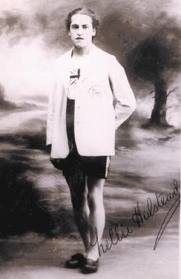
The second event was a BBC report on women in the Olympics which  suddenly conjured up the vague childhood memory of a neighbour who’d been in the Olympics. Radcliffe is a working class town and it’s had its fair share of sportsmen. My old man was an FA coach. It’s cricket Club featured West Indian legends Sir Frank Worrell and Garfield Sobers. Paul Gascoigne played for the local Borough football club. On the snooker table it gave us John Spencer. So who was this Olympian? As kids we knew her as Nellie. She was well respected but Nellie Halstead was a bit different. She was quite manly and I recall she was a welder. She had  a rep as a famous runner and that was it. Basically,  I knew nothing about Nellie so I googled her.

Nellie Halstead: Olympic Champion, footballer and master welder.

Turns out that in her day Nellie Halstead  was known as “Britain’s greatest woman athlete”. Born in Radcliffe in 1910 , the teenage Nellie joined the Bury and Radcliffe Athletic Club. At the age of twenty, she competed at the English Championships and broke the world record for the 220 yards sprint. She then went on to break the world record for the 440 yards race in 56.08 seconds – a record which stood for 22 years.

True to the legend, in 1932,  she joined Team GB and set off for  Los Angeles to compete in the Olympic Games where she won a bronze medal in the 4×100 relay. In 1934, at the Empire Games, she represented England and won gold in the then 3×110/220 yards, silver in the 4×110/220yds and a bronze in the 220 yds. Nellie also raced in Berlin (Jesse Owens blitzed Hitler’s Arian race in Berlin 1936 – wonder if she was there? ) , Prague, and San Francisco.

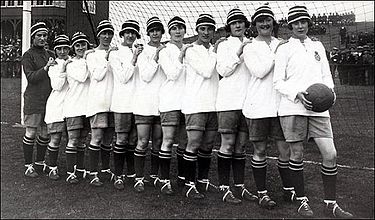
Dick Kerr’s Ladies Football Team

In line with another highlight of the 2012 Olympics – the women’s football –  it transpires that as Nellie’s running career came to an end an end, she signed up for for the Dick Kerr Ladies Football Team as their centre -forward. It was the popularity of this women’s football team that prompted the FA to ban them from playing on registered pitches! In later life she became an excellent golfer.

A working class woman, Nellie Halstead, did what most people only dreamed of. She began her working life as a weaver but when her running career took over she was given part time work in a local brewery. During the war years she became a highly skilled welder, a trade she maintained until retirement (which meant working on the egg  stall at Radcliffe Market). Nellie came from an era of radio and newspapers – pre-Television –  and not surprisingly vanished into obscurity and despite today’s huge media attention maybe that what happens to the majority of Olympians. They take home Gold, Silver and Bronze and slip quietly into history.

Uncovering Nellie Halstead’s pioneering role was touching. As kids one of our heroes was Alf Tupper, a tough working class runner who took on and beat the toffs, week in week out, in The Victor comic. Little did we know that the real life women’s version lived a couple of doors away.  We’ve come a long way in terms of women’s participation in athletics and respect is most definitely due to women like her. I’d like to know more. However, right now as our Olympic heroine Nellie only merits a one line mention on Radcliffe’s pretty comprehensive Wikipedia page I need to see that’s boosted up!

Don’t you just love people’s history.  It’s the best!

Posted in Just Runnings | Tagged , , , , , , , , | 9 Comments

STANDING UP AGAINST PUTIN, THE KGB & THE RUSSIAN ORTHODOX CHURCH: Feminist punk group Pussy Riot face up to 3 years in prison.

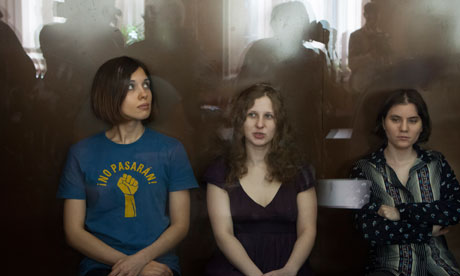
Sitting in the glass cage alongside her two fellow band members Maria Alyokhina and Yekaterina Samutsevich, Nadezhda Tolokonnikova wore a T-shirt emblazoned with a clenched fist and the the famous Spanish War slogan ‘No Pasaran’.  It’s a trial that Dolores Gomez Ibarruri, famous as La Pasionaria would have been appalled at. These bold young feminist women are charged with hooliganism motivated by religious hatred following an anti-Putin performance in a Moscow cathedral.

They face a state prosecutor who is demanding they serve a minimum of 3 years  out of a possible  7 year sentence but that didn’t stop Maria Alyokhina telling the court, “I am not scared of you. I’m not scared of lies and fiction, or the badly formed deception that is the verdict of this so-called court. Because my words will live, thanks to openness.”

Below is a re-print of Yekaterina Samutsevich’s elegant Closing Statement at the Pussy Riot Trial. It gives us a rare insight into the perverse nature of the constitutionally secular state that is modern Russia. As a former card carrying Commie I know whose side I’m on and it’s not Putin’s.

Yekaterina Samutsevich, defendant in the criminal case against the feminist punk group Pussy Riot

” During the closing statement, the defendant is expected to repent or express regret for her deeds, or to enumerate attenuating circumstances. In my case, as in the case of my colleagues in the group, this is completely unnecessary. Instead, I want to express my views about the causes of what has happened with us.

The fact that Christ the Savior Cathedral had become a significant symbol in the political strategy of our powers that be was already clear to many thinking people when Vladimir Putin’s former [KGB] colleague Kirill Gundyaev took over as head of the Russian Orthodox Church. After this happened, Christ the Savior Cathedral began to be used openly as a flashy setting for the politics of the security services, which are the main source of power [in Russia].

Why did Putin feel the need to exploit the Orthodox religion and its aesthetics? After all, he could have employed his own, far more secular tools of power—for example, national corporations, or his menacing police system, or his own obedient judiciary system. It may be that the tough, failed policies of Putin’s government, the incident with the submarine Kursk, the bombings of civilians in broad daylight, and other unpleasant moments in his political career forced him to ponder the fact that it was high time to resign; otherwise, the citizens of Russia would help him do this. Apparently, it was then that he felt the need for more convincing, transcendental guarantees of his long tenure at the helm. It was here that the need arose to make use of the aesthetics of the Orthodox religion, historically associated with the heyday of Imperial Russia, where power came not from earthly manifestations such as democratic elections and civil society, but from God Himself.

How did he succeed in doing this? After all, we still have a secular state, and shouldn’t any intersection of the religious and political spheres be dealt with severely by our vigilant and critically minded society? Here, apparently, the authorities took advantage of a certain deficit of Orthodox aesthetics in Soviet times, when the Orthodox religion had the aura of a lost history, of something crushed and damaged by the Soviet totalitarian regime, and was thus an opposition culture. The authorities decided to appropriate this historical effect of loss and present their new political project to restore Russia’s lost spiritual values, a project which has little to do with a genuine concern for preservation of Russian Orthodoxy’s history and culture.

It was also fairly logical that the Russian Orthodox Church, which has long had a mystical connection with power, emerged as this project’s principal executor in the media. Moreover, it was also agreed that the Russian Orthodox Church, unlike the Soviet era, when the church opposed, above all, the crudeness of the authorities towards history itself, should also confront all baleful manifestations of contemporary mass culture, with its concept of diversity and tolerance.

Implementing this thoroughly interesting political project has required considerable quantities of professional lighting and video equipment, air time on national TV channels for hours-long live broadcasts, and numerous background shoots for morally and ethically edifying news stories, where in fact the Patriarch’s well-constructed speeches would be pronounced, helping the faithful make the right political choice during the election campaign, a difficult time for Putin. Moreover, all shooting has to take place continuously; the necessary images must sink into the memory and be constantly updated, to create the impression of something natural, constant and compulsory.

Our sudden musical appearance in the Cathedral of Christ the Savior with the song “Mother of God, Drive Putin Out” violated the integrity of this media image, generated and maintained by the authorities for so long, and revealed its falsity. In our performance we dared, without the Patriarch’s blessing, to combine the visual image of Orthodox culture and protest culture, suggesting to smart people that Orthodox culture belongs not only to the Russian Orthodox Church, the Patriarch and Putin, that it might also take the side of civic rebellion and protest in Russia.

Perhaps such an unpleasant large-scale effect from our media intrusion into the cathedral was a surprise to the authorities themselves. First they tried to present our performance as the prank of heartless militant atheists. But they made a huge blunder, since by this time we were already known as an anti-Putin feminist punk band that carried out their media raids on the country’s major political symbols.

In the end, considering all the irreversible political and symbolic losses caused by our innocent creativity, the authorities decided to protect the public from us and our nonconformist thinking. Thus ended our complicated punk adventure in the Cathedral of Christ the Savior.

I now have mixed feelings about this trial. On the one hand, we now expect a guilty verdict. Compared to the judicial machine, we are nobodies, and we have lost. On the other hand, we have won. Now the whole world sees that the criminal case against us has been fabricated. The system cannot conceal the repressive nature of this trial. Once again, Russia looks different in the eyes of the world from the way Putin tries to present it at daily international meetings. All the steps toward a state governed by the rule of law that he promised have obviously not been made. And his statement that the court in our case will be objective and make a fair decision is another deception of the entire country and the international community. That is all. Thank you. ”

This statement is reprinted from http://chtodelat.wordpress.com/ – “News about activism, art and critical thought from Russia and elsewhere.” Check it out.

Photography: Top – Alexander Zemlianichenko  Below –  Alexandra Astakhova.

Posted in Deep stuff, Follytricks! | Leave a comment

Tonight… I-Ficial Opening … Word Sound & Power: Reggae Changed My Life…

Greetings & Apologies!  I’ve been a little bit quiet on the ancient to future tip due to Swift and myself trodding between Ealing, Hackney and the 02 working on Stage 2 of the Word Sound & Power: Reggae Changed My Life exhibition.

Box & Beezer’s Wild Dayz shots

So, in the midst of Olympic mayhem we are poised for the I-ficial opening of both Word Sound & Power along with Bob Marley ‘The Messenger’ exhibition… yes, it’s tonight

Duke Vin poster: A Swifty Original

It’s a work in progress… it’s not definitive.  We pretty much regard Stage 2 as the foundation for the future.  Swift’s artworks just keep on coming and we are sitting on some incredible archives that need to be seen. There a whole bunch of artists/designers, all itching to add brand new original pieces to the show and we need that interactive dimension which will allow the people to tell their stories.

However, in the mean time, enjoy the journey so far.

Count Shelley Box: A Swifty Original based on a photo by Dennis Morris

http://www.britishmusicexperience.com/reggae-changed-my-life/

Posted in Deep stuff | Leave a comment

Yeah Nah! The movie!

Big respect to the Aukland PIYN crew… good times.

Posted in Deep stuff | Leave a comment

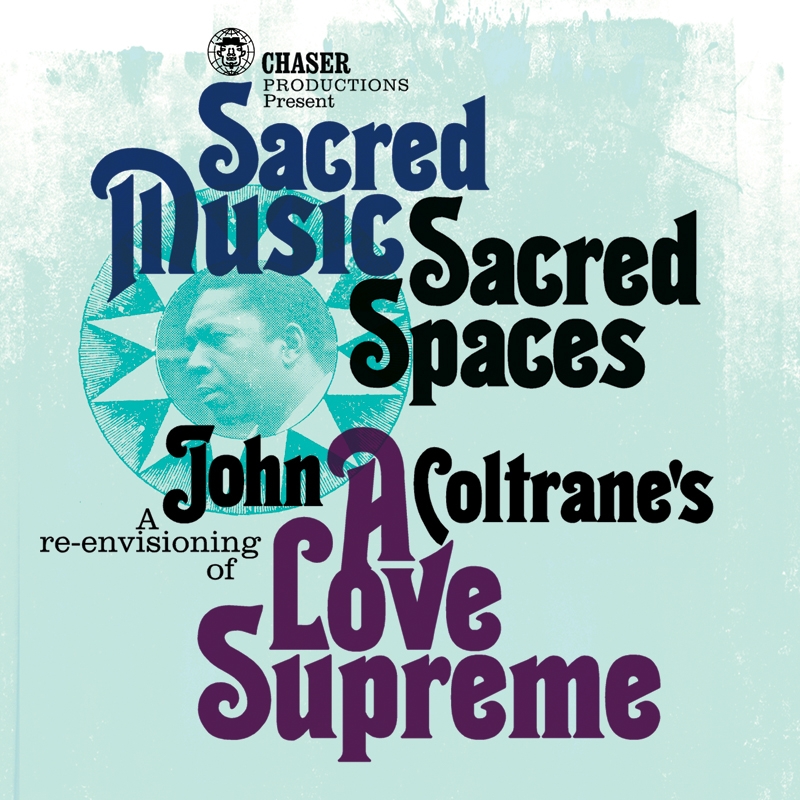
THE JOURNEY : JOHN COLTRANE’S ‘A LOVE SUPREME’ & A SUMMER SOLTICE ALIGNMENT OF SPIRITUAL FORCES

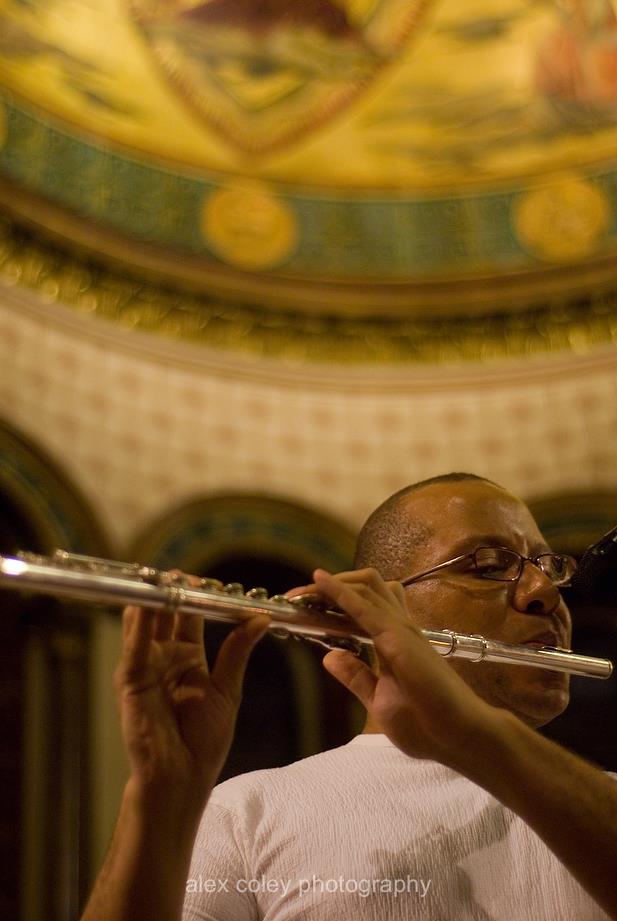
Composer… flautist… Rowland Sutherland

It seems a long time ago that Jason Jules and myself began to explore the potential of a concept – Sacred Music : Sacred Spaces. Back then our sights were  fixed on Spitalfields, an area that encompasses Brick Lane and has a rich but turbulent history rooted in a succession of immigrant communities that settled there after fleeing from cultural and religious persecution. At the heart of that community, adjacent to the Ten Bells, a public house long associated with the area’s debauched and brutal  past, stands the impressive Christchurch Spitalfields. It’s  a Hawksmoor church which reputedly sits on a web of energy lines that criss-cross the city. This was surely the place to initiate Sacred Music : Sacred Spaces.

Despite being unsure about the restrictive sight-lines,  due to the narrow nave of the church, we penciled in a booking. However, as with most good ideas that embrace a bold vision, the spectre of a budget that didn’t balance led to a stealthy retreat. As Lenin or Max Romeo would say:  ” One step forward two steps backward.”

Sacred Music : Sacred Spaces as an event went onto the back burner. That said,  the concept of re-envisioning John Coltrane’s ‘A Love Supreme’, as a healing force for our own troubled times, continued to provide a  focus for many a conversation. In itself, too much chat can be counter productive. One can talk about an idea so often it almost feels like you’ve actually done it. Fortunately, the project was rescued from that particular fate by a friend who suggested a PRS Foundation New Works grant application.

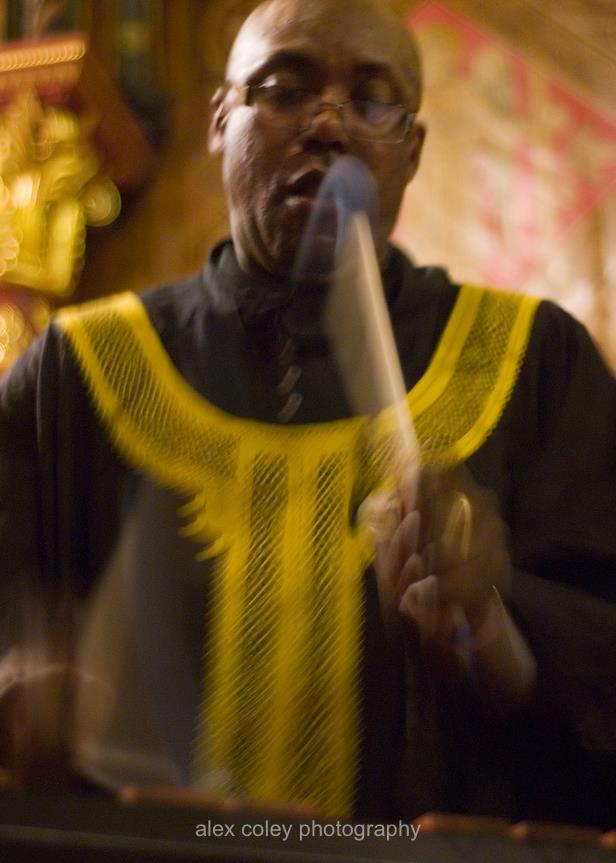
Marimba Master – Orphy Robinson Pic: Alex Coley

Amazingly, our efforts were successful and it became possible to commision  master flautist Rowland Sutherland to re-envisage Trane’s iconic suite in four parts.  In fact, Rowland was my first choice to tackle this composition as I’d once witnessed a terrific performance where he had been responsible for scoring the works of Sun Ra.  Another musician, also involved in that performance, was Jazz Warrior, Orphy Robinson, and as both Jason and myself had a good working relationship with this vibes-marimba don he was an obvious choice for musical director.

Rowland commenced work on the score at the dawn of 2012 and one proviso of the PRSF grant was an actual performance date. Tricky. Very tricky. The task for Chaser Productions was to combine an auspicious date on the astrological calendar with an appropriate venue and adequate finances and that was always going to problematic. Sacred Music: Sacred Spaces was always going to be an ambitious, expansive and expensive venture.

Like the collaborative  Shape Of Things To Come events that I’d curated through Straight No Chaser in the Nineties,  Sacred Music: Sacred Spaces embodied an intuitive dimension that allows things to grow organically.

Some people would describe that process as crazy as it has a tendency to spiral out of control. I don’t disagree with that but you do have to get it right and that element is not always tangible. With Sacred Music : Sacred Spaces there was  an obvious chemistry involved in combining the musicians and an appropriate performance space with the key concepts but  it also demanded intuitive respect for an alchemy that relates to principles and practices rooted in myth, religion and spirituality.

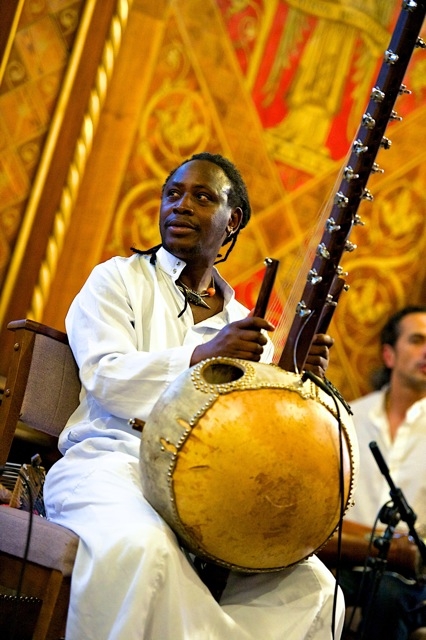
Mosi Conde Pic: Alexis Maryon

By good chance I was introduced to the acting head of Sound & Music – Guy Morley. A most knowledgeable, veteran of the UK’s thriving alternative music scene he was immediately empathic to the concept of re-envisioning Coltrane’s music in line with our own time and in tune with the cultural and religious diversity of our own inner cities.

It was Guy who suggested I check out The Chapel at Kings College on The Strand  and when I did I was bowled over. After 30 minutes of sitting quietly, listening to someone playing the organ and taking in the architecture of Gilbert Scott along with the iconography of the images in the stained glass windows, this wayward soul  was convinced it was the right setting for Sacred Music : Sacred Spaces.

An initial performance date around Easter time was shelved but with Sound & Music on board, with a promise of financial assistance for the premier performance, we happily settled on June 21st, the summer solstice, as the most auspicious date possible!

The Chaplain at Kings, Tim Ditchfield was relaxed, quietly enthusiastic and most helpful, promising us several days prior to the 21st when when we could workshop and rehearse Rowland’s composition in the Chapel itself. It was all good.

The process itself was compelling. For me, it was picking up on all the reference points that I had given to Rowland to consider when confronting the original and creating his own score. We had listened extensively to the muscular live performance of ‘A Love Supreme’ by the Coltrane Quartet in Antibes, checked the out-takes of Trane trading phrases with Archie Shepp, snapped up the recording of the whole suite by the Turtle Island String Quartet, reflected on Jon Hendricks reading the words to Psalm and been mesmerised by both Anga Diaz and Alice Coltrane’s innovations. For Rowland, the quest was to take the music into another dimension. As Wynton Marsalis maintained when approaching the suite himself replicating what had gone would be a waste of precious musical time

Brilliant rehearsal shot – l to r Rowland, Steve , Shabaka by Alexis Maryon

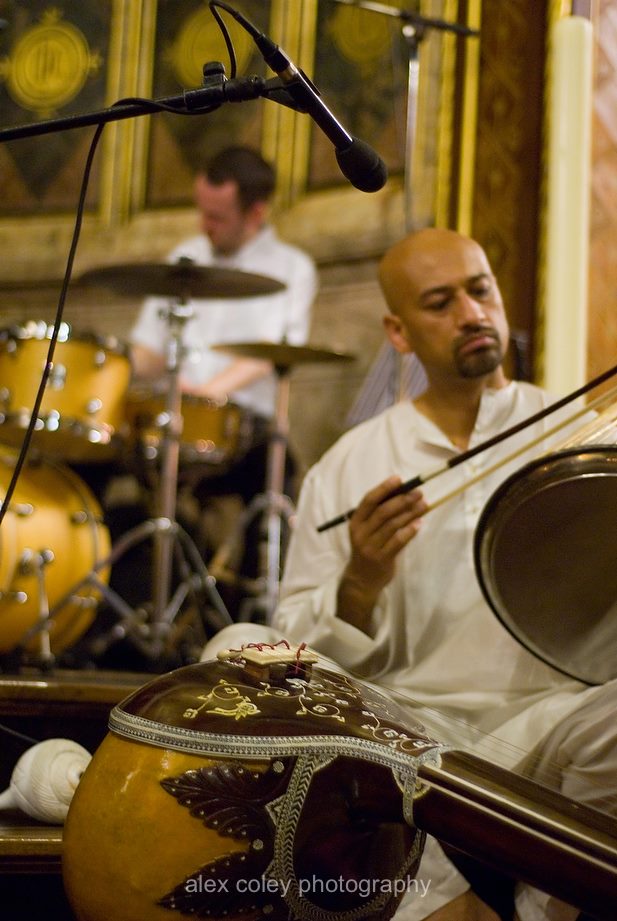
Rowland got the non European instruments together first. After discovering that Sona Jobarteh couldn’t fill the kora spot we sought out a replacement.  Mosi Conde, from the Guinea griot tradition stepped in and he immediately found his place alongside the musical magician Ansuman Biswas who graced the session with the sounds of  santoor, tablas and the waterphone (think whales!). The deities of Ifa were represented by the rhythms laid down by the trio of bata drummers – Ade Ogun Crispin Robinson, Dave Pattman and Oli Savill – it was fascinating to watch and hear Ansuman work out how to lock the tablas into their complex patterns.

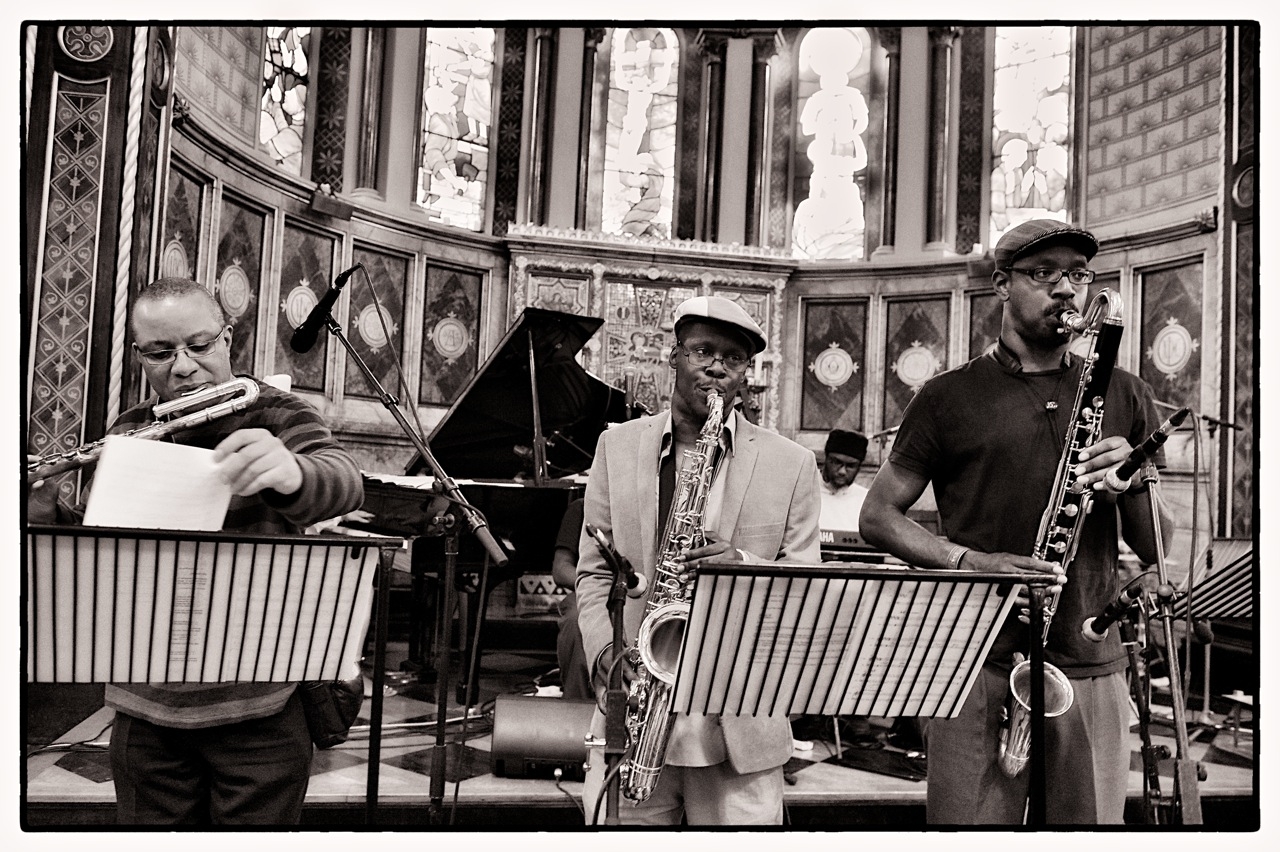
The next session saw the “jazz” instruments come together. Keys, bass, drums, horns and, of course Rowland’s flute and Orphy’s marimba”. This was a meeting of generations – Jazz Warriors  Roland, Orphy and Steve Williamson joined forces with middle and nu-skool players like Nikki Yeoh, Neil Charles, Richard Spaven and Shabaka Hutchings. Also in the mix was the witty, bear-like, improv and electronica genius that is Pat Thomas . To say, they were cooking doesn’t do justice to the energy at work. It was volcanic.

Nikki Yeoh Portrait by Alexis Maryon

Richard Spaven & Ansuman Biswas

We completed rehearsals on the 20th with everybody in the Chapel for the first time but somehow I still wasn’t getting the feeling of the composition overall. It seemed like I was going to have to wait like everybody else to hear Rowland’s arrangements in their totality.

Having guested on Gilles Peterson’s show on BBC6 music, Robert Elms’ esteemed BBC Radio London broadcast, Chris Phillips’ Jazz FM show and done a whole hour On FM 101 with Jenny Runacre and Anjul Dutt – along with all that Facebook-ing and Twitter-ing – I felt that we had most bases covered. That said, monitoring the on-line sales is always a stressful business.

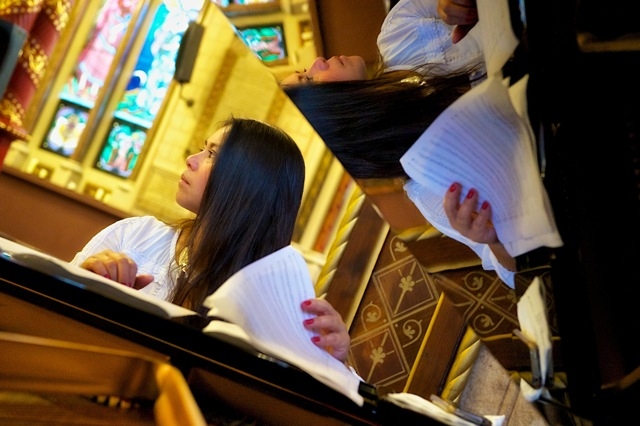
However, on the night, despite a some nasty rain prior to the second performance, the people arrived full of expectation. The Chapel was packed with an array of people of all races,  from kids to old folk and it was positively glowing in the evening light…. the stained glass looked splendid. The Sacred Music : Sacred Spaces Ensemble  were all dressed in white apart from the conductor, the high priest, Orphy Robinson, who was attired in black and gold and there was genuine sense of calm in the room as the opening section of ‘Acknowledgement’ opened with a  Ansuman on santoor and the kora paving the way for Juwon Ogungbe to deliver an invocation on God and love from Swami Satchidananda. The bata drums joined in and gradually the piece built in momentum around uplifting and powerful  solos from Rowland and Steve Williamson.

Orphy Robinson…Sacred Music : Sacred Spaces – The Universal Field Marshall

The band swung into action in Resolution and flowed fearlessly into Pursuance. Nikki Yoh’s piano rippled and pulsed throwing out bold lines and free flowing passages while Pat Thomas traded intimate volleys of sound. Holding it down and gently driving the whole movement forward was the muscular contra-bass of Neil Charles. It was a joy checking the interplay between Nikki, Neil and drummer Richard Spaven.  Indeed, Richard’s rapport with the bata drums was also most compelling.

Juwon Ogungbe by Alex Coley

The ensemble’s interpretation of Psalm was built around Juwon’s recitation of the poem John Coltrane wrote and played phonetically on the tenor saxophone on the original studio recording. In fact, if you owned the UK vinyl  pressing of ‘A Love Supreme’ you would never have seen the poem as it was only available of the gatefold sleeve of the US album. Rowland’s arrangement offered us a  call and response structure. Each spoken part which culminated with Juwon singing the lines in Yoruba, followed by the whole ensemble dramatically rising in unison in a collision of sounds and solos guided only by Orphy’ s conduction.  As the final verse ended the frenetic sounds of the ensemble subsided and was replaced by silence. The audience rose into a standing ovation.

The air was alive with energy and forty minutes later the ensemble took to the stage for a second performance. They were confronted with a whole new audience… apart from those people  who simply couldn’t resist taking in the next set. From the get-go the vibe was different. Rowland’s Sutherland’s initial flute solo took instant flight as the set built towards a twisted riff that faintly  echoed the familiar bass line and chant which characterises Coltrane’s original.

Steve Williamson Pic: Alex Coley

As the light outside vanished, the burning candles created a new atmosphere, to which both audience and musicians seemed to respond. The feeling in the Chapel was heavier, a touch darker and imbued with a different sense of freedom. It was precisely that freedom which emerged in both the solos and ensemble sections, and special mention has to made of Shabaka’s totally arresting  bass clarinet solo which came hard on the heels of a Steve Williamson solo which dropped the listener into a spiritual zone occupied only by tenor players like John Coltrane, Albert Ayler and Pharaoh Sanders.

As the final waves of sound drew to a close around Juwon’s vocals it more than confirmed, in my mind, that the skills of the musicians in the ensemble combined with Rowland’s composition and arrangements, were easily the equivalent of anything to come out of the US or anywhere else. There was a spiritual depth at work and it touched everyone in the house… you could see it in their faces as they left and within the gratitude which was offered up to the musicians. As Rowland said, “It’s amazing what you see when you are facing the audience… one woman in front of me just couldn’t hold the emotion in anymore… she just started crying.”

3. 07.2012

Posted in Deep stuff, Is That Jazz? | Tagged , , , , , , , , | 3 Comments

Sacred Music & The Art Of Freedom

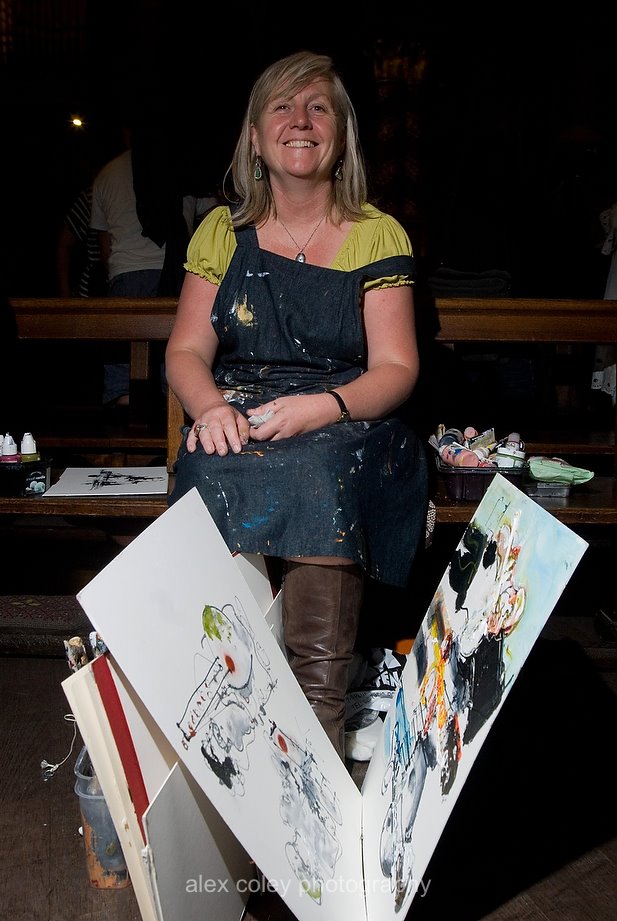
Gina Southgate at Sacred Music Sacred Spaces Portrait by Alex Coley

If you are a regular at Jazz In The Round you’ll be familiar with the artworks of Gina Southgate. We were fortunate enough to have Gina in The Chapel at Sacred Music: Sacred Spaces  and here’s a lovely portrait of her and some of the works she did on the night as she was in the flow of Rowland Sutherland’s “re-envisioning”  of John Coltrane’s ‘A Love Supreme’.

Watch out for an interview with Gina in the future.

Posted in Deep stuff, Is That Jazz? | Tagged , , , , , , , , , , , | Leave a comment

IN THE SPIRIT OF ALICE COLTRANE: Ansuman Biswas – A modern day master of the interdiscipllinary arts

This Thursday’s  re-envisioning of John Coltrane’s ‘A Love Supreme’ will further the expansive, global innovations of his loving wife Alice Coltrane .

Pianist, harpist and band leader, Alice Coltrane’s  Sanskrit name was Turiyasangitananda. She was devoted to the practices of Indian spiritual master Sri Swami Satchidananda, and the Indian sage Sri Satya Sai Baba and these influence permeated all levels of her own music. The Sacred Music : Sacred Spaces ensemble will embrace her vision by integrating the mind enhancing musical offerings of a modern day master the interdisciplinary arts – Ansuman Biswas.

Ansuman is a unique and deeply spiritual individual and on mid summer;s night in the Chapel in Kings College  he will exchange tabla rhythms with a trio of Cuban/Nigerian bata drummers  and add to this  spiritually charged endeavour  the sublime sounds of  the santoor, water phone, conch and assorted percussion.

You can find more about Ansuman’s diverse and mind stretching projects on http://www.ansuman.com/home.html

Ansuman Biswas : Zero Genie

Sacred Music : Sacred Spaces is supported by the PRS Foundation & Sound and Music

Posted in Deep stuff, Just Runnings | Tagged , , , , , , , , , , , | 1 Comment

Deep In The Chapel… Visions of A Love Supreme

With only a week to go before we premiere the re-envisioning of John Coltrane’s ‘A Love Supreme’ the vibe and the anticipation is building.

After a long period of writing flautist Rowland Sutherland has been busy adding swathes of sound and colours to the spiritually changed canvas that John Coltrane left us. For two days this week The Chapel in Kings College has vibrated with the shimmering sounds of the santoor, the donpura and the kora while trading melodies and rhythms with the family of bata drums. Cultures and traditions in harmony… A Love Supreme… all set to receive the voice… the words… by Juwon Ogungbe.

The next phase embraces the fierce talents of  Nikki Yeoh piano Orphy Robinson steel pan / marimba Neil Charles contra bass Pat Thomas electronics Rowland Sutherland flute Richard Spaven drums Steve Williamson saxophones Shabaka Hutchins bass clarinet.

And after that? Everybody will come together in spiritually charged unity.

I can’t wait.

Sacred Music: Sacred Spaces is supported by the PRS Foundation and Sound & Music and hosted by The Chapel in Kings College which is adjacent to Somerset House. There will be two separate performances.

There are less than 200 seats per set… we strongly advise that you buy tickets on-line to ensure entry.

First performance: Doors 7pm
7.30pm / Doors 7pm: https://agmp.ticketabc.com/events/sacred-music-sacred-/

Second performance: Doors 9pm
9.30pm /Doors 9pm. https://agmp.ticketabc.com/events/sacred-music-LATE/

Posted in Deep stuff, Is That Jazz? | Tagged , , , , , , , , , , , , , | Leave a comment

COOL BREEZE! HAVANA meets DMZ’s Mala

Despite rejecting ’nuff offers of projects over the years something about Gilles Peterson’s Cuba project f elt right!  The results of their visits to Havana and beyond are now beginning to surface… here’s a taste…

Mala, Simbad, Vince and GP in Cuba!

“I was totally out of my element, but you have to do these things in life to change and grow, to learn about yourself and to learn about other people as well, you know. I knew from the start it was going to be a real learning experience – when we first went out there we didn’t even have a concept for what we were going to do. The plan was literally just go to Cuba, link up with some musicians, check out the vibes, and then see what happens.”

“I like to think that it was interesting for [the Cuban musicians] to hear what they do in a completely different context,” he says. “I wanted [the album] to feel Cuban in a way, to respect the musicians and the culture, but at the same time I still wanted to make music that I could play to my audience, and in my environment – on a soundsystem. It’s Havana meets South London, you know?”

El Malecon, Havana

Mala quotes from Fact magazine … watch out for a full interview later this week – http://www.factmag.com/

‘Mala in Cuba’ is scheduled for release on 10th September 2012.

Posted in Words, Sound & Power | Tagged , , , , , , , , | Leave a comment