A MODEST TRIBUTE to a former US Marine and CIA operative, Robert W. Smith’s whose pioneering writings gave us access to the complex and thrilling world of Chinese martial arts from Monkey Boxing and White Crane to Pa-Kua Chang.
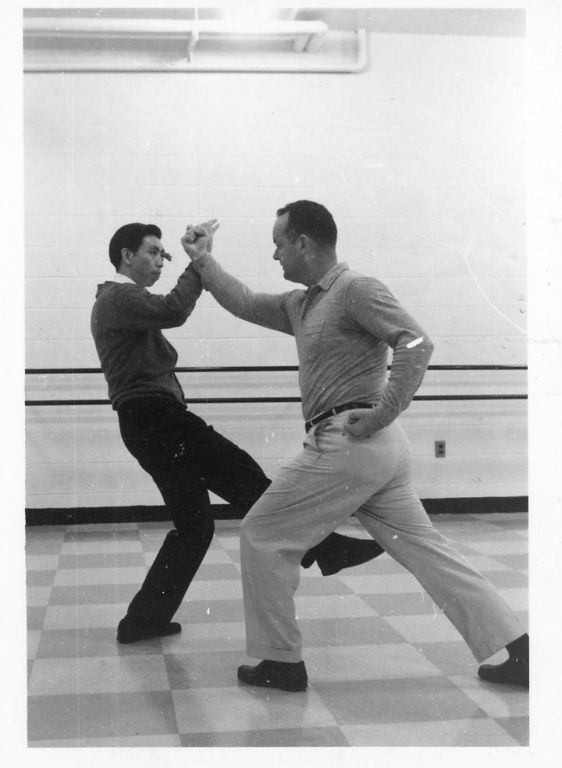
Robert W. Smith & C.C. Chen
BACK IN THE LATE 70’S AND EARLY 80S, my brother adopted the ethics and principles in Miyamoto Musashi’s Book Of Five Rings and then progressed to Bruce Lee’s Jeet Kun Do before ending up in Master Toddy’s gym in Manchester practicing Muay Thai. I, however, ended up opting for the more mysterious and relaxed practice of Yang Cheng Fu’s t’ai chi ch’uan. While I liked the idea of this “Supreme Ultimate” art of self defence, a hint of skepticism as to its effectiveness in a real fight combined with natural curiosity always ensured I was on the lookout for info beyond what my teacher was letting off.
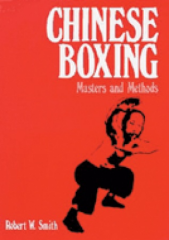
Books on Chinese martial arts were few and far between. You had to seek them out at shops like the Guanghwa Bookstore in China Town or Compendium in Camden Town. One of the first books I snapped up was the late Robert W. Smith’s now classic Chinese Boxing: Masters and Methods, large because it contained a chapter on the much celebrated acolyte of Yang Cheng Fu, the Master Of Five Excellences, Cheng Man Ch’ing.
First published in 1974 this book was based on the books, photos, films, translations and notes that Smith amassed while researching and practicing martial arts in Taiwan during the early Sixties. As I was focused on t’ai chi chu’an, the nartial arts of other masters were designated interesting but a complete mystery. Thankfully, that’s not the case today. While the Cheng Man Chi’ng short form I learned has slipped into memory I now find myself referencing the other martial arts masters in this book like Wang Shu Jin, Chen Pan Ling and Hung I’hsiang. In fact, I have to thank Robert W. Smith for introducing me – and thousands of others – to the concept of Nei Jia – the so called internal schools of the Chinese martial arts which embrace the triumvirate of t’ai chi ch’uan, hsing I ch’uan and pakua ch’uan.
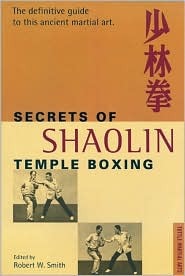
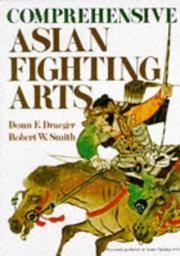
Smith was skilled third degree Japanese Judo practitioner and his first book focused on this art. In 1969, he co-authored with Donn Draeger the definitive Asian Fighting Arts and, prior to the Shaw Brothers kung fu films he introduced the West to The Secrets of Shaolin Temple Boxing. Ironically, this ex-marine was also a CIA operative in Taiwan and according to one of my teachers, Marnix Wells, an academic, author and student of Wang Shu Jin, Robert Smith’s CIA status undoubtedly gave him access to some of the most accomplished martial artist in Taiwan who had fled the mainland with Chiang Kai-Shek.
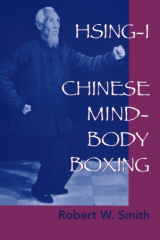
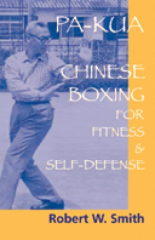
Smith’s books were published the Japanese publisher Charles E Tuttle. An initial book on the circle walking art of ‘Pakua – Chinese Boxing For Fitness & Self Defense’ appeared in 1967 and was succeeded by a similar size volume entitled ‘Hsing-I – Chinese Mind-Body Boxing’ in 1974. Smith joined forces in the late 8o’s with a young Allen Pittman to produce two more books that explore the fighting arts of Pa-kua and Hsing I. Smith’s books were undoubtedly ground breaking and are the perfect written complement to the Taiwan episodes of the classic TV documentary, ‘Way Of The Warrior’.
His extensive writings include dozens of magazine articles, book reviews and even some poetry. Under the pen name of John F. Gilbey, he wrote “Secret Fighting Arts of the World,” a fictitious send-up of the many completely outrageous martial arts stories he had collected. Some gullible readers swallowed these over the top tales whole and even quoted Gilbey in subsequent publications.
For 26 years, Robert W Smith held a free Saturday morning t’ai chi ch’uan practice in the Bethesda, Maryland, YMCA, parking lot and also offered formal instruction in t’ai chi ch’uan, pa-kua Chang and hsing-i ch’uan. His writings are based on hands on experience and reflect both his character and a full life which he attributed to both “humility and luck”. He gave us template that was of its time. He gave us new directions to explore and in conclusion I quote Ted Mancuso, a respected Californian martial artist and the man behind Plum Publications, “I believe Robert W. Smith has left a footprint that will not soon wash away.”
Note: I’ve used Robert W. Smith’s spellings of T’ai Chi Ch’uan, Hsing I Ch’uan and Pa- kua Chang rather than my preferred spelling – Taijiquan, Xingyiquan & Baguazhang
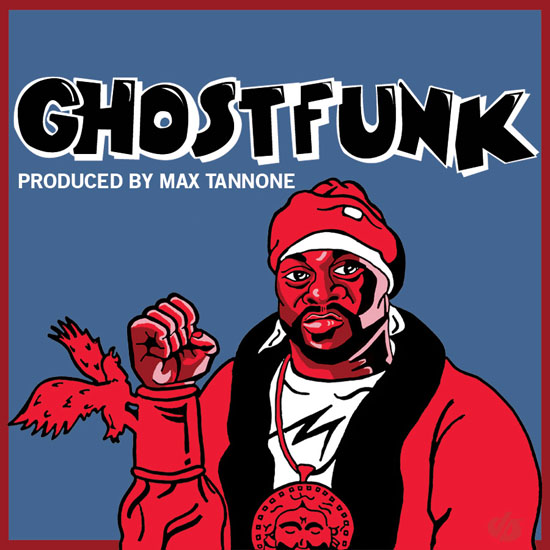
OK people, make some noise and hit that download button ’cause here comes ‘Ghostfunk’– the latest episode from wayward NYC based remixer Max Tannone. His latest venture is to pair one of his favorite hip-hop artists, Wu-Tang member Ghostface Killah, with vintage African funk, high-life, and psychedelic rock music. Nice.
GHOSTFUNK : Artwork by Joe Dichiara.
Max Tannone is responsible for crafting a batch of seriously unique remix albums. He burst onto the scene in early ’09 with ‘Jaydiohead’, combining the sounds Jay-Z and Radiohead. Catching the ears of MTV, NBC, hundreds of blogs, music news sites, and vinyl bootleggers, the project had Jay-Z himself tweeting – “There are 3 or 4 real gems on Jaydiohead.”
Following ‘Jaydiohead’, the Beastie Boys contacted Max for a special remix within a remix to promote the re-release of their seminal ‘Check Your Head’ album. Entitled ‘Doublecheck Your Head’, Max rose to the challenge, deftly weaving together a bunch of Beastie’s tracks to create a feisty re-interpretation of the punk-rap classic.
Max followed that with the vibesin’ ‘Mos Dub’ which dropped in spring 2010. Merging the lyrical styles of Brooklyn legend Mos Def with dub-wise masters like King Tubby and Lee ‘Scratch’ Perry, ‘Mos Dub’ is simply a 10 track gem that rocks! A sequel, ‘Dub Kweli’, featuring Mos Def’s oft-partner in crime, Talib Kweli, surfaced in late August of 2010, just prior to ‘Selene’, a five song EP inspired by the science fiction movie Moon.
So, for you musical pleasure, you can download ‘Ghostfunk’, ‘Mos Dub’ et al, free of charge, on Max’s website. http://www.maxtannone.com/
Following up the piece I did on July 3rd I’ve just been checkin’ in on Toshio Matsuura’s blog and copied off a little post he dropped on the 26th July while still reeling from the impact of another quake. The ever diligent marathon running DJ/producer/broadcaster is off to help lift the spirits of the people in the devastated Tohoku region.
“I’m sure there were many people in Tokyo who were awaken by the
aftershock early this morning. It was still dark, but I dashed to the
record room to make sure my records were safe.
Since it was the biggest aftershock since the earthquake in March,
I’m sure the tremor felt in Miyagi prefecture was worse than in Tokyo.
All of you in the Tohoku region, please take care.
The month of July is coming to an end and this weekend will mark four
and a half months after the quake. I will be visiting the Tohoku region
again this weekend.
In mid April, I saw on TV how soccer players of my generation were
visiting the stricken area. That triggered me to tweet “I will DJ for charity
in the Tohoku area” on twitter. 3 months since then, my Tohoku tour will
finally take place.
I will participate in events throughout the Tohoku region for 3 nights in a
row. First will be “Tohoku Jazz Meeting” which is an important event
where DJs from the 6 prefectures of the Tohoku region will come together
in Akita. Also, I will appear at Vinyl Diz, a great store in Sendai that I visited
on my previous trip to the Tohoku region, and Players Café in Morioka
which I haven’t visited in years.
Mainly I’ll play jazz, but also new and old songs that I think is fresh.
I truly want to bring music and love to the region.
I hope local residents as well as people traveling or visiting their homes in
the Tohoku region can come to the event.
I hope to enjoy music and discuss about “the future of the Tohoku region”
with all of you.
Just a quick piece to follow up the Tomorrow’s Warriors meet Steve Williamson story….
Steve Williamson: On a Journey to Truth.
Saturday night at the Purcell Room was a touch special. First of all, I need to give Gary Crosby a heads up for the work that he’s doing, as an artist in residence at the RFH, with the Tomorrow’s Warriors orchestra. The impressive pieces played in the first set, orchestrated and conducted by young players like pianist Peter Edwards, James McKay and saxophonist Binker Golding, took in Wayne Shorter’s ‘Dance Cadaverous’ alongside their own bold compositions and illuminated a deep rooted affinity to the tradition and a startling confidence. However, this was a game in two halves and as they launched into Jason Yarde’s arrangement of Steve Williamson’s ‘Soon Come’ you immediately became aware of a different, more radical and modern rhythmic sensibility at work. ‘Mandy’s Mood’, ‘How High The Bird ‘ and ‘Sweet Love of My Likeness’ followed and that left this listener with a lingering taste of Steve Williamson’s compositional depth. The set culminated with ‘Waltz For Grace’ – a moving song that reflects on the premature passing of Steve’s sister – and it brought onto the stage the elegant Studio 1 vocalist and JA’s “First Lady of Jazz”, Myrna Hague, along with the saxophonist himself. As Steve teased his soprano into the tune and Myrna sought out a point of entry, an inevitable element of improvisation crept into the proceedings and, much to their credit, it was deftly integrated into the Warriors’ complex arrangements. Following a riot of applause the night drew to close with just Gary and Steve refreshing a long-time musical friendship by dueting on Coltrane’s ‘Equinox’. Enough said!
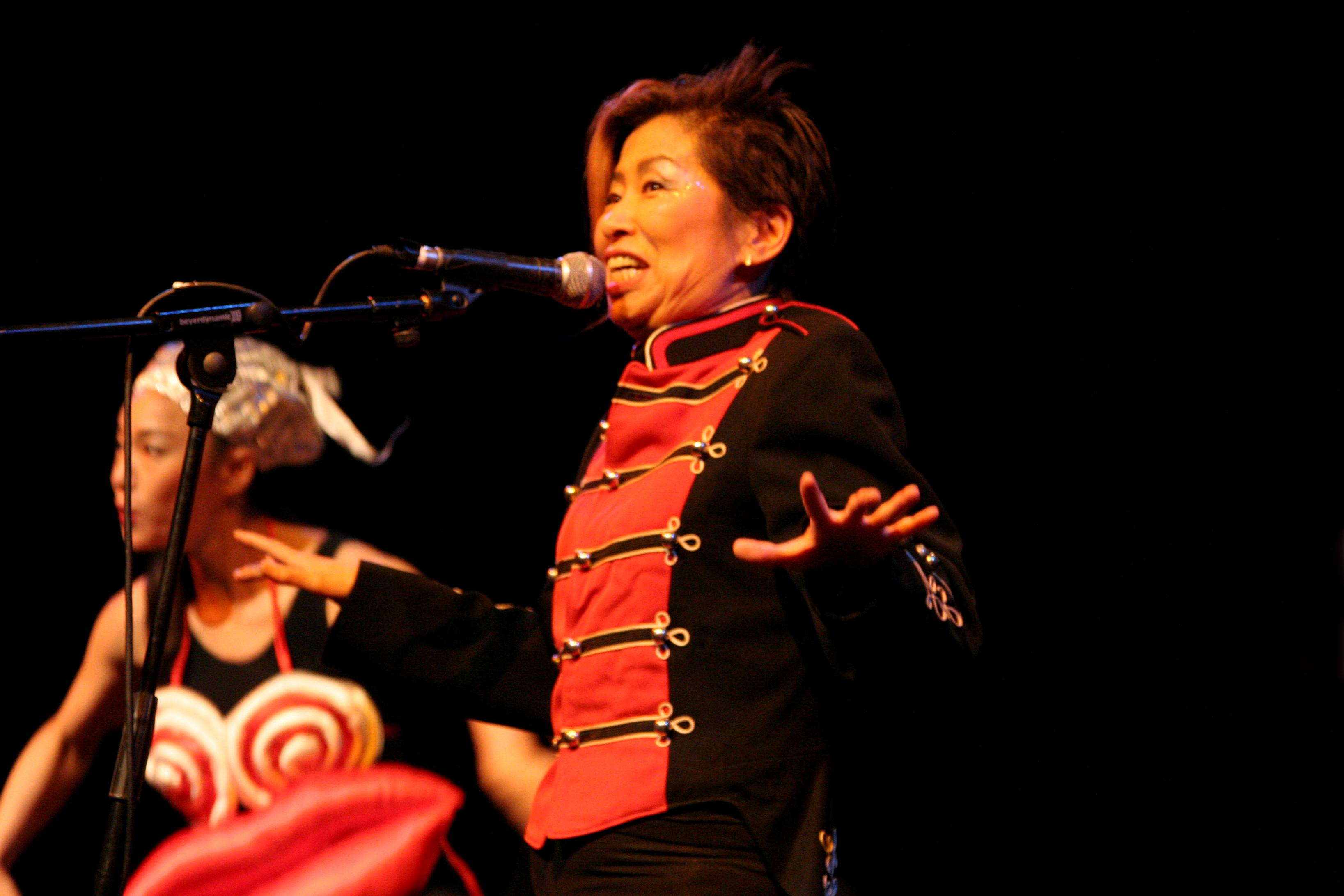
While passing through Euston last Friday I chanced upon one Kazumi Taguchi, a ninja and a former Frank Chicken, who I have not seen for at least a decade. Disguised as a music grad student from SOAS and dressed in regular attire, Kazumi courteously explained she would love to chat but was already late for a Frank Chicken rehearsal in preparation for an appearance at the Barbican’s Extraordinary Voices. A little confused and a sense of déjà vu ensued before she informed me that the session is scheduled for 4pm on Saturday, on the free stage and with that vanished in a puff of smoke.
Now, Frank Chickens and I go way back to the early Eighties when I penned the first major interview/feature on them for the NME. Both Neil Spencer (NME editor) and I were partial to a couple of beers and a touch of alternative comedy on a Sunday night and had been blown away by these largely unknown but super feisty and quirky women from Japan. Musically, the Chickens had hooked up with Stoke Newington based improv duo Steve Beresford and David Toop, both of whom were obsessed with NYC electro, and the most excellent results of that encounter can be found on those early records.
At 4pm on Saturday the Barbican was alight with energy and following a riotous performance by a promenading choir we elbowed out a space for oncoming appearance of Frank Chickens. It was busy and there was clearly a host of Frank Chickens fans in the house. Maybe their winning the Foster’s Edinburgh Comedy God Award in 2010 – a fortuitous event, appropriately based on a viral rebellion – has provided a little added momentum to their rep. However, as the electronic beats – which still sound remarkably fresh – kicked in and they hit the stage, the thrill that I experienced first time round still exists. The humour is priceless, the choreography fittingly anarchic and the innovative costume changes endless. There were classics like ‘We Are Ninja’ and ‘Blue Canary’ along with a bunch of new numbers and as their set gathered momentum so more and more younger members appeared. As Kazuko explained, “We even have Irish man in the group… Ray… we follow old English tradition of cheap labour!”
Not happy with being labeled a “national disgrace” Kazuko maintains their expanded membership now allows them to be an “international disgrace” and it’s clear from this show that the youthful energy, irreverence and humour which underpinned their original performances is firmly intact and guaranteed to carry them into the future. Basically, it’s as they say, “We are not what you expect… doron doron!”
Pics – Top: Kazuko Hohki / Bottom: Kazumi Taguchi
Someone disabled the vid I posted so here’s some links:
The Pandeiro Lesson... Adriano Adewale... tun ch ch tak tun tak tun ch ch...
As someone who’s spent the last three decades writing about music I can’t remember the amount of times I’ve been asked, “Do you play?” The answer is always, “No… I just dabble.” Inevitably, that’s always followed by, “On what instrument do you dabble?” and somewhat predictably, percussion is my first stop. Let’s face it you simply can’t dabble on a violin or a saxophone, it sounds horrendous, but when it comes to percussion, just for a moment, reflect on how many happy but deluded people you see wandering away from a festival with a freshly acquired djembe.
My first attempt to master an instrument was back in the late Seventies. During a mission in Jamaica I bought a beautiful conga drum from a master drum maker called Scotty. Despite irritating the US customs I somehow managed to get the drum through the Miami transit area without them confiscating the goat skin drum head and with only one small hole drilled in it. They were looking for drugs!
I arrived back in Hackney determined to master a few rhythms and immediately registered for a class in Finsbury Park with a Ghanaian master drummer Isaac Tagoe. I still have hazy recollections of the rhythms that Isaac hammered into us and have an enduring memory of him taking my drum at one session and playing it. It sounded amazing. He brought the drum to life and allowed it to breathe and sing. I wanted to do that. I felt I owed it to the drum. I studied diligently but as the weather got worse and worse and as I trudged through the snow, with my drum on my back, to what would be my last lesson I recognized defeat. The grand idea was no match for the discipline required.
However, over the years, I seem to have appropriated lots of percussion: plastic eggs, Nigerian and Brazilian agogo bells, shekeres and caxixis. During one trip to Sao Paulo in Brasil I also snapped up a pandeiro, a tambourine like instrument which, in the right hands, can sound like a whole escola do samba.
In June 2011, as my birthday approached, I was offered the present of five pandeiro lessons at the annual SOAS World Music Summer School. It was an opportunity sent from the orixas. Having dabbled I know that this deceptive instrument is not easy to master but consoled myself saying, “How difficult can it really be… it seems like every Brazilian, regardless of age or sex, can play pandeiro. Maybe not like Marcos Suzano but they can all handle a basic samba or capoeira rhythm.”
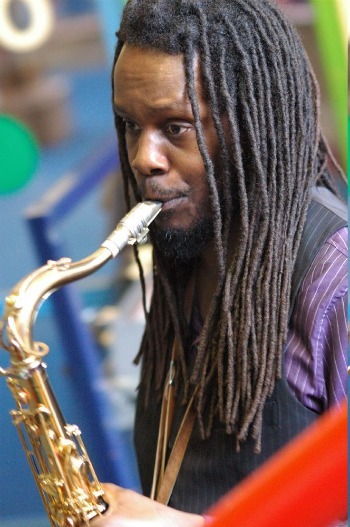
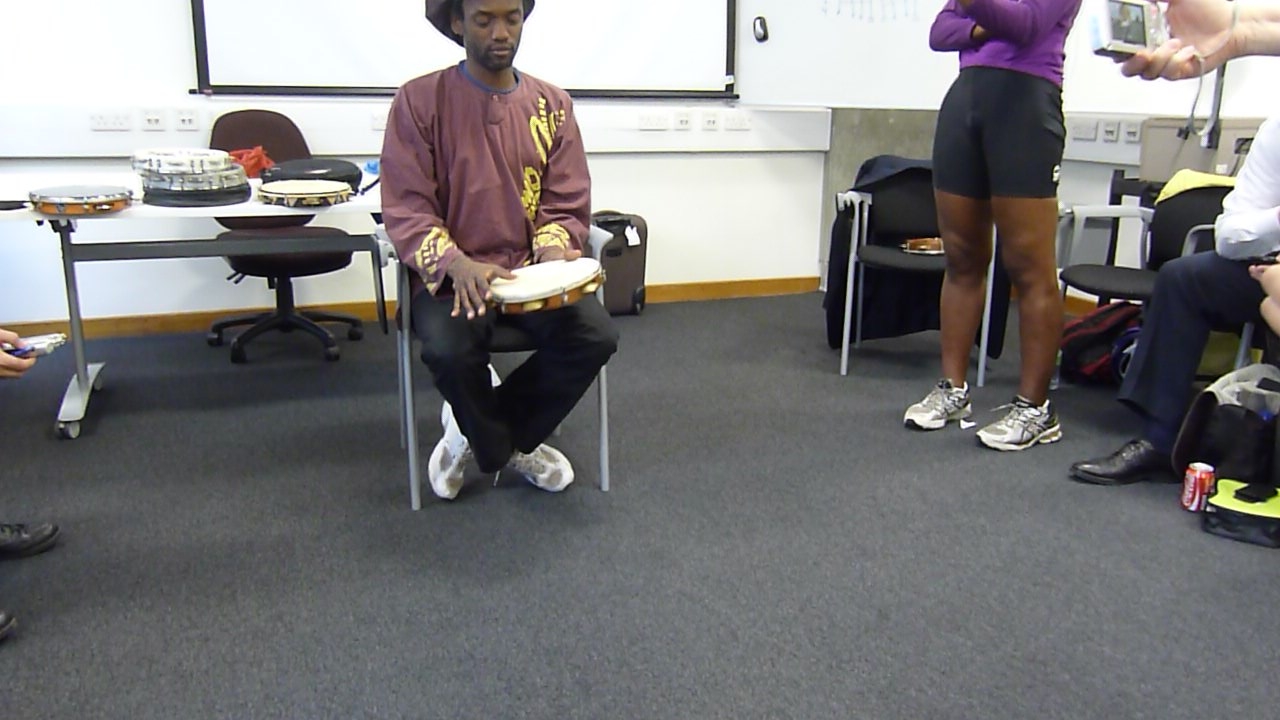
The teacher for the workshops was Adriano Adewale, a loose limbed dreadlocks who hails from Sao Paulo. Along with releasing one album of his own in 2008 he appears to be involved in a whole range of crossover projects from teaching to theatre to session work and his own band. In a tight circle the 12 plus group introduced themselves one by one. There were assorted musicians (piano, percussion, trap drums), samba and capoeira players, academics and just one music journalist! Only I and a writer/yogista/healer had never played pandeiro before.
So, it was in at the deep end. A day by day blow would be excruciating to write and read but needless to say it was a roller coaster ride. To play you have to relax and relating that to my taijiquan experience relaxation is essential to maintain a good posture and alignment. Lose that and it all falls apart and in the sessions that followed I would fall apart at every twist and turn of those simple but elusive rhythms. Trying to relax while picking up basic rhythm from your neighbour before passing it on to the next person became pure stress. Everyone fluffed it at some point but, as the days passed, I’m pretty sure my face reflected pure panic – especially when playing pandeiro was combined with singing and the dance steps … ”Foy, Foy, Foy…”
During the three hour sessions the demons inside would whisper, “You have to quit… you can’t do this! You’re just plankton feeding on disconnected rhythmic sound bites! That’s it… no tomorrow!” But each day I came back. I was supposed to be having a good time… right? And in a lot of ways I was. It was tough going but it’s about perspective. You can’t expect to play like Adriano or Airto Moreira in a couple of days! While the roda (the circle) could be stressful it was also imbued with the power of rhythm and sound and it generated a collective spirit that was always non judgemental and encouraging. Combine that with Adriano, eyes wide open and smiling, stepping into your space (and into your face) going “tun ch ch tak tun tak tun ch ch tak tun TAK…” pushing you to sing the sounds to yourself thereby connecting hand and mind, enabling you to breathe and move on … “that’s it!”.
Playing pandeiro is physically demanding. As one experienced player in the group looked at the growing blister on her palm she laughed and declared, “I play lots of instruments but these days seem to measuring success in relation to the pain threshold.”
First came the rhythms of capoeira (nice), next came coco from the Norde Este (love that!), then samba followed by samba variations and then samba funk! We sang the lovely ‘Marinheiro So’ and Adiran Barbosa’s ‘Saudoza Maloca’ and learned how to flick the pandeiro to create the sounds that make a song swing. It was exhausting and invigorating. I have a long, long way to go but now that I’ve started I simply need to continue. I confronted a few demons and, right now, typing this and listening to Clementina and Dona Selma Do Coco, I feel I know a little about the pandeiro. I am consistently drawn to “old ways” and I feel blessed that Adriano has equipped us with a few solid techniques which, if combined with some hard work and a couple more workshops, might just allow me to give an affirmative answer to that question, “Do you play?”
Classic press shot for the Rebirth Of Cool album. IDJ & Steve Williamson (l to r) Marshall Smith, Jerry Barry, Steve Williamson & Gary Nurse. Photography: Nick White
Having orchestrated a number of features on stellar saxophonist Steve Williamson in Straight No Chaser and been instrumental in taking his band, That Fuss Was Us’ to play in Japan, I have no qualms in saying that I am a fan… a believer in what this man has to offer.
It was a blistering, late night performance of Steve Williamson’s That Fuss Was Us, at Gold in Tokyo, that was instrumental in getting the hard core Japanese Jazz establishment to take the nu-generation of UK based jazz warriors seriously. Basically, the senior editor of Japan’s most prestigious jazz journal described their performance at Gold as the most thrilling session he’d seen since witnessing the debut of Miles Davis’ electric band.
A crucial member of the Jazz Warriors in the mid 1980s, Steve Williamson record three superlative solo albums, ‘Waltz For Grace’, ‘Rhyme Time [That Fuss Was Us]’ and ‘Journey To Truth’. Each of these albums is endowed with an abundance of challenging compositional ideas and an approach to rhythm that reflects Steve’s affinity to Hip Hop and the NYC M-Base movement as well as his passion for African music and his own Jamaican heritage.
However, life is never simple and some it takes a toll more than others. As such, Steve has had a tendency to vanish off the radar and though it seemed a little weird at first, the news that Gary Crosby’s Tomorrow’s Warriors Jazz Orchestra is set to celebrate the music of Steve at the RFH has to be cause for celebration.
“For me… and anyone around the Jazz Warriors… we accepted he was the one! We knew he was a genius.” declares Gary Crosby – bassist and artistic director of Tomorrow’s Warriors – and it’s his commitment to Williamson as a pivotal figure in the evolution of the UK jazz scene that has led him to stage the South Bank performance.
“This performance is the first in a series celebrating great British jazz musicians. The Tomorrow’s Warriors Orchestra, is made up of young players like Peter Edwards, James Mackay and Binku Golding alongside experienced players like Denys Baptiste and Kevin Robinson. Myrna Hague is coming in from JA to sing ‘Waltz For Grace’. Interpreting Steve’s compositions is definitely a challenge and for this performance we will mostly take tracks from ‘Waltz For Grace’ plus one or two from the second album. Steve is a daring musician and these are adventurous charts for such a large ensemble.”
Apparently, Steve has dropped into the rehearsals a couple of times to have a listen. He gets on with “the juniors”, making the connections and delivering the word on what they need to know. Hopefully, the saxophonist will be present at the pre-concert conversation hosted by journalist/broadcaster Kevin Legendre. It will discuss the impact of Steve Williamson’s music and its relevance as a soundtrack to the late Eighties and Early Nineties.
I last saw Steve play in November 2009, during the London Jazz Festival. It was a small but packed gig at Charlie Wrights in Hoxton. It was a largely improvised set and Steve, who featured on tenor and soprano, was joined by UK avante garde stalwarts Roger Turner on drums , Pat Thomas on keys & electronics and by NYC based trumpeter Roy Campbell who has collaborated with David Murray, Sun Ra, Cecil Taylor and John Zorn. It was thrilling and exhilarating session that once more confirmed Steve as a fierce talent and I for one will be at the South Bank to check this ambitious tribute which aims to link generations and shine a light on a serious artist who has slipped into the shadows.
The Tomorrow’s Warriors Jazz Orchestra Play the Music of Steve Williamson
Saturday 23 July at 7:45pm,
Purcell Room, Southbank Centre,
London SE1 8XX
The lovely Guida De Palma rolls into London town to play Jazz Refreshed. Says it all!
Guida is a Franco-Portuguese vocalist, songwriter and educator who spent most of her working life in Paris and London but now resides in Lisbon. Best known for her London rooted project JAZZINHO, she has just launched a Lisbon based band PIRI PIRI FUNK MACHINE. At Mau Mau expect a mix of Jazz, Soul, MPB and Funk… yes, Sambalanço… the spirit of Banda Black Rio, Tim Maia, Sandra de Sá, Jorge Ben and Copa 7 lives on!
NICE poster! Fresh!
Lisbon based Guida De Palma at Jazz Refreshed... 14th July... a session!
Here’s a few July sessions to tune into…Worldwide looks amazing… Blaze has got some deep stuff going down in east London… Mau Mau keep up the flow and the Southbank is gearing up… also, check out Ceu at the Jazz Cafe.
London Is The Place for me!
JULY 5th: Vibes FM presents ‘Thanks & Praise’ – Gappy Ranks launch party @ Sebastians Wine Bar, 49-51 Norwood road, London SE24 9AA, from 8pm. Music by Courtney Melody, Roberto Allen, Commander B & the full Vibes FM crew . Swag tun up & good vibes guaranteed !
Blaze: July 5th: Sing The Truth : Feat. Dianne Reeves, Angelique Kidjo and Lizz Wright / 19:30 / Barbican Hall
Blaze: 6th July : Sharon Jones & The Dap-Kings + Charles Bradley / 19:30 / Barbican Hall
JAZZ REFRESHED @ MAU MAU: Richard Spaven 7th July / Guida De Palma 14th / 28th Shabaka Hutchings / Sons Of Kemet
6th – 10th July: Gilles Peterson’s Worldwide Festival , Sete, Montpellier, France : Baaaad line up in a fantastic setting! Raphael Saadiq, Dam Funk, James Blake , DJ Harvey, L.B.S, Konono No.1, Jamie xx, Flying Lotus, Mount Kimbie, Derrick Carter, The Pyramids, FM Belfast, Cut Chemist, Kode9, Joy Orbison, Brandt Brauer Frick, David Rodigan, Ghostpoet, Ramadanman, Toshio Matsuura, Kode 9, Cut Chemist, Owiny Sigoma. Zara Macfarlane,
Blaze: 7th July: Randy Brecker and Bill Evans – Soulbop feat. Medeski Martin and Wood + Terence Blanchard Quintet / 19:30 / Barbican Hall
Blaze 7th July: Re:Definition 2011 feat. Kano, Ghetts, Donae’o, Mikill Pane and more. / 20:00 / Hackney Empire
Blaze: 8th July: Calle 13 + Wara + DJ Quantic / 21:00 / Hackney Empire: Check my post: Puerto Rico’s Calle 13 roll into Hackney – June 10. Nice vid with Ruben Blades.
9th July: IYE AJA feat. Juwon Ogunbe: “ Looking forward to seeing you at The Newham African Caribbean Resource Centre. Iye Aja is turning out to be breakthrough creative process and all the artists involved are excited about sharing the work we’ve made so far, with you….”
8-9th July: Hiromi: The Trio Project. Check this girl out!
Blaze: 9th July : Penguin Cafe Orchestra + Beth Jeans Houghton / Hackney Empire. “I loved that first album … expect acoustic power and a beguiling, feisty charm. A new album ‘A Matter of Life’… is out now.”
Blaze: 10th + 11th July: Hugh Masekela & band with special guests!
/ 20:00 / Hackney Empire / Hackney Empire
Blaze: 11th July: Esperanza Spalding Chamber Music Society / 20:00 / Barbican Hall. Contra-bass & vocals… sublime stuff!
Esperanza... new flavas!
11 July 2011: Céu + DJ set: D.Vyzor / £17.50 / Jazz Cafe, 5 Parkway, Camden Town, London, NW1 7PG. Céu is without doubt one of Brazil’s standout young voices – a singer-songwriter whose pure voice nestles in the sweet spot where bossa, electronica, samba, and dub make effortless connections. She will be performing songs from her excellent album, ‘Vagarosa’ (Six Degrees Records).
Blaze: 13th July: Tom Waits’ Rain Dogs Revisited – Dir. by David Coulter with Arthur H, The Tiger Lillies, Camille O’ Sullivan, Stef Kamil Carlens, St. Vincent, Erika Stucky / 20:00 / Barbican Hall
Blaze: 12th July: Congotronics vs Rockers feat. Deerhoof, Juana Molina, Konono N°1, Kasai Allstars, Wildbirds & Peacedrums, Matt Mehlan (from Skeletons) / 19:30 / Barbican Hall. Sounds pretty out there!
17th July : Cleveland Watkiss / Orphy Robinson + Nu Savannah – 17th July @ Hackney Empire. The original Jazz Warriors meet the Sounds Of Young Hackney.
13th July: Gilad Atzmon – The music of Charlie Parker With Strings @ Ronnie Scotts. Fresh!
Blaze 14th July: Ebo Taylor / Fool’s Gold / 20:00 / Hackney Empire – “ I’m still buzzing on that original cut of ‘Love & Death’ from this Ghanaian master musician.”
Blaze 18th July: Baloji / Fatoumata Diawara
Showcasing two of Africa’s hippest musical exports / 20:00 / Rich Mix
Blaze 23rd July Aurelio / Danyel Waro / Carlou D: Paranda meets Reununion meets Senegal. Enuff said! / 19:30 / Barbican Hall
Blaze 24th July Irma Thomas + Soul Rebels Brass Band The Queen of New Orleans. Believe! / 19:30 / Barbican Hall
LONDON IS THE PLACE FOR ME: 22-26th July @ the Southbank Centre – This is a big one! A long weekend celebrating some of the seminal moments in black British music. Projects include Big Audio Dynamite at Royal Festival Hall, steel pan, sound systems, an evening dedicated to the film Babylon with live music from Dennis Bovell, a mixed-bill evening tracing the history of great songs
Following that…. VINTAGE AT THE SOUTHBANK CENTRE is a three-day party, a big dressing-up box and a collector’s dream, celebrating the 1920s to the 1980s. Over 13 hours of music, fashion, film, art, design, and dance each day. If last years Vintage at Goodwood was anything to go by expect some serious programming and the Southbank to be transformed.
Plum Publications
Excellent resource for run by Ted & Debbie in California, both long time martial arts practitioners…. lots of books, dvds etc with informed reviews based on experience.
SUPA DUPA rare 'n' old skool Nigerian Ju Ju, Fuji & hi life…
Just haul up the the groovemonzter, log on & stream the majestic sounds of Sir Shina Adewale, Dr Orlando Owoh, King Sunny Ade, Cardinal Rex Lawson, Queen Oludunni Decency, Tunde Nightingale, Alhaji Sikuru Ayinde Barrister…. wonderful!
the blue moment
Richard William’s exellent reflections on the world of music and….
Plum Publications
Excellent resource for run by Ted & Debbie in California, both long time martial arts practitioners…. lots of books, dvds etc with informed reviews based on experience.





 ancienttofuture.com