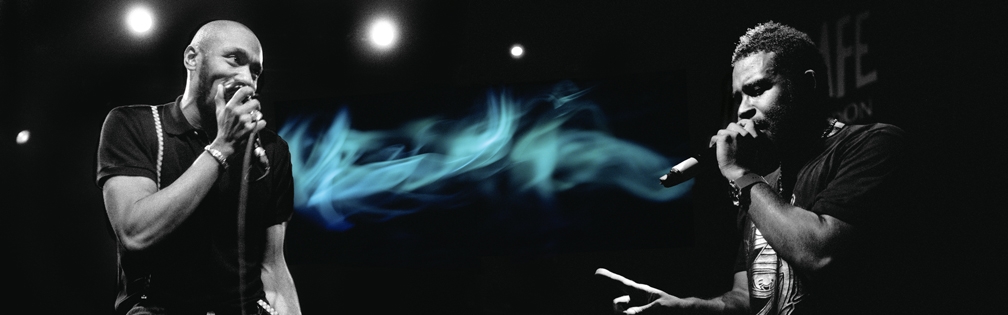
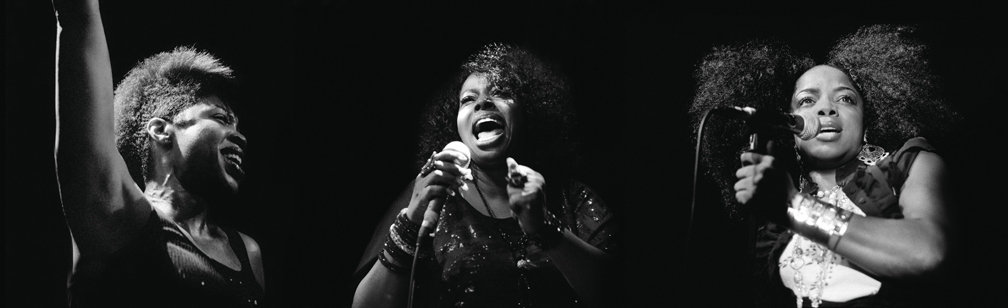
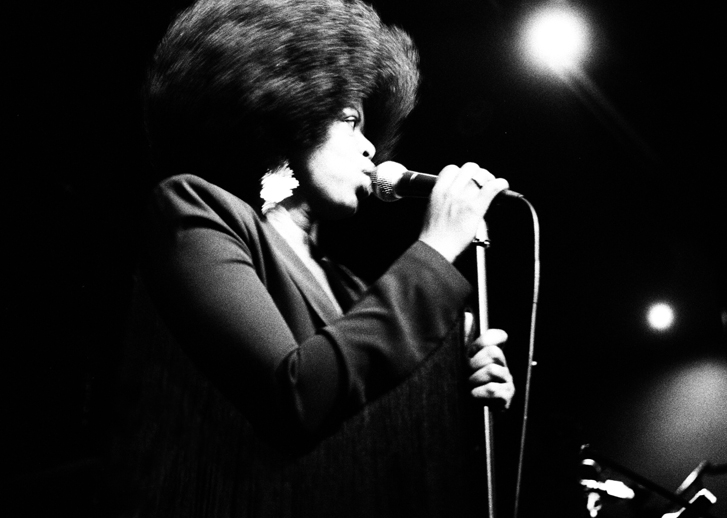
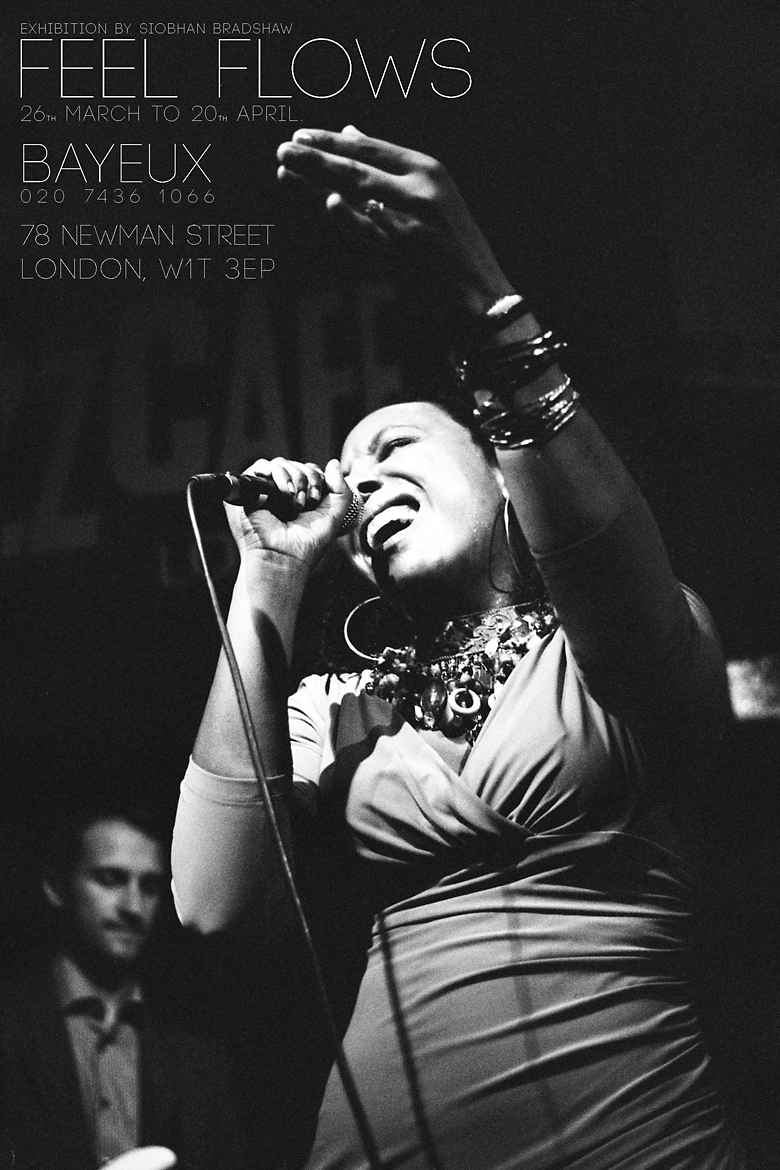
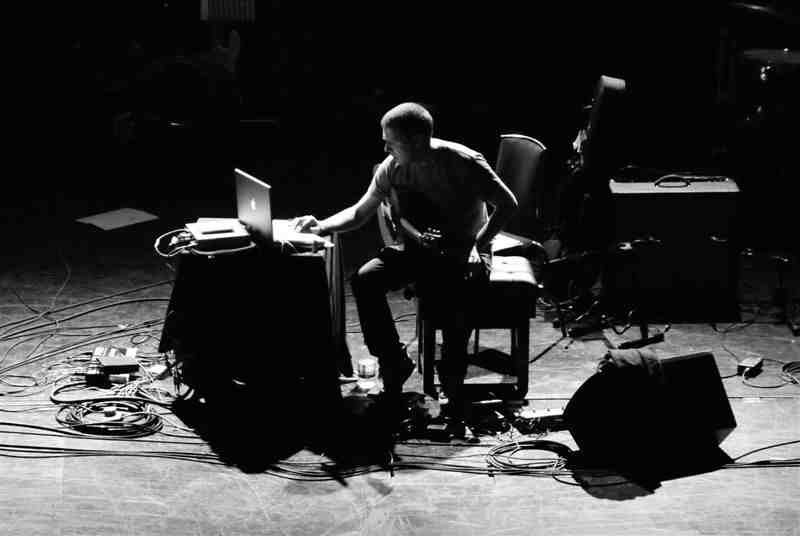
If you’re a Camden Town Jazz Cafe regularor a late night Soho wanderer you might well have come across a camera totin’ Siobhan Bradshaw. After studying fine art at St. Martins she traded in painting and drawing for an SLR and an F3 film camera and true to her Soho roots, in 2010, she held a successful central London show in Cuts – yes, the hairdressers, it’s a Soho institution! That show attracted the attention of veteran music photographer David Redfern and two years on she has collected together a host of music inspired images for a brand new show called Feel Flows at Bayeux.
Siobhan’s photography and film making embraces the spirit of those classic 50s and 60’s jazz album sleeves and the intensity of film noir. As a photographer she equally at home in the moment and at one with musicians and singers in full flight as she is with desolate, late night cityscapes – places and spaces devoid of people but fused with an undefinable energy.
Above: Joyce Sims
Feel Flow shows the artist’s commitment to that art of photography. While she has moved with the times and taken on board digital technology she clearly loves the power of a well crafted print. Drawing on the dozens of live sessions, the final mix of shots in Feel Flows includes an elegant and pensive portrait of reggae legend Alton Ellis, the mighty Pharoah Sanders, funk and soul legends Maceo Parker, Bobby Womack and Reuben Wilson. Rap artists Mos Def and Pharoahe Monch share the same frame as do N’Dambi, Angie Stone, and Leela James but it’s the solo shots of powerful women like Meshell Ndgeocello, N’Dambi, Angie Stone, Leela James, Jean Grae, Adriana Evans and Joyce Sims that provide the core of this show.
Alton Ellis - Rock Steady Don!
Unfortunately, I’ve come onto Feel Flows a bit late in the day and it finishes on 20th April. So, don’t sleep on this. If you’re in London’s West End head on down to Bayeux in Newman Street which is off Oxford St.
PS: If you can’t make it check The Jazz Cafe’s Facebook page which is overflowing with Soibhan’s images. Also her web page is http://www.siobhanbradshaw.co.uk/
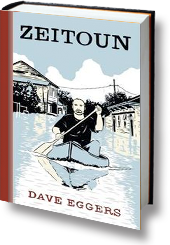
It’s doesn’t seem that long ago that I read the glowing reviews of David Egger’s book, Zeitoun – a unique take on the catastrophe that overtook the Crescent City following Hurricane Katrina. It was a book I needed to read! Well, three years have slipped by since then and despite the excellent HBO produced Treme, which revived memories of a city battered by the forces of nature and betrayed by President Bush, Zeitoun slipped into the recesses of my memory.
However, a week a go, I spotted a copy of the book in a shop window after recognising it’s distinctive cover. I forked out the dosh and started reading the same night. I was hooked from the off. This is a true story of Muslim family in New Orleans, a family that was well known in the community through their hard working painting and decorating set up whose company logo was a paint roller resting at the end of a rainbow.
Zeitoun - The Man!
Zeitoun, after whom the book is named, hails from a sea faring family in Syria. His wife, Kathy, is an American convert to Islam and between them they have four kids. Their story is told by David Eggers, a progressive force in the firmament of contemporary US writers, and he crafts a deeply touching picture of what befalls Zeitoun and Kathy as Katrina approaches and then devastates the city.
While Kathy takes the kids and leaves, Zeitoun stays to look after their properties. In the canoe that he’s seen paddling on the cover of the book he takes to the flooded streets of the city helping where he can, whether fellow city dwellers or abandoned animals, and gradually believes it was God’ s will that he made that choice to stay.
Inevitably, the tension between Zeitoun – who is at sea in a disaster zone patrolled by a jumpy National Guard, US Army veterans of the Iraq war and a racist local police force – and his family – who are living the life of refugees – intensifies. And when it all spins out of control, the reader is drawn into an America that is deeply flawed.
David Eggers gave all the author’s proceeds from this book to various charities related to the issues thrown into sharp relief by his own story telling and the realities that threatened to destroy Zeitoun and his family. In light of that I can most definitely recommend that you seek out this book. It is grounded, powerful, emotional, polemical and above all still totally relevant.
Greetings… time for a little catch up… been sitting on a bunch tunes and waiting to an opportunity to fling a few words on each on-line. So, as I’m deeply frustrated with the constantly engaged tone at HM Revenue & Customs I’ve decided to make a start.
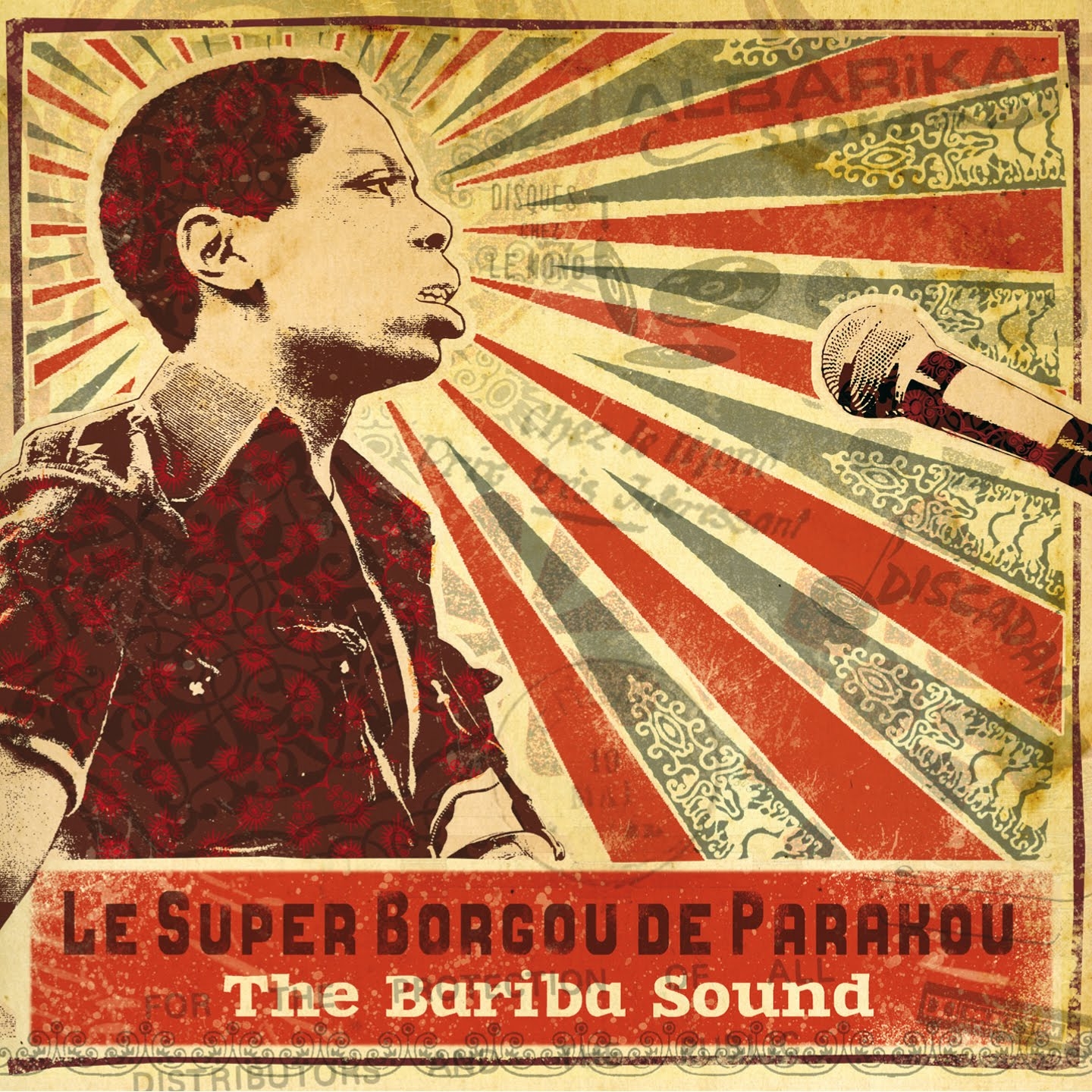
First up comes Le Super Borgou De Parakou: ‘The Bariba Sound’ on Analog Africa. Following on from label boss, Samy Ben Redjeb’s previous musical forays into Benin where he initiated us into the Vodou driven ridims of Cotonou, this crate digger supreme has now immersed himself in the music of the predominantly Islamic people of the north – the Bariba and Dandi. To tell the truth, I’ve been struggling with this set. Maybe it was down to both Analog Africa and Soundway, having conjured up some majestic music in recent times that’s been hard to follow. That said, as I sat in my friend’s kitchen in Bristol, with these recordings bubbling away on a more modest hi-fi than my own, we were both struck by the potency of the selection. Without realising it, over a couple of cold beers, we had tuned the hi-fi to sound like a powerful radio and I found myself whisked back in time to savour the musical heartbeat of Parakou. Unpolished as these recordings may be, there is a great, raw energy at work punctuated by some bad-ass solos – check the guitars and the Farfisa! It was no surprise to discover that Le Super Borgou De Parakou were famed for their covers of Congolese rumba hits but these guys, like their peers, across the African continent, were quick to enhance the “village sounds” with whatever was coming their way. Don’t touch that dial!
Small Island, Mighty Sparrow, Sir Galba -1950s
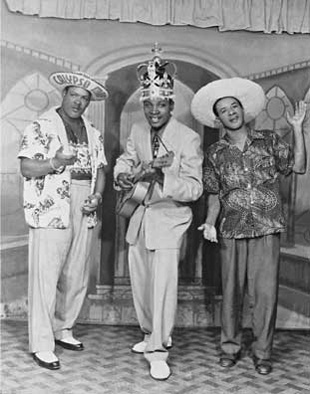
A double Cd that’s been gagging for a few words is the Mighty Sparrow double Cd ‘Sparrow Mania’. If you are not familiar with this legendary Trini(dadian) wordsmith and troubadour I suggest you treat yourself to this mind-blowing selection put together by Strut. History has thrown up some mighty calypsonians from Kitchener to Black Stalin but none are are as mighty as the Sparrow himself. This man has lyrics like dirt and no subject is taboo. Politics, race, sex… the Mighty Sparrow is combative and wikkidly funny. The arrangements on Sparrow’s songs are tremendous, from small ensembles to jazz-style big bands that swing like crazy and rival their Cuban neighbors for dancefloor sensuality. If you think calypso is some cheesy tourist music, you need to think again. On the street it’s ruffneck renegade runnings, and listening to ‘Sparrowmania’ it easy to see why this man was crowned Calypso Monarch eleven times and notched up ’nuff victories in the Carnival Road March.
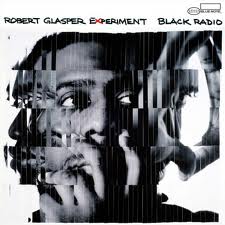
A few years have now slipped by since I first met stellar pianist Robert Glasper through Straight No Chaser. It was his first time in the UK and he wasn’t long out of college but he clearly had a plan, a plan that’s most definitely come together. He’s established himself on the frontline of a new generation African American jazz players ready to engage with the tradition but he’s also pursued his passion for hip hop and R&B by occupying the keys seat in Q Tip’s band and launching his own Robert Glasper Experiment. ‘Black Radio’ (Blue Note) is the latter’s current offering and it’s a collaborative endeavor that has all the hallmarks of the Philly Soul movement. Ledisi and Bilal are in the mix. Erykah Badu weighs in with a trademark rendition of ‘Mongo’s Afro Blue’ and Lalah Hathaway is in fine voice on ‘Cherish The Day’. Lupe Fiasco and Yasin Bay (Mos Def) drop lyrics and while Meshell gets top marks for sensuality on ‘The Consequences Of Jealousy’, I was definitely suckered by the combination of the brilliant Chris Dave, RG and Stukley. Overall? ‘Black Radio’ is a classy affair.
The closure of the Dub Vendor shop in Clapham Junction, post the recent riots, signified for me, the end of an era but no sooner had the shop closed its doors than Chris Lane and John McGilivray announced the relaunch of their groundbreaking Fashion label. For me, Fashion was synonymous with the rise chart busting homegrown UK Lovers and MC’s like the late Smiley Culture, Asher Senator, Pato Banton and Tipper Irie. From their subterranean dub cutting and recording studio in Lavender Hill they intuitively negotiated the transition into dancehall using engineers Gussie P and Frenchie. Chris Lane was also pivotal to the sound which took Maxi Priest into the mainstream. This First Volume of ‘Fashion Records In Fine Style: Significant Hits Vol. 1‘ kicks of with the sweet harmonies of Dee Sharp’s sweet ‘Let’s Dub It Up’ and Alton Ellis impeccable ‘Play It Cool’ and progresses through host of blues dance rub a dub faves. The duo of McGilivray and Lane have been attuned to the pulse of reggae music in this town for decades and they took that experience into all their recordings with both UK artists and Jamaican artists like Frankie Paul and Cutty Ranks whose ‘The Stopper’ is a classic. For a solid taste of UK reggae music look no further.
Topping of this first batch of reviews is Stuart McCullum’s independently produced solo set ‘Distilled’ which I bought at Jazz In The Round immediately after taking in his live set of . Fleeting echoes of the Cinematic Orchestra betray his involvement in the latter but this Mancunian based whiz kid, armed with a guitar (electric & acoustic) and a box of electronic gadgets and trickery, has produced a compelling set of soundscapes that ebb and flow over samples, beats, loops and orchestrations, but inevitably build in intensity, effortlessly sweeping up any listener in their path. Seek out the album via http://www.stuartmccullum.com & check the ancient to future review – Jazz In the Round… bit late but quick review – in Is That Jazz for a video documentary on the making of ‘Distilled’.
In New York City, this Wednesday – April 11th – African Film Festival, Inc. and the Film Society of Lincoln Center will present the opening of the 19th New York African Film Festival with a reception and a screening of Mama Africa – a 90 minute tribute to the late great Miriam Makeba by Finnish film maker Mika Kaurismaki.
Miriam Makeba was the first African musician to win international stardom, one whose music was always anchored in her traditional South African roots, as was a ceaseless message against racism and poverty. Following her 1956 hit record ‘Pata Pata’ – for which she received a recording fee of few dollars and no royalties – Miriam took on the lead role in the Broadway-inspired musical King Kong. It took her to London and then, with the assistance of Jamaican singer and radical Harry Belafonte, the United States.
However, when she attempted to return to her homeland to attend her mother’s funeral the apartheid government of the day rescinded her passport. Forced into a life in exile Miriam Makeba dedicated her life to exposing the harsh realities of the regime.
Singing for US President John F. Kennedy and Marlon Brando, performing with Harry Belafonte, Nina Simone and Dizzy Gillespie, being married to bandleader & trumpeter Hugh Masekela and then Black Power activist Stokely Carmichael, her life was a tumultuous one in which she always stood for truth and justice on behalf of all African people.
Miriam & Brando
Following his release from prison on the 11th February 1990, Nelson Mandela persuaded Makeba to return to South Africa, which she did in June that year on her French passport. She worked with Graça Machel-Mandela on the plight of child soldiers and children with AIDS/HIV, attended the UN as a Goodwill Ambassadorand continued to record and perform Sadly, after collapsing at a concert in November 2008 in Italy Miriam Makeba at the age of 76.
In concert: Miriam Makeba & Dizzy Gillespie (1991).
Along with a huge body of recorded music, this documentary, which traces her life and music through more than 50 years of performing and activism, will hopefully help ensure her place in global history as an artist whose life was underpinned by a commitment to equal rights and justice for the oppressed people of the world and I can’t wait for a big screen showing here in London town!
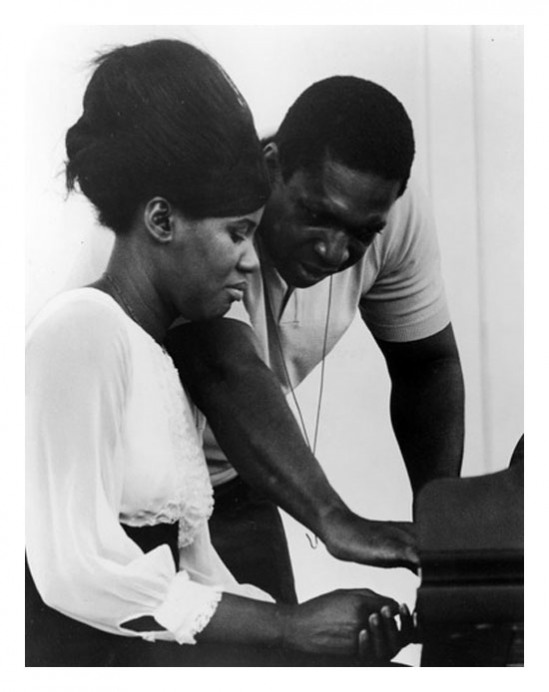
JUST BEEN LISTENING to ‘World Galaxy’ and Alice Coltrane’s rendition of Pt 1 – Acknowldgement from ‘A Love Supreme’… thought I’d just post this pic from 1965 of Alice and John Coltrane…
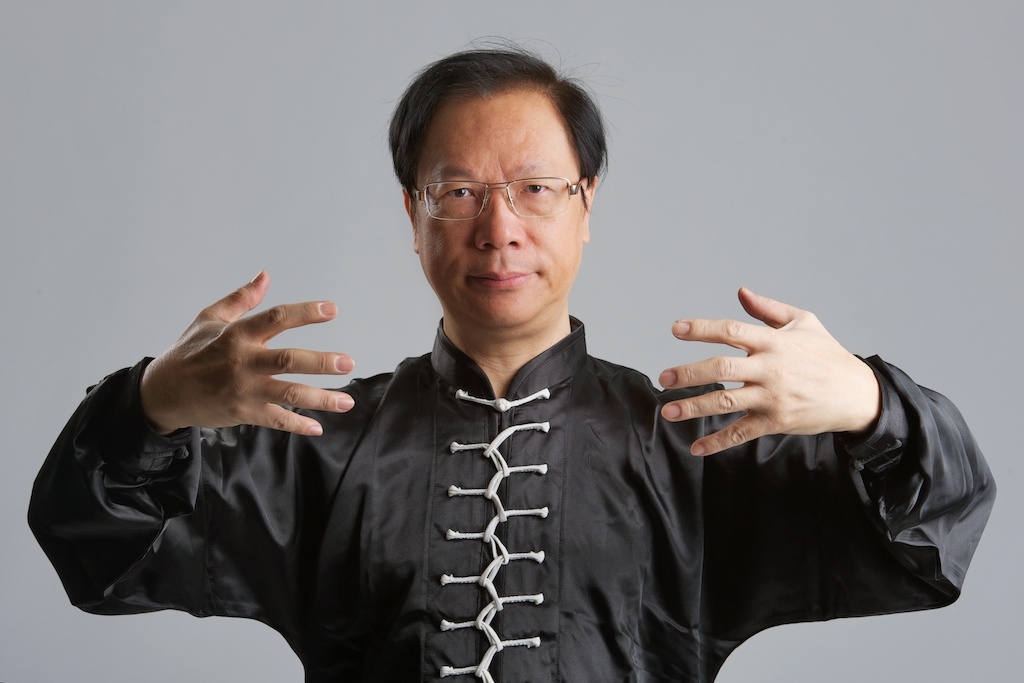
I first came across Sifu CS Tang when I was searching the web for xingyiquan and baguazhang material related to the famous Taiwan based martial artist Wang Shujin. From his Yang Xin studio in Hennessy Road, in the Wanchai district of Hong Kong , this stalwart of the local martial arts community offers classes in Gao & Cheng style baguazhang, Yi Quan, Yang, Wu & Chen taijiquan, xingyiquan and pak mei. His rather chaotic looking web site and on-line store is a treasure trove of material related to the “internal” arts. It includes some excellent material based on his own, 40 years of experience, training in martial arts with renowned teachers from Hong Kong, Taiwan and the mainland.
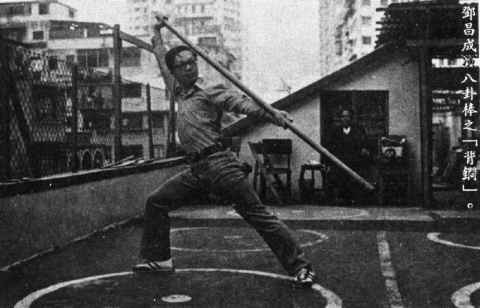
CS Tang: Back in the day!
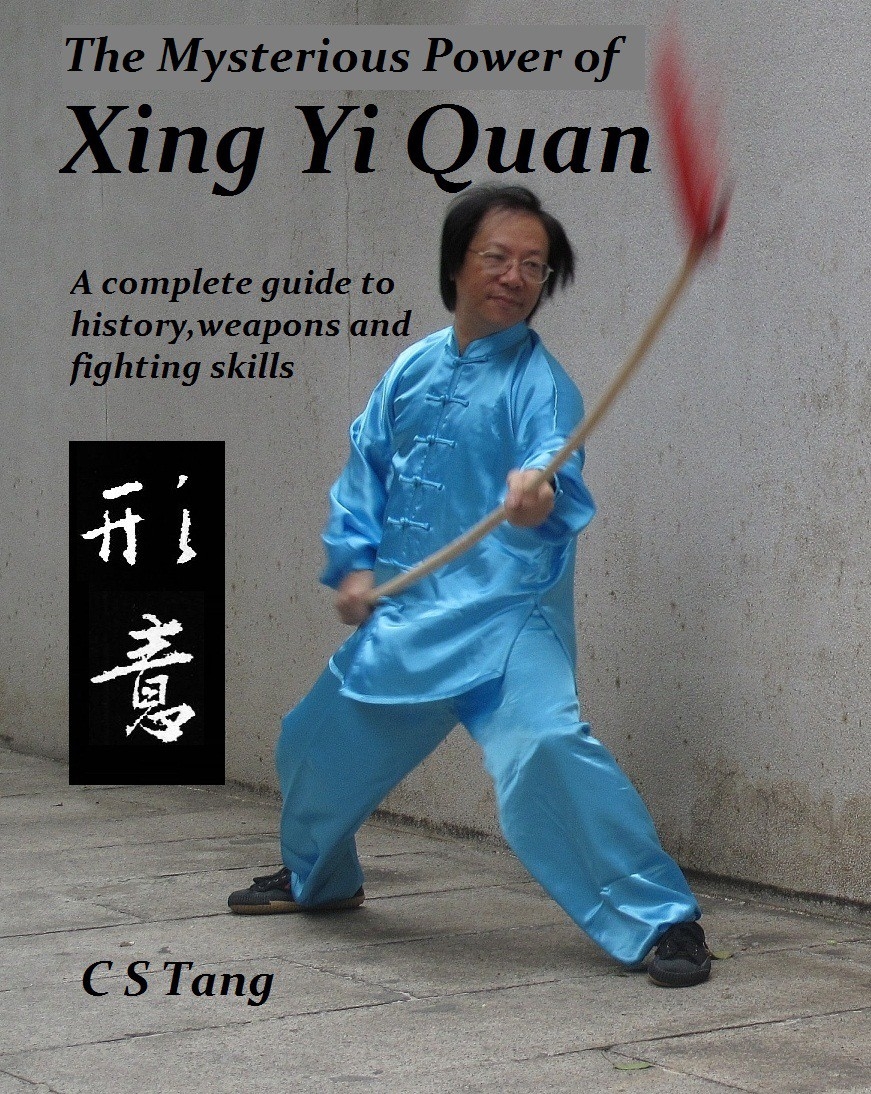
CS Tang has produced instruction DVD’s 0n Gao bagua zhang and the Chen taijiquan of Grandmaster Feng Zhiqiang. He has sought out and studied with a host of famous practitioners including Liu Jing Ru – with whom he produced the excellent little book on Cheng shi Bagua Zhang – Dragon Stretches Its Claws. However, following on from his book The Way Of Yi Quan, he has produced large format, 300 page volume entitled The Mysterious Power Of Xing Yi Quan, and this book is now available in English from author and nèijiā practitioner, Alex Kozma’s excellent Line of Intent publications
Along with taijiquan and baguazhang, xingyiquan – “Form/Intention Boxing”, or “Shape/Will Boxing” – is one of the major “internal” / Nèijiā Chinese martial arts and I became interested in it following a serious bout of illness that left me disillusioned with the Yang family taijiquan that I’d practiced. I wanted to stay in the Nèijiā world but wanted something more aerobic, more dynamic. Xingiquan fitted that definition but it was hard to find someone who taught the system in depth. Having discovered that Marnix Wells , a student of Wang Shujin, has studied Wang’s xingyiquan, alongside his baguazhang, I looked him up and my own journey began.
Since then I have encountered various teachers of xingyiquan, including Alex Kozma, but sadly have been unable to maintain a consistent approach to learning the art. However, while I maintain my training in Chen shi taijiquan I keep returning to the Five Elements that form the basis of xingyiquan. I enjoy the challenge of the aggressive, seemingly linear movements; the timing and coordination needed to generate bursts of power; the simultaneous attacking and defending. One day I might even get even master a couple of the 10/12 sequences based upon the movements and fighting behavior of various animals.
So, on returning to The Mysterious Power of Xing Yi Quan let’s first of all establish that you cannot learn this art from a book. You need a teacher. That said, this book does deliver the flavour of xingyiquan. Sifu Tang traces it’s complex history and he takes us down his own own path of learning, from his initial teachers in Hong Kong, where the practiced on rooftops and weapons were restricted to the pole due to lack of lighting (!) to the mainland and the home of Song Family xingyiquan in Taigu City, Shanxi province.
ABOVE: Song Style Xingyi Quan at the Zhao family house in Dong-Gua shanxi, 1996.
That said, The Mysterious Power Of Xing Yi Quanis not a historical travelogue. It is a very detailed reference book and training manual dealing with Hebei xingyiquan. Along with spelling out the specific alignments and the nature of the movements, each section is backed up with clear, sequenced photos of the various forms – from the single elements (metal, fire, water, earth, wood) to the linking forms, two person sets & weapons – that make up xingyiquan.
Sadly, not all of us can afford to board that plane to go and train in Hong Kong or Shanxi and would therefore suggest that the author puts together a selection of DVDs that complement the content of the book and offer more specific, detailed information and training tips. However, as there is a comparatively small library of written works , in English, on xingyiquan, anyone who is training in the art will undoubtedly find this book informative and useful.
Above: CS Tang demonsrates Gao style bagua – a taster from his DVD set (not sure about the music!)
Following on from her celebrated book – The First Rasta – my long time friend, French music journalist and occasional contributor to Straight No Chaser, Hélène Lee, has collaborated with Christophe Farnarier, and directed a compelling portrait of Leonard “Gong” Howell’s life.
The initiator and catalyst of the Rastafari Movement, Howell (1893-1981) is considered by many as its founder. The film follows the trail of a forgotten and overlooked, yet central character in the history of this movement.
In 1915, Leonard Percival Howell, boarded a banana boat and set sail from Jamaica. On his travels he encountered an array of thinkers: adepts of the New Thought and Bolshevism, anarchists and Gandhi followers, free-thinkers and Garveyites; each of whom is looking for some kind of Promised Land.
After 18 years of travel Howell arrives back to Jamaica with a head full of new ideas and in 1939 he creates Pinnacle, the first Rasta Commune – a laboratory of a new way of life.
With a mix of archival footage, interviews with members of his first community and a dramatic sound track by Bunny Lee, Max Romeo, Val Bennett, The Abyssinians and Count Ossie’s Mystic Revelation of Rastafari drummers, Groundation, 100 Grammes de Têtes and Tu Shung Peng, The First Rasta makes fascinating and moving viewing giving an insight into the community of Pinnacle, which laid the foundation of a culture that has since spread to the four corners of the world.
Big respect to Hélène Lee. She is one of the most important global commentators on reggae music and Rastafari and any venture she takes on board I’m going to check out. So far, the film had never been shown in the UK and is released on DVD in April. Don’t sleep on this.
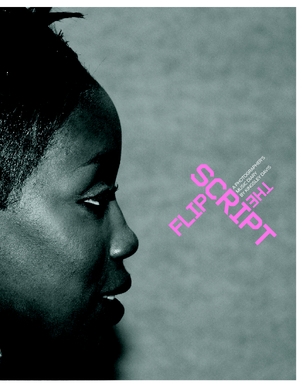
Kingsley Davis’ has just launched his new website with news, videos, shopping and a selection of B&W prints now available.
The man himself is totally chuffed with the result and to mark the launch Kings has got another signed copy Flip The Script – the book – up for grabs.
He managed to catch up with Ms Dynamite at the recent Urban Classic with the BBC Symphony orchestra and she kindly signed a copy …. so, if you fancy a punt simply visit the contact page and send Kingsley a message with Ms D in the inquiry box plus your contact info – simple!
It’s one year on from the Tohoku tsunami and earthquake disaster and in the wake of the stirring images and stories that have reached us I am more than hacked off with a bunch of pro nuclear power scribblers who are claiming that the disaster has been hi-jacked by the anti-nukes movement.
Their rationale is that 20,000 people died as a result of the tsunami but nobody has died as a result of the destruction at the Fukushima Daiichi power plant. On the surface that’s true but I’m also convinced that those workers who tried to get the plant under control in the early days of the disaster will pay the price. It’s more than bizarre that these pundits regard what’s gone on at the plant as a source of scare-mongering rather than an event with deadly long-term consequences.
Rather that get into a debate with those people, I would love someone to do a reality TV show where these journalist/commentators are transported , with their families, to live right on the border of the exclusion zone for 12 months. When there, they will eat local produce (including the seafood) and their children will attend the local schools which now have had the top soil removed from the playground.
Failing that I need to refer one “journo” who smugly shrugged off the huge amount of radiated water that’s gone into the sea to the blog of a local school teacher – http://fukushima-diary.com/2012/01/live-minamisoma-blogger-ustream/ – who is clearly suffering from the effects of living in a disaster zone that has been rated alongside Chernobyl.
Like the TV footage of the Twin Towers, the footage of the Tsunami sweeping towns and its inhabitants off the face of the earth will stay with me forever. The pain caused by the magnitude 8.9 earthquake and ensuing tsunami will live on for generations in Japan. It remains shocking that today, in one of the world’s most affluent and developed nations, more than a quarter of a million survivors face up to five more years in temporary shelters.
The Asanuma family were driven by the tsunami from their family home in Ishinomaki, Miyagi, and have taken refuge in a temporary residence. Photography by Shizuo Kambayashi
We’ve all seen the photos where once the debris has been removed the only sign that a town once stood there are the patterns, etched into the ground, outlining the buildings’ foundations. The Japanese government is currently spending about $258 billion on rebuilding but despite this massive sum, a full recovery may not even be possible. If it is achieved, according to authorities, it will take at least a decade.
Alongside the physical damage and death toll we have the ongoing catastrophe of the Fukushima Daiichi power plant – which is still a source of half truths and mis-information. Basically, there is a war going on between those who are pro and anti nuclear power and in that context I prefer to shelve TEPCO’s statements on the plant and listen to someone like Arnie Gunderson – a former nuclear power executive who served as an expert witness at the enquiry into the Three Mile Island Incident – via http://fairewinds.com/
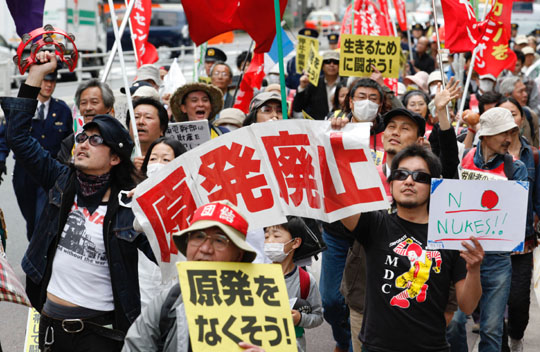
Japan still suffers the consequences of America’s willingness to experiment with the impact of nuclear weapons of mass destruction and people are quite rightly fearful of the radiation from the Fukishima plant. That fear has undoubtedly been compounded by hundreds of violent after-shocks that have taken place over the past 12 months. However, the Japanese people have shrugged off a reputation for political indifference and made their voices heard. The result of intense public opposition to nuclear power is that only two of the 54 nuclear reactors in Japan are currently in operation.
For us in Europe, the Tohoku earthquake disaster led several countries, including Germany, to stop construction on new nuclear plants. However, that didn’t stop the French sending their Industry and Energy Minister Eric Besson to Japan on the anniversary of the earthquake.
French Industry and Energy Minister Eric Besson visits the stricken Fukushima Daiichi nuclear power plant
The French are Europe’s evangelists for nuclear power at home and around the world and in this cynical exercise Besson (see pic!) became the first foreign politician to enter the crippled Fukushima Daichi plant since the disaster. He informed one journalist that nuclear power was too important a source of energy to abandon and told the workers in the plant they must revive atomic energy in Japan.
Basically, for the French, nuclear power is big business. And that brings it all back home to the UK because according to the Guardian yesterday it looks like the UK is handing control of its energy future to France http://www.guardian.co.uk/environment/2012/mar/13/uk-energy-future-france – and that’s not good…
The current situation in Japan demands we ask questions and demand answers. Nuclear power… is it worth the risk? What are we going to do with all those spent fuel rods that can’t be recycled and will be lethal for 20,000 years + ?
Buddhist monk bows and offers a prayer in a neighborhood destroyed by the March 11 earthquake and tsunami in Onagawa, Miyagi Prefecture, on March 9, 2012, two days before the one-year anniversary of the disaster. Photography by Shizuo Kambayashi
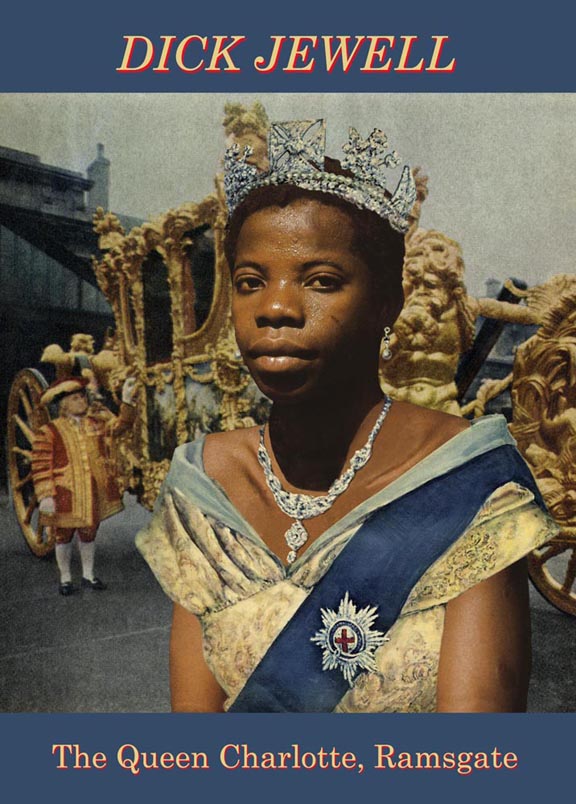
Go on & treat yourself… after all, Spring is in the air and it is the Queen’s Jubilee! Head on down to the south coast in search another Queen – The Queen Charlotte, the “liveliest new arts and entertainment venue” in Ramsgate where you will find Black Queens, White Lies, Red Herrings, an exhibition by Dick Jewell – an artistic ragamuffin if ever there was one.
Sadly, I missed the opening for Black Queens, White Lies, Red Herrings but one can be sure that will be some excellent and most controversial pieces on display from this wayward film maker, photographer and montage artist…. the last time I saw him he was talking someone through the reggae soundtrack to his Super 8 film of skinheads in Brick Lane in the Seventies. Have I said enough?
To view Dick’s works and then partake of fine wines and choice beers you need to locate The Queen Charlotte at 57 Addington Street. It’s open Thurs & Friday (5.30 – 11pm) + Saturday (5.30 – 12pm) and the show continues until April 7th.
You can check out Dick’s site – http://www.dickjewell.com/– for a little taste …. and as a staunch republican I’m definitely lovin’ that flyer!
Art Contact at the Queen Charlotte: mark.hampson@royalacademy.org.uk
Plum Publications
Excellent resource for run by Ted & Debbie in California, both long time martial arts practitioners…. lots of books, dvds etc with informed reviews based on experience.
SUPA DUPA rare 'n' old skool Nigerian Ju Ju, Fuji & hi life…
Just haul up the the groovemonzter, log on & stream the majestic sounds of Sir Shina Adewale, Dr Orlando Owoh, King Sunny Ade, Cardinal Rex Lawson, Queen Oludunni Decency, Tunde Nightingale, Alhaji Sikuru Ayinde Barrister…. wonderful!
the blue moment
Richard William’s exellent reflections on the world of music and….
Plum Publications
Excellent resource for run by Ted & Debbie in California, both long time martial arts practitioners…. lots of books, dvds etc with informed reviews based on experience.